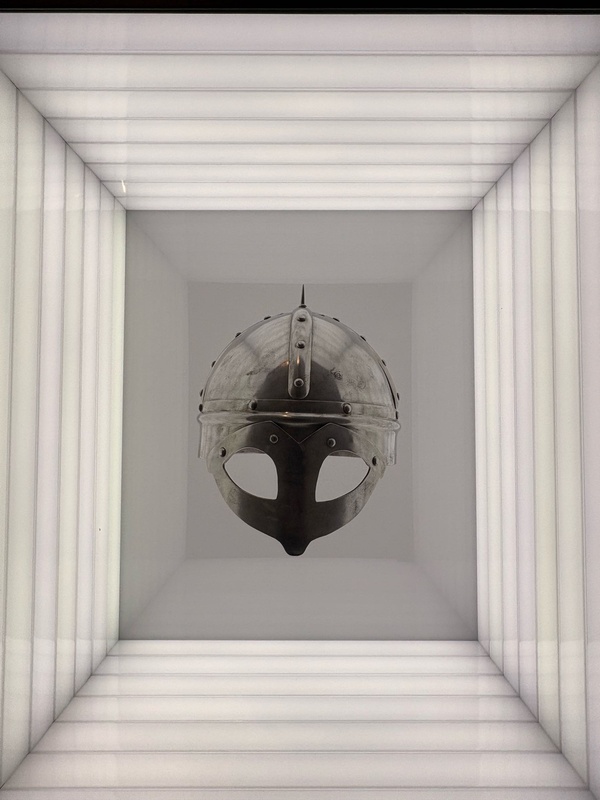
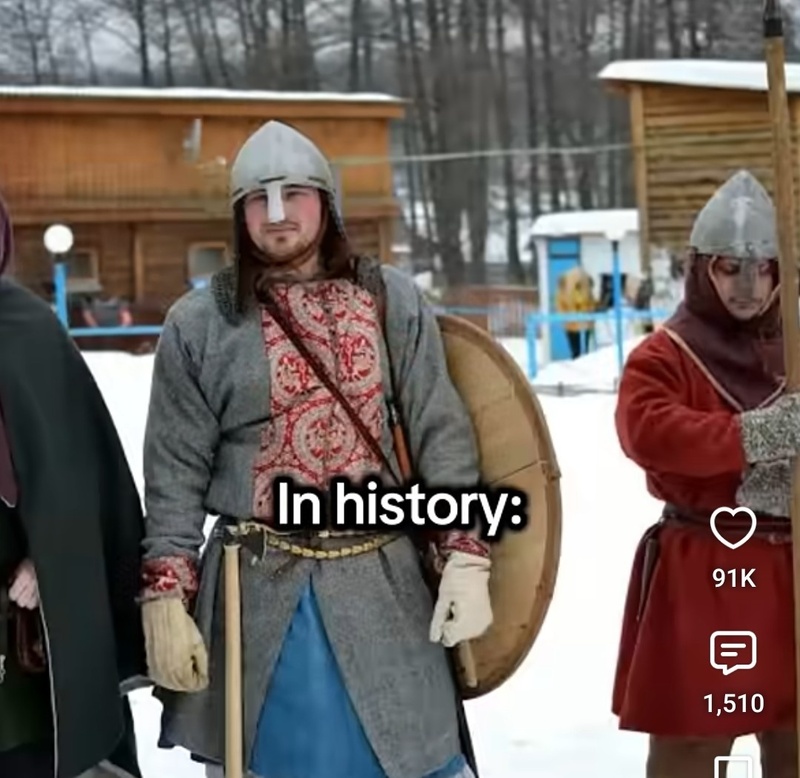
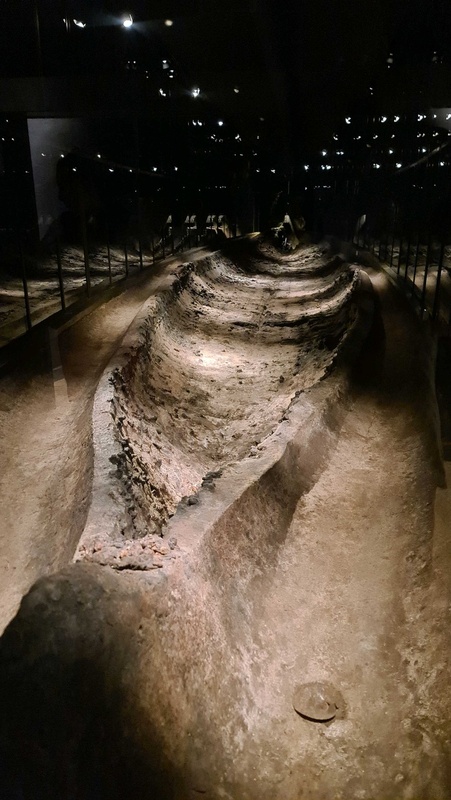
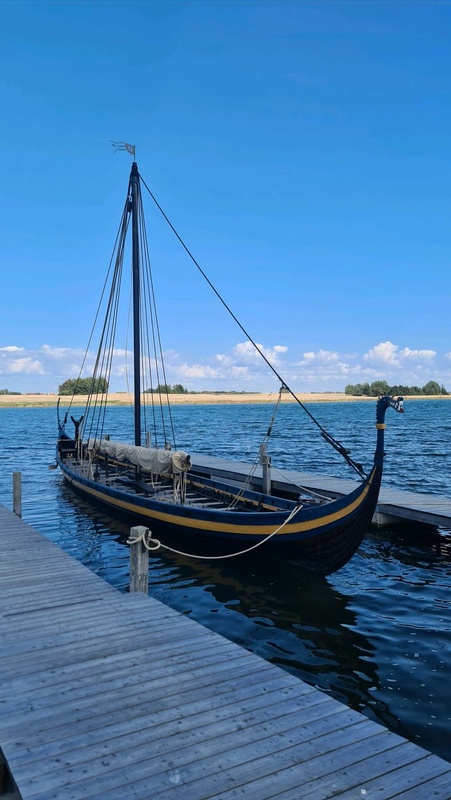
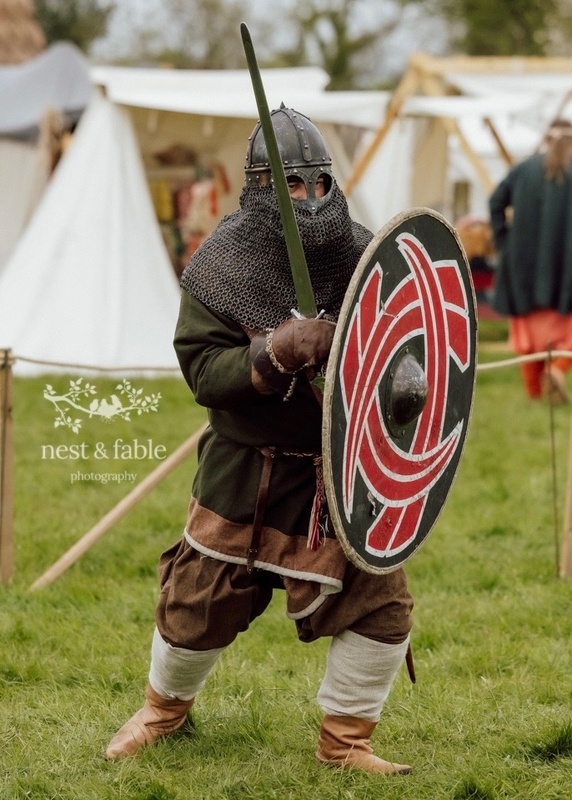
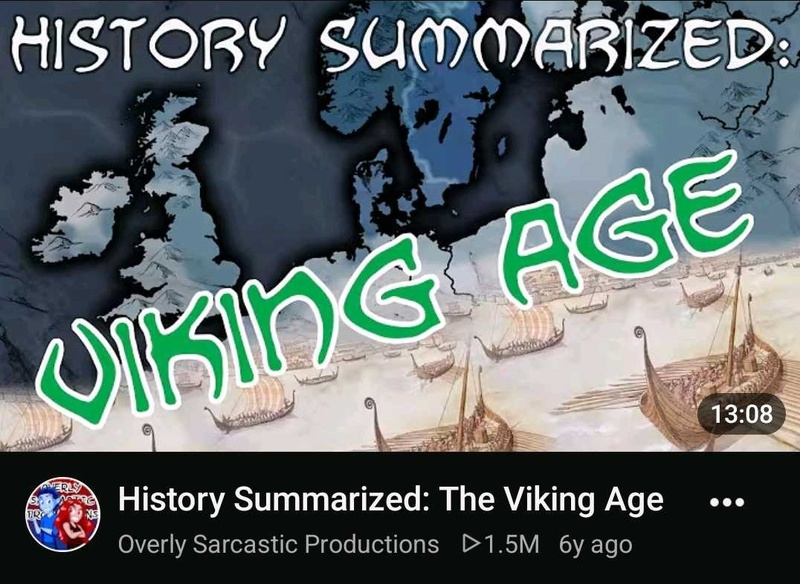
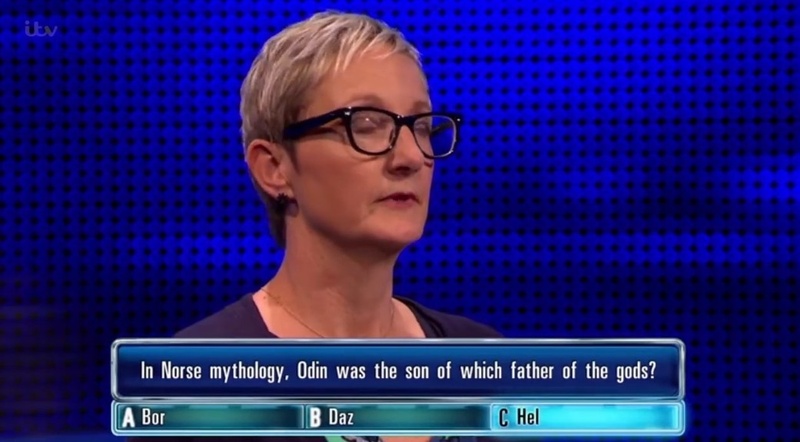
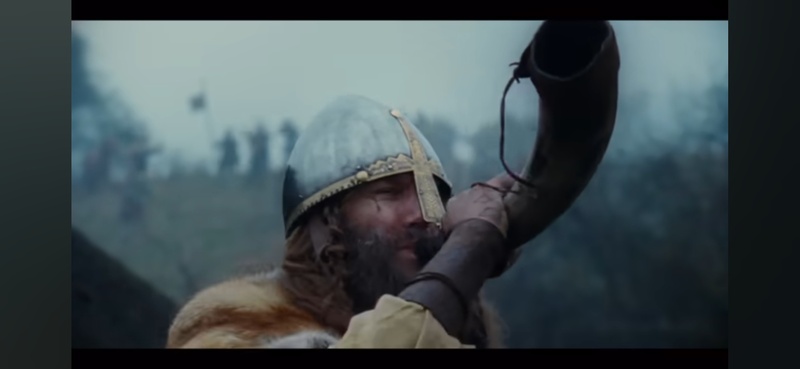
Copy of Gjermundbu helm at the Viking Museum Stockholm, Sweden. The real 10th-century Gjermundbu helmet (discovered in 1943 at the Gjermundbu farm in Ringerike, Norway) is the world's best-preserved Viking Age iron combat helmet with a spectacle face-guard. It is kept in Norway at the Museum of Cultural History, University of Oslo.
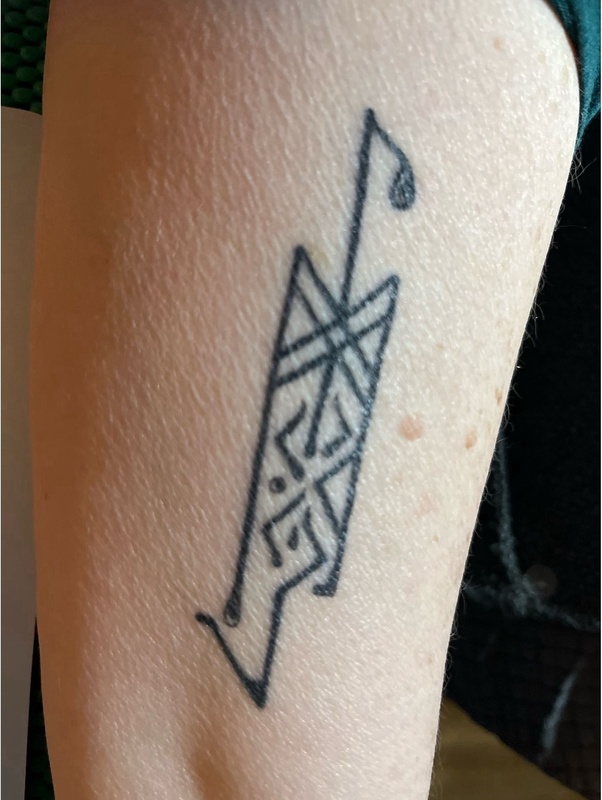
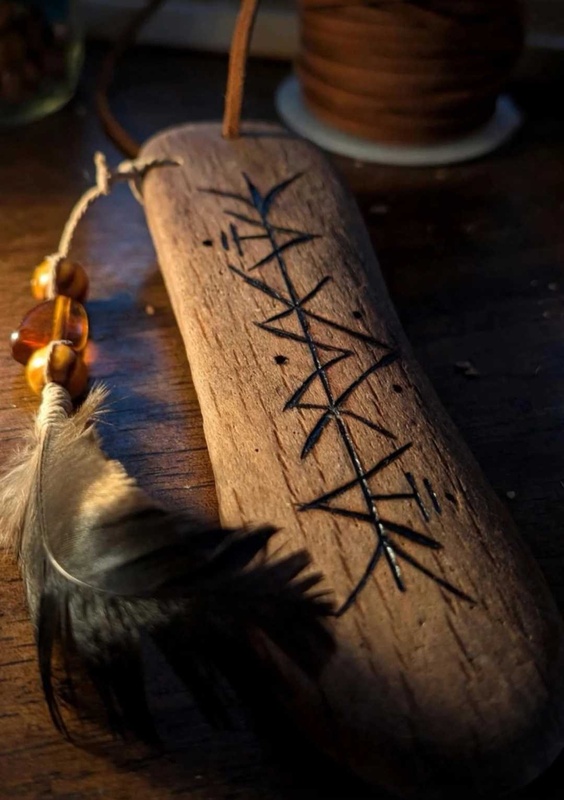
Stylized Bindrune Tattoo. "A Spell for Spokane" design using the runes Mannaz, Dagaz, Jera, Laguz, Kaunaz, and Thurisaz. Features dripping water designs on the staves.
Designed by Natalie Doud as part of fundraising for the Spokane Complex Fires.
"Materially:
50% of each $200 tattoo will be donated to The H.O.M.E Starts Here Fund. This fund is being activated to accept donations for community members impacted by the Spokane Complex Fires.
Spiritually:
This bindrune has been intentionally cratted as a visual spell to build community resilience and interconnection. It is a prayer for rain and healthy community interdependence for all those affected by the fires in Spokane. More than an intangible hope, the effect of the intention placed into this symbol is a reminder that with patience, humility, and connection to self, community, and nature, we have everything we need to rebuild a thriving community."
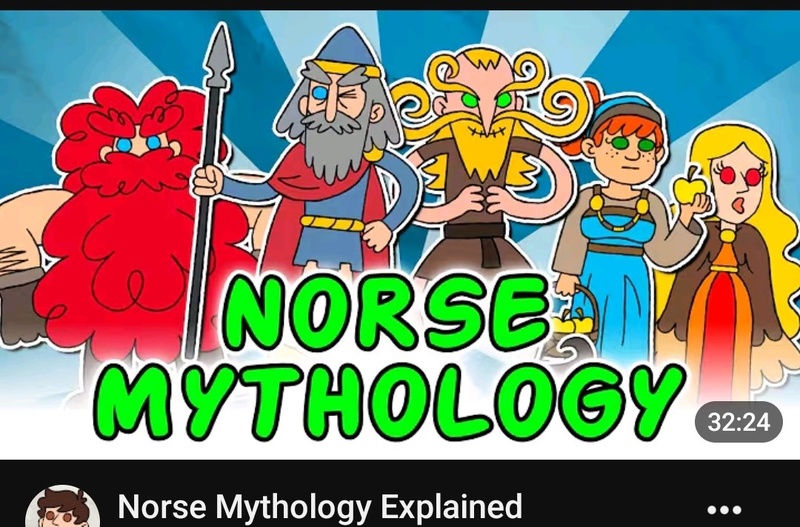
Screenshot of a thumbnail for Norse Mythology Explained, an animated video essay introducing Norse mythology to a general online audience. The thumbnail features brightly coloured cartoon representations of five figures apparently drawn from Norse mythology – three male and two female. The male figures include a red-haired and red-bearded character who appears to represent Thor, a grey-bearded, spear-carrying figure resembling Odin, and a more fantastical figure with elaborate golden facial hair who could be Loki. Of the two female figures, one is probably Iðunn, identifiable by her basket of golden apples, while the other may represent Freyja. The character designs, exaggerated physical features and colourful presentation illustrate how Norse mythological figures are adapted into accessible and immediately recognisable forms for contemporary online audiences.
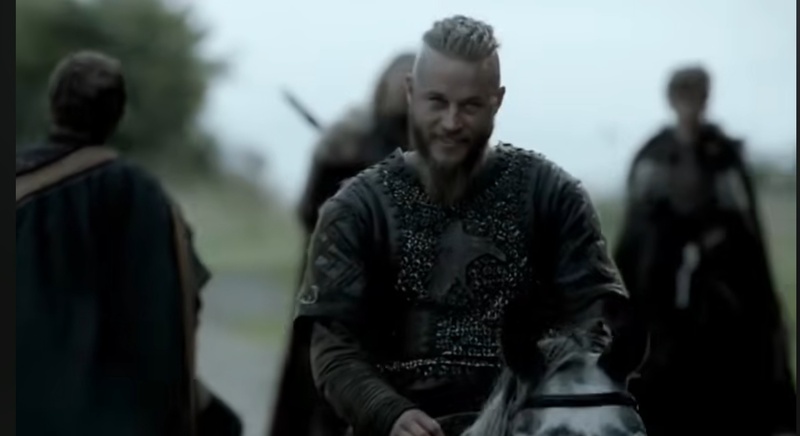
Screenshot from Vikings (2013–2020), a historical drama television series created by Michael Hirst for the History Channel. The image depicts Ragnar Lothbrok, played by Travis Fimmel, in a scene identified by the contributor as a meeting with King Ecbert of Wessex. Ragnar is portrayed wearing dark clothing with leather and metal detailing, with a distinctive shaved hairstyle and braided hair and beard. The series draws on medieval Scandinavian legendary traditions surrounding Ragnar Loðbrók, combining material from sagas and other medieval sources with historical events associated with Viking activity in Anglo-Saxon England.
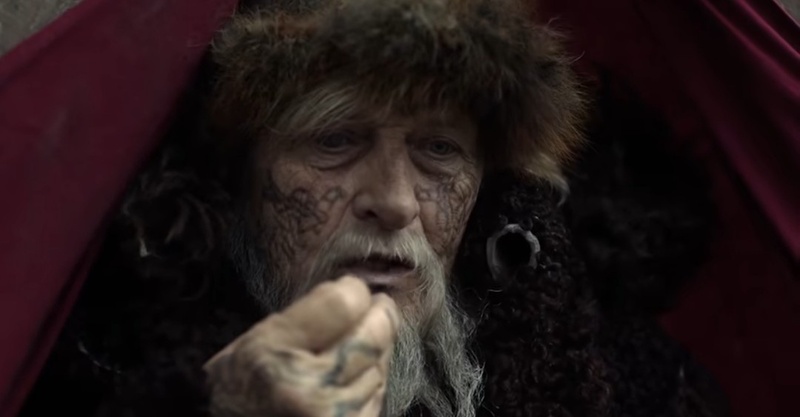
Screenshot from The Last Kingdom (2015–2022), a historical television drama based on Bernard Cornwell’s The Saxon Stories novels. Set in ninth- and tenth-century England, the series depicts the conflicts between Anglo-Saxon kingdoms and Scandinavian settlers and warriors during the Viking Age. The image shows a male character wearing a fur hat and heavy clothing, with a long grey beard, facial tattoos or markings, and prominent earrings. Although the series draws on historical events and figures, its character designs combine elements of Viking-Age material culture with modern interpretations and conventions of historical fantasy.
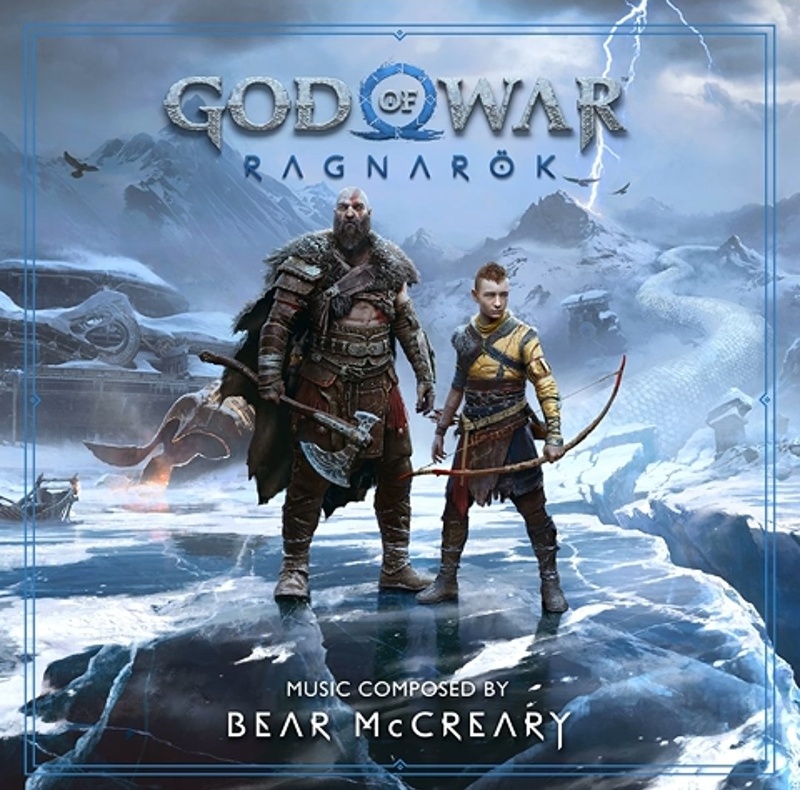
Cover artwork for the official soundtrack of God of War Ragnarök (2022), an action-adventure video game developed by Santa Monica Studio and published by Sony Interactive Entertainment. The soundtrack was composed by Bear McCreary. The image depicts the game’s protagonists, Kratos and his son Atreus, standing in a snowy landscape surrounded by mountains. Kratos carries his Leviathan Axe, while Atreus holds a bow. A large serpent-like form in the background evokes the mythological world of the game, which draws extensively on Norse gods, creatures and narratives. The game reimagines Ragnarök, the destruction and renewal of the world described in Old Norse mythology, as the culmination of an original narrative involving Kratos, Atreus and the Norse gods.
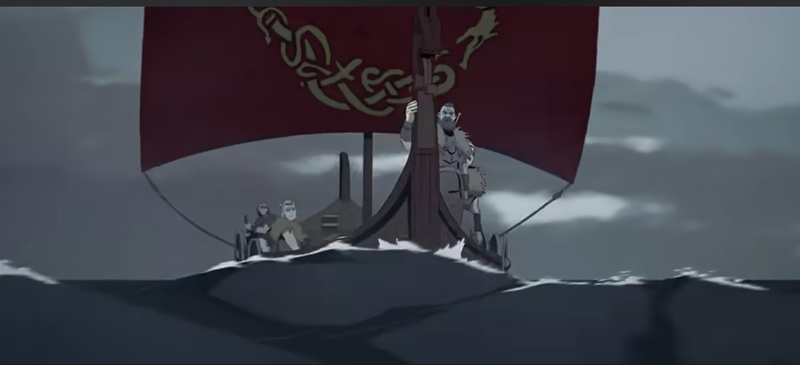
Screenshot from 'Vikings vs Cannibals', an animated short film depicting a group of Viking warriors sailing across a stormy sea in a traditional Scandinavian longship. The vessel features a high, curved prow, a large red square sail decorated with interlacing ornament, and shields mounted along its sides. The figures wear fur clothing and appear to have blue facial markings or war paint. The animation features many visual conventions associated with Vikings in contemporary popular culture, including the longship, weapons, shields, fur clothing and blue facial markings.
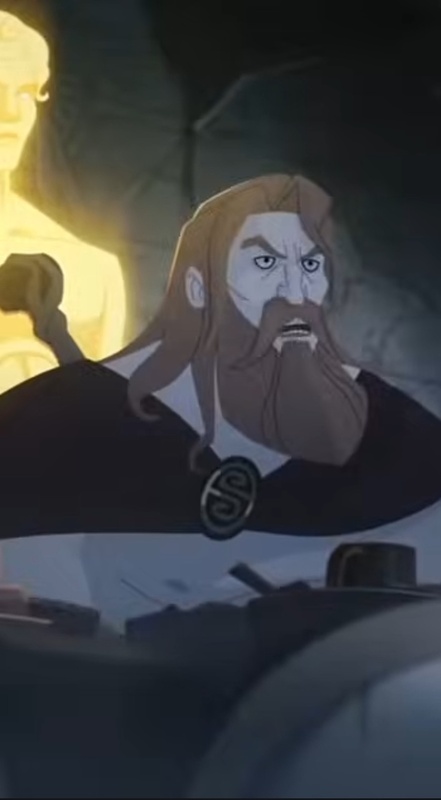
Screenshot from 'Twilight of the Gods' (2024), an American adult animated television series created by Zack Snyder, Jay Oliva and Eric Carrasco for Netflix. image here depicts Thor, recognisable by his red hair and beard, alongside the glowing figure of Baldr. The series draws on characters and narratives from Old Norse mythology, adapting them for contemporary audiences through an aesthetic influenced by fantasy animation and graphic novels.
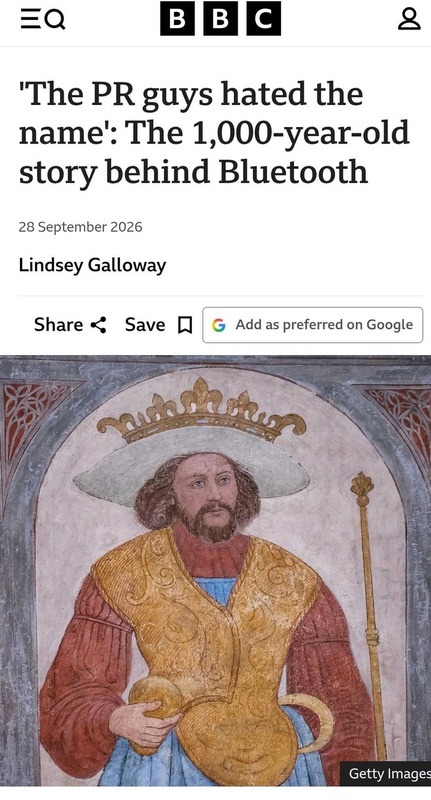
Online BBC article by Lindsey Galloway, published on 28 September 2026, entitled ‘The PR guys hated the name’: The 1,000-year-old story behind Bluetooth. The article explores the origins of the name Bluetooth, the wireless communication technology named after the tenth-century Danish king Harald Bluetooth (Haraldr blátǫnn), who is traditionally credited with uniting Denmark and Norway. The name was proposed in the 1990s by Jim Kardach of Intel as a temporary codename for a project intended to unite competing wireless communication technologies, drawing an analogy with Harald’s political achievements. The name was subsequently retained and became one of the world’s most recognisable technology brands. The Bluetooth logo is a bindrune, combining two characters from the Younger Futhark, ᚼ (Hagall) and ᛒ (Bjarkan), representing the initials H and B of Harald Bluetooth.
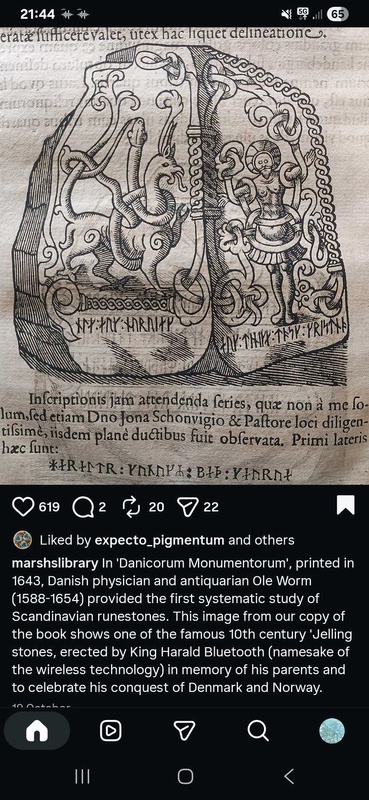
Screenshot of an Instagram post by Marsh’s Library, Dublin, reproducing an illustration from the Danish antiquarian Ole Worm’s Danicorum Monumentorum Libri Sex, published in Copenhagen in 1643. The illustration depicts the larger of the two Jelling runestones, erected by King Harald Bluetooth in the tenth century to commemorate his parents, Gorm and Thyra, and to proclaim his achievements in Denmark and Norway. The illustration shows two decorated faces of the stone, including the image of Christ and a quadruped entwined with a serpent, together with runic inscriptions. Worm’s publication was an important milestone in the documentation and interpretation of Scandinavian runic monuments.
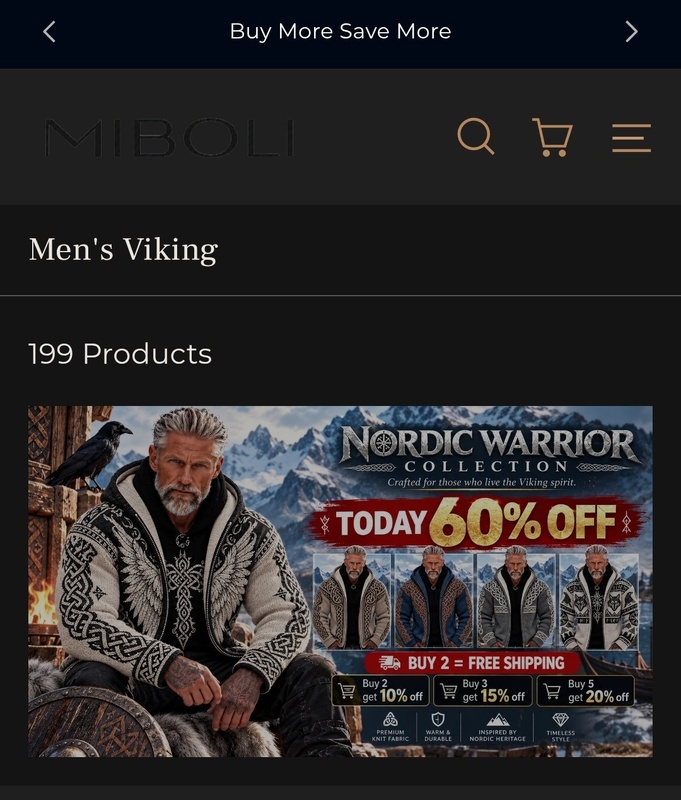
Screenshot from the MIBOLI online clothing retailer. The featured “Nordic Warrior Collection” depicts an image of a grey-haired, tattooed man wearing a hooded cardigan decorated with designs inspired by Norse and Viking art. He is accompanied by a raven, with a round shield in the foreground and snow-covered mountains in the background. The advertisement draws on popular representations of Viking masculinity, combining the imagery of a rugged warrior with contemporary fashion. The raven may evoke Odin’s association with Huginn and Muninn, while the shield, interlace patterns and mountainous landscape reinforce the Nordic theme. The clothing incorporates designs resembling runic inscriptions and stylised Norse ornamentation. The collection is marketed with the slogan, “Crafted for those who live the Viking spirit”.
Contributor comments: Welcome screen of an ad-blocker app (AdGuard Mini) after they rebranded. This screen is only shown to users once, to introduce the new features of the app.
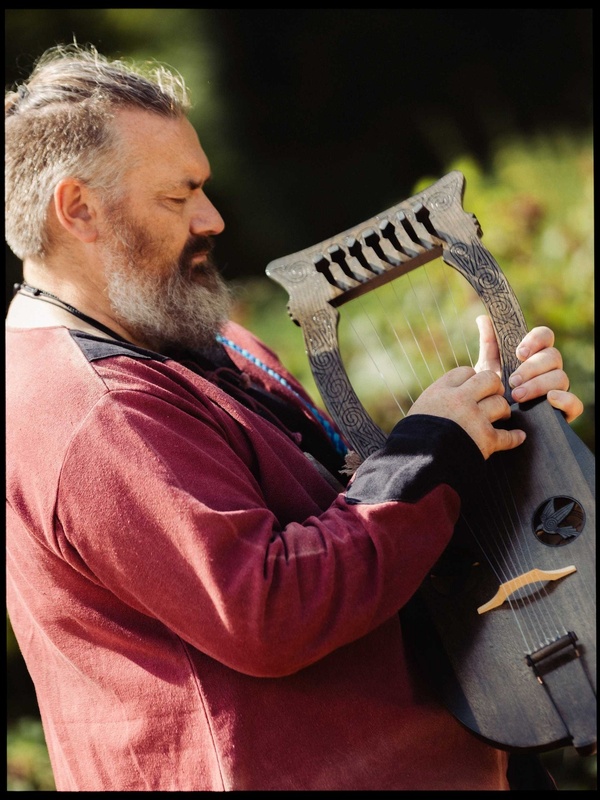
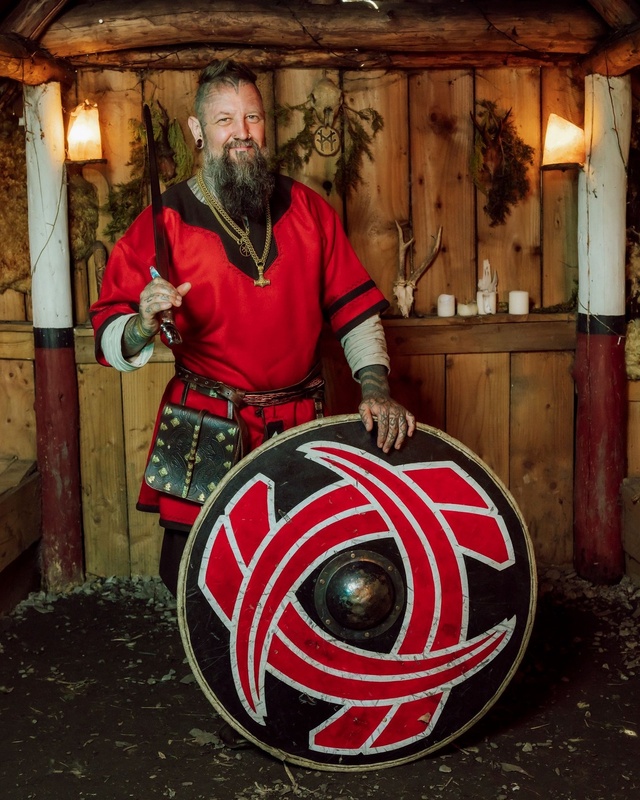
Contributor info: A portrait of photo in my reenactment kit, An Elder of the Hiberno Norse Viking group "Nordan Jorfors" the Northern Boars based in Kendal, Cumbria, UK.
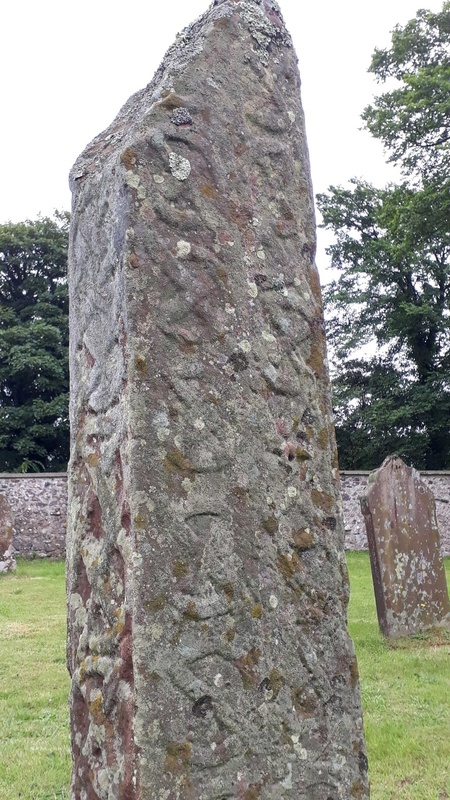
The Waberthwaite cross. An Anglo-Scandinavian cross shaft in a Cumbrian churchyard combining Viking period interlace and Anglo-Saxon animal/bird motif decoration.
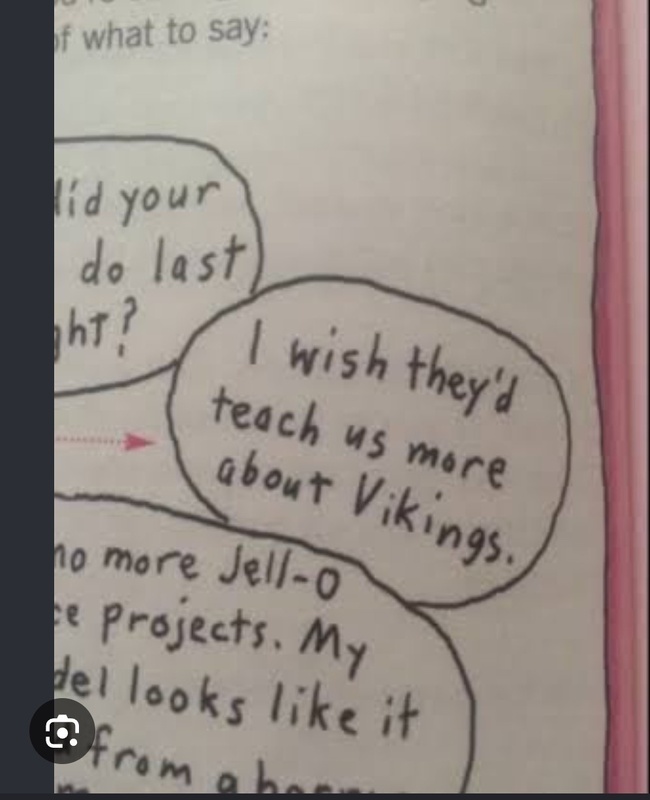
Page from the book "A Smart Girl's Guide to Boys" mentioning Vikings as a conversation starter. This particular line from the book has also been used as a popular meme.
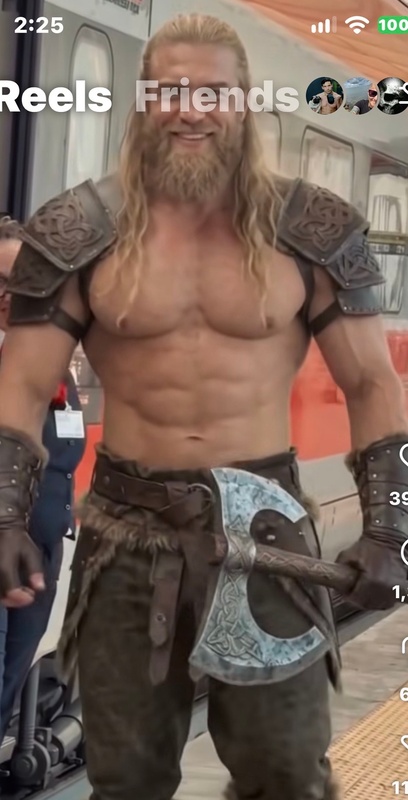
Public post by shaun_rez titled "First day in the city… already turning heads. 😂⚔️ #Vikings #VikingLife #FunnyReels #Halloween2026 #viralreeĺs. The reel includes a photo of man dressed as a Viking on IG.
https://www.instagram.com/reel/DfLBQMDSaXn/?cplk=MWgwNzJkZDBpdnBpOA== . Possibly AI
Both dress and hairstyle & beard
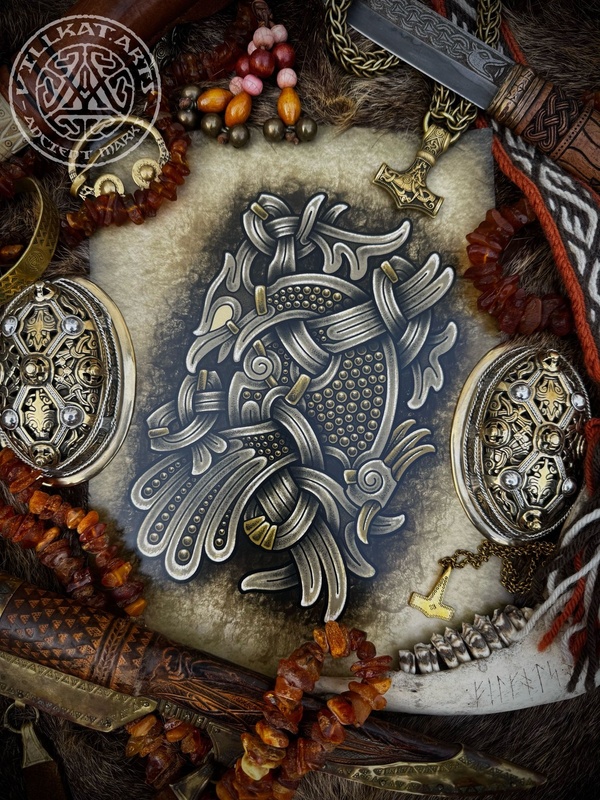
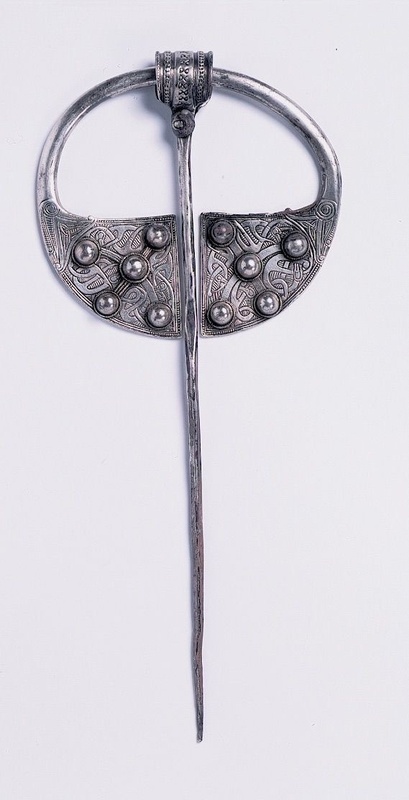
The Orton Scar Brooch is a famous 9th- to 10th-century Viking penannular silver brooch discovered alongside a matching silver torque in Cumbria.
Discovered by a labourer in a limestone rock crevice at Orton Scar in 1847.
The Orton Scar Brooch is held in the collections of the Society of Antiquaries of London.
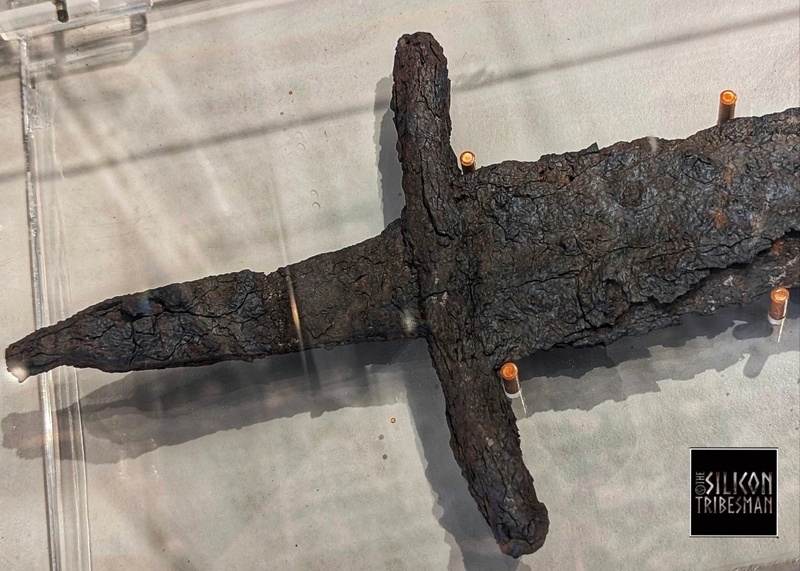
The Witherslack Viking Sword, Kendal Museum, Cumbria
Found at the foot of Whitbarrow Scar (south-west of Kendal)
Original photo from "the silicon tribesman" website.
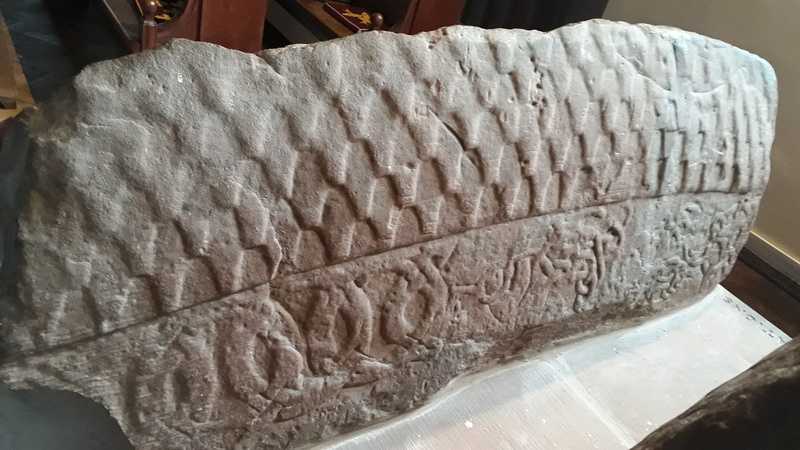
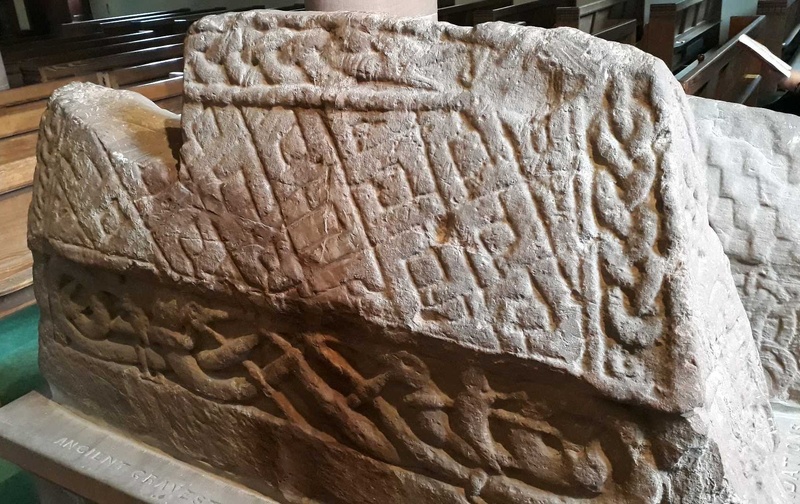
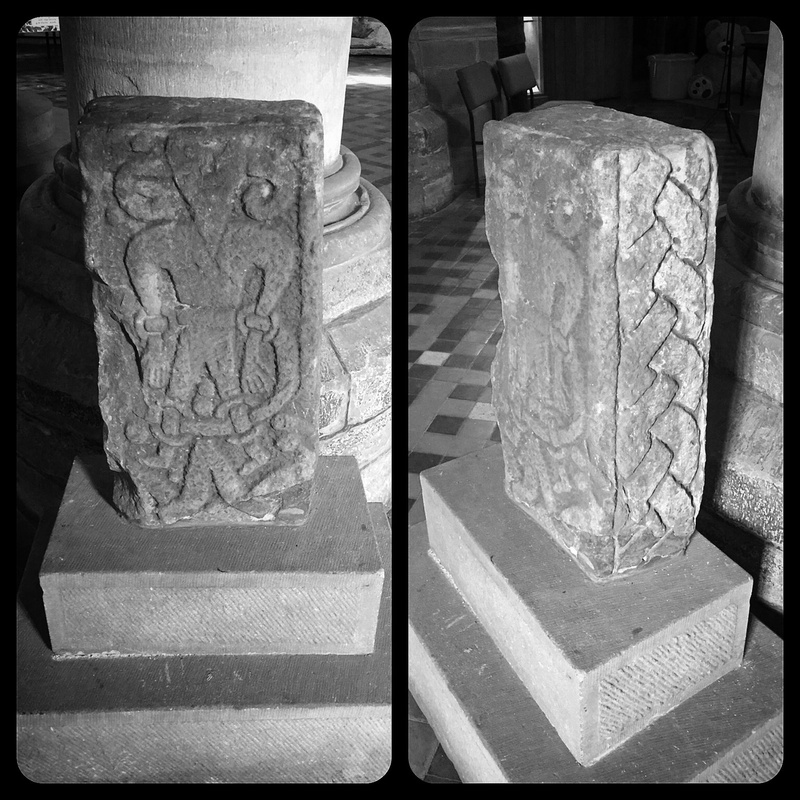
Contributor description: Viking Age sandstone carving, The "Loki Stone" , in the Church of Kirby Stephen, Cumbria. Also in the church are other fragments of stone carvings with Hiberno-Norse knotwork.
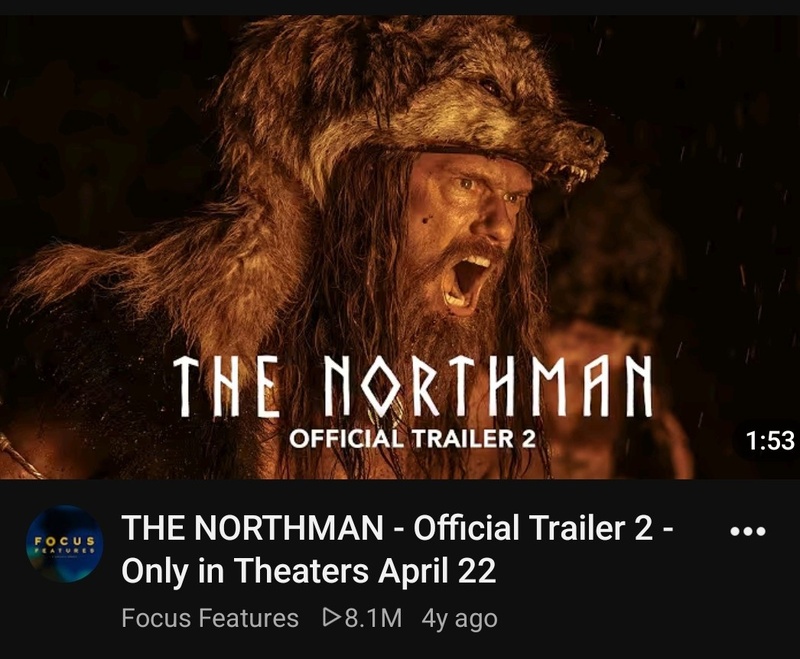
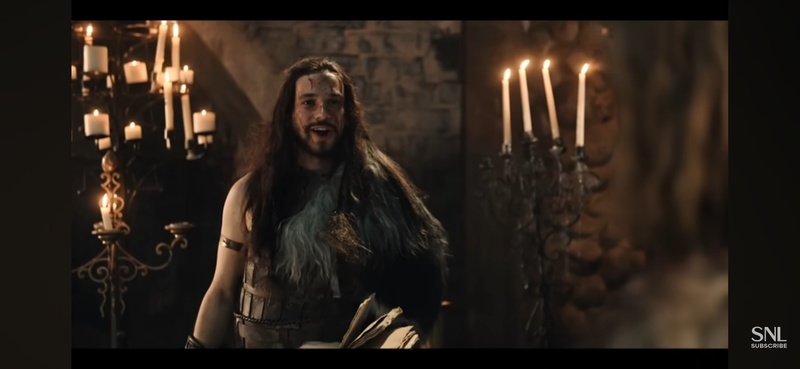
Trailer for the 2022 film "The Northman" directed by Robert Eggers. This particular director is known for his meticulous attention historical accuracy. However some elements of the film appear to be influenced by norse mythology or popular perceptions of the Vikings.
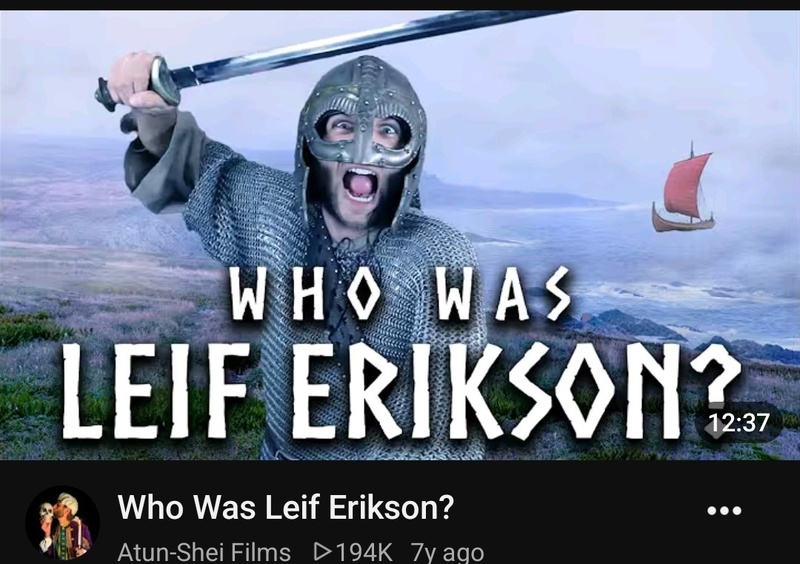
Video essay discussing Leif Erikson and whether the Vikings were the first Europeans to encounter America.
Atun-Shei Films. "Who Was Leif Erikson?"
https://www.youtube.com/watch?v=C4cZLO1GJ40
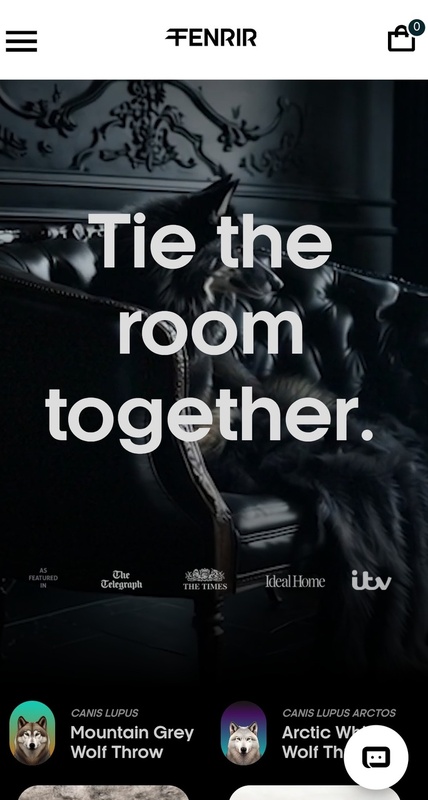
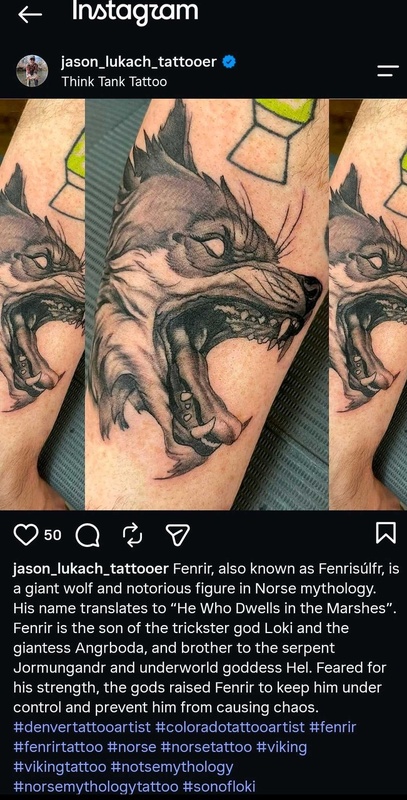
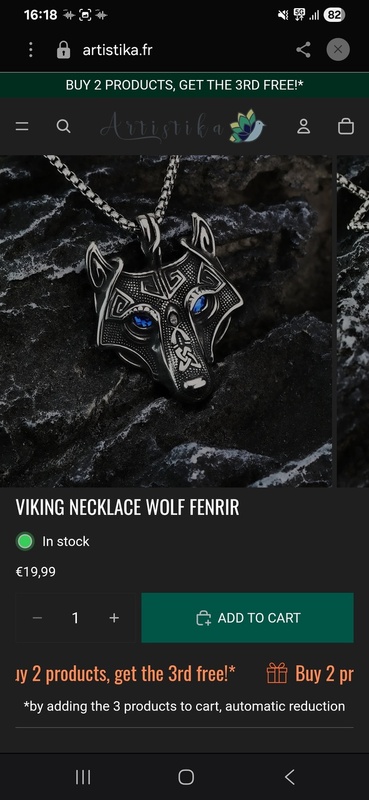
Necklace representing Fenrir/ Fenrisúlfr, the giant wolf who is the offspring of Loki and Angrboda.
https://artistika.fr/en-ie?tw_source=google&tw_adid=747884887160&tw_campaign=22471069640&tw_kwdid=kwd-1307516905171&gad_source=1&gad_campaignid=22471069640&gbraid=0AAAAACTbO24Z_uUDAulvw4D51iWCFbL_B&gclid=CjwKCAiAzKvXBhBAEiwABLl9AokZZOEOw6HxHpoJYoFf_YojE8Cd0fMRm4W69Q3F8bbaMBOJBNbNJhoCYscQAvD_BwE
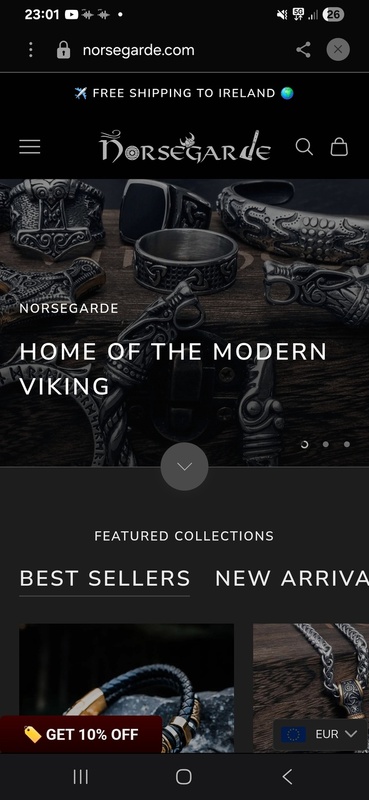
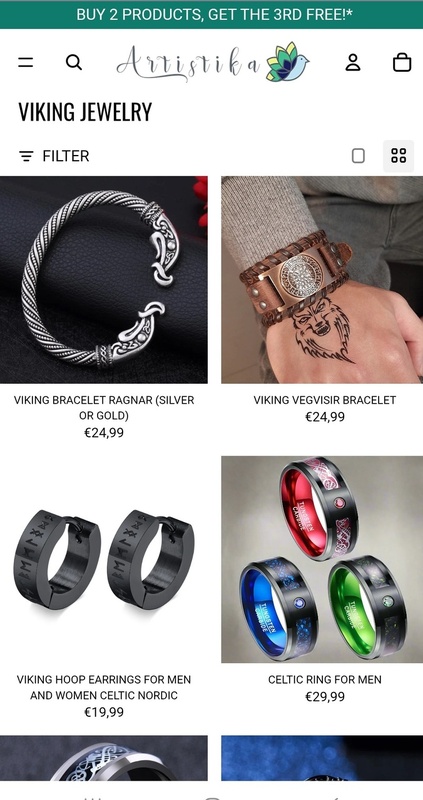
A selection of Norse/Viking inspired jewelry and accessories available on the online retailer, Artistika.
https://artistika.fr/en-ie?tw_source=google&tw_adid=747884887160&tw_campaign=22471069640&tw_kwdid=kwd-1307516905171&gad_source=1&gad_campaignid=22471069640&gbraid=0AAAAACTbO24Z_uUDAulvw4D51iWCFbL_B&gclid=CjwKCAiAzKvXBhBAEiwABLl9AokZZOEOw6HxHpoJYoFf_YojE8Cd0fMRm4W69Q3F8bbaMBOJBNbNJhoCYscQAvD_BwE
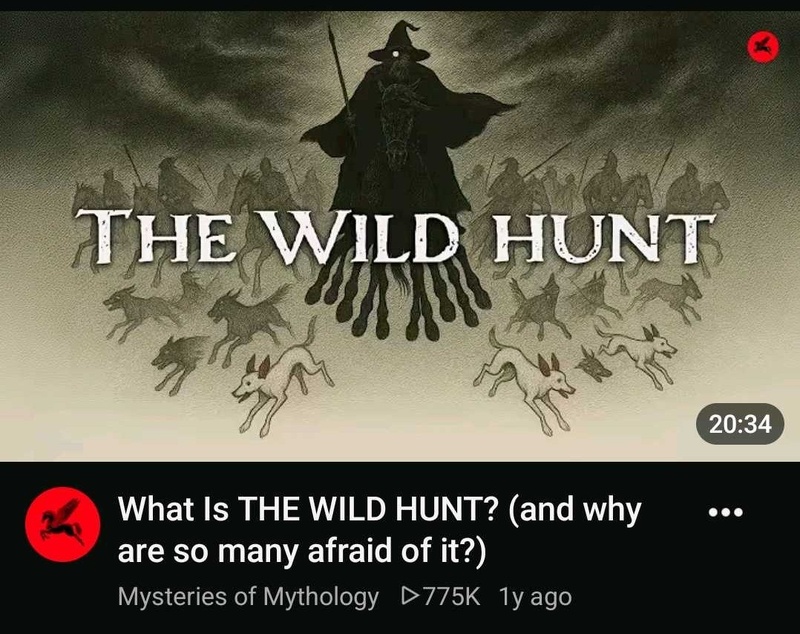
Mini documentary/ video essay on The Wild Hunt of Odin, a famous motif in Germanic and Scandinavian folklore. This video essay was produced by the Mysteries of Mythology YouTube channel.
https://www.youtube.com/watch?v=Gc9Z9YDo838
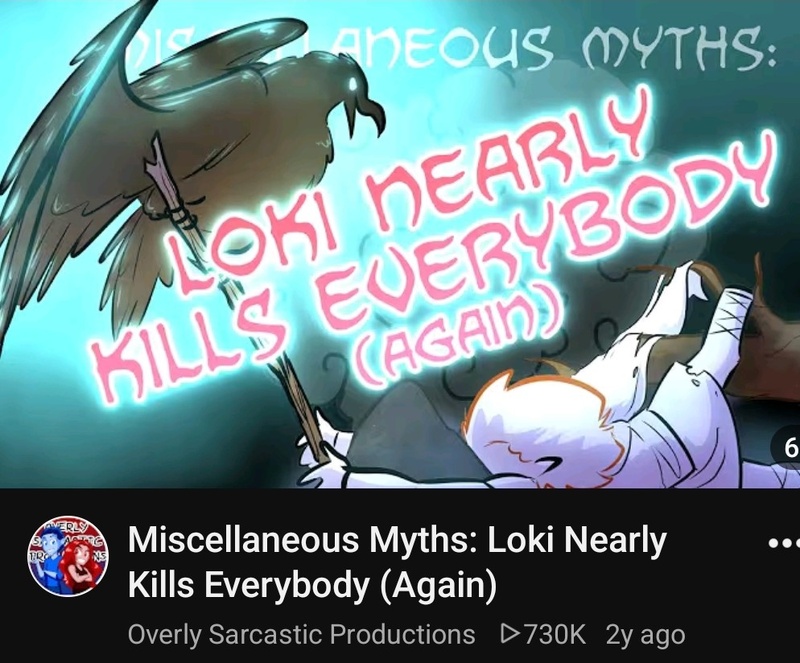
Overly Sarcastic Productions: Loki Nearly Kills Everybody (Again)
"Or "that one time the Norse gods learned their immortality was Highly Conditional", or alternatively "why it's important to take your meds consistently"
EDIT: Snorri did his Sturlussoning in 1200 CE, not 1200 BCE. That's what I get for dunking on a trickster god I guess"
https://www.youtube.com/watch?v=otgH_1Tq8Ro
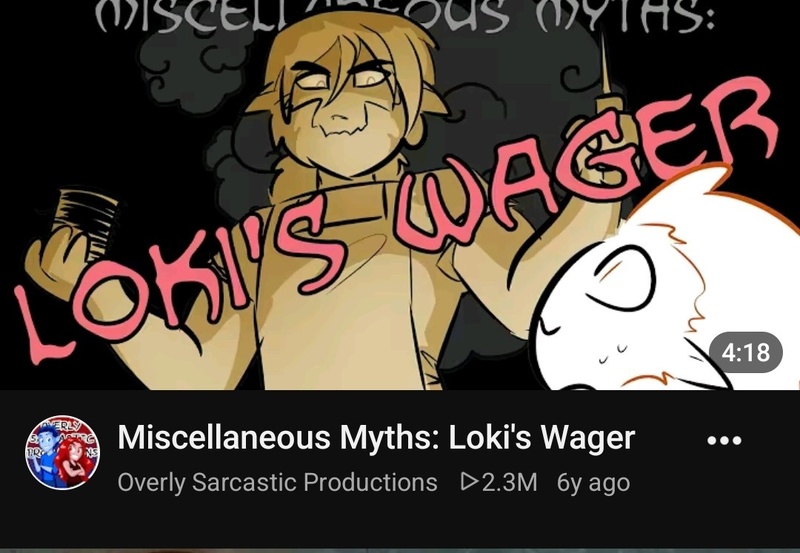
Overly Sarcastic Productions video: "Miscellaneous Myths: Loki's Wager"
"Loki, Loki, Loki. When will you learn that your actions have consequences?
Alternate title: HAIRCUT PRANK GONE WRONG (I ALMOST DIED! NOT CLICKBAIT)
(FUN FACT! While that math that briefly shows on the screen calculates the correct solution for the parameters stated, there's actually an error in the formula! Find it for extra credit!)"
https://www.youtube.com/watch?v=VdMXFQ-AE8o
Alina Gingertail performing "My Mother Told Me" in a fantasy clothes loosely inspired by the Vikings, Norse culture and mythology.
https://www.youtube.com/watch?v=KRqIkTlGIOE
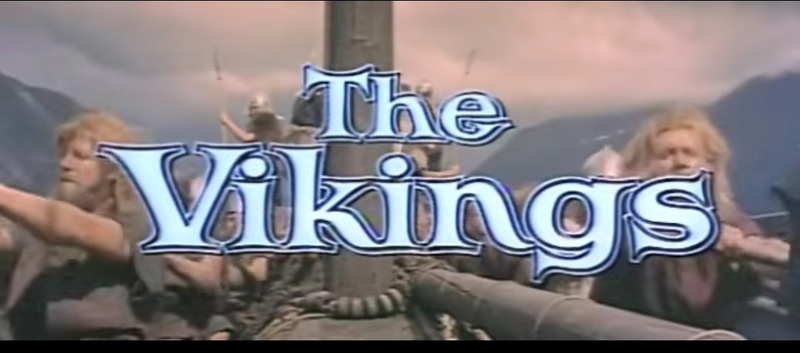
"The Vikings" is a 1958 historical epic directed by Richard Fleischer and produced by Jerry Bresler alongside Kirk Douglas through his independent company, Bryna Productions (Brynaprod), in partnership with Curtleigh Productions. Distributed by United Artists, the film was shot between June and October 1957 on a $3.5 million budget. It celebrated its world premiere in New York City on June 11, 1958, before expanding to a wide theatrical release in the United States on June 28, 1958.
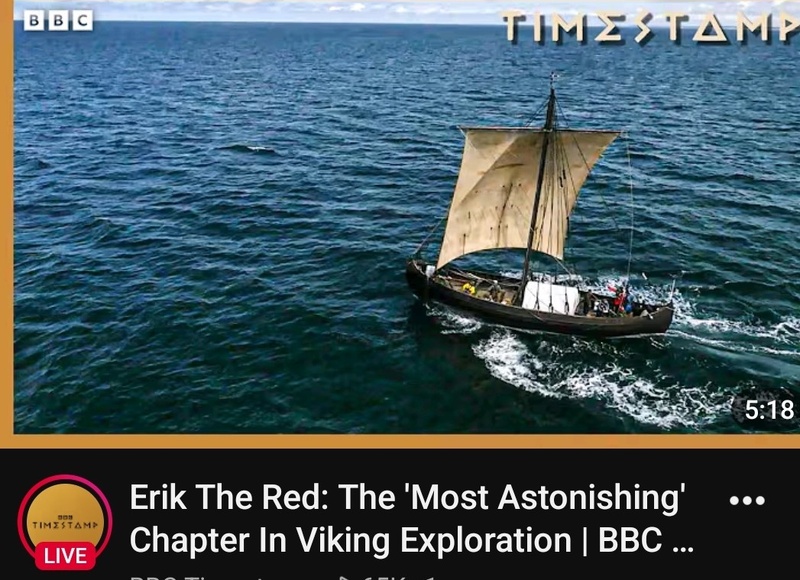
Contributor description: Documentary about Erik the Red (BBC YouTube channel).
"They spoke of gods, exile, and uncharted lands... but never wrote them down. Discover how Viking stories survived across centuries – hidden in memory, carved in stone, and finally penned by monks. Historian Dan Snow investigates what truths lie within these ancient tales and what can they tell us about one of the Vikings' most extraordinary feats of exploration."
This clip is from The Vikings Uncovered (2016)
https://www.youtube.com/watch?v=vFBdVqMFE7M
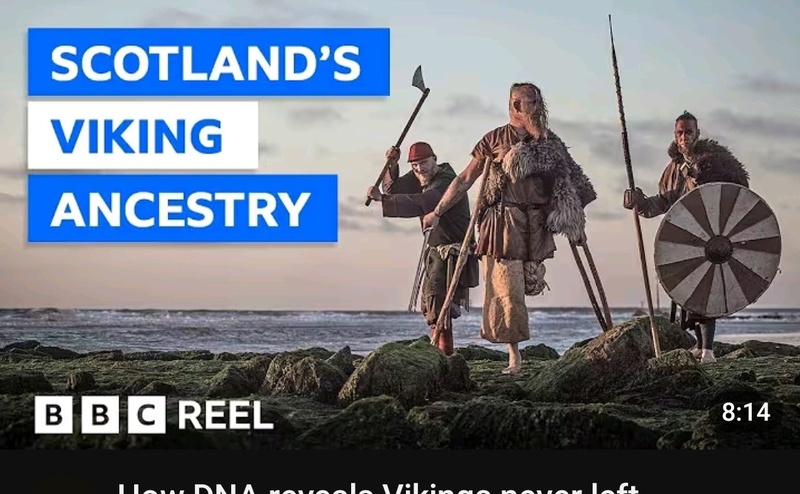
Contirubutor description: Mini documentary on BBC Global about the genetic impact the Vikings had on Scotland. Vikings conquered many of Scotland's islands, as well as the mainland, in the 8th and 9th Centuries. They came, they conquered, they left, or so the story seemed to go.
Now historians are re-assessing the legacy the Vikings left on islands like Islay, a small island of about 3,000 inhabitants off the west cost of Scotland.
Linguistic and DNA evidence now suggests that the Vikings never really left at all, as BBC Reel's Melissa Hogenboom reports.
Reporter and producer: Melissa Hogenboom
Edit & Camera: Adam Proctor
https://www.youtube.com/watch?v=dw3VbJ0RTcQ
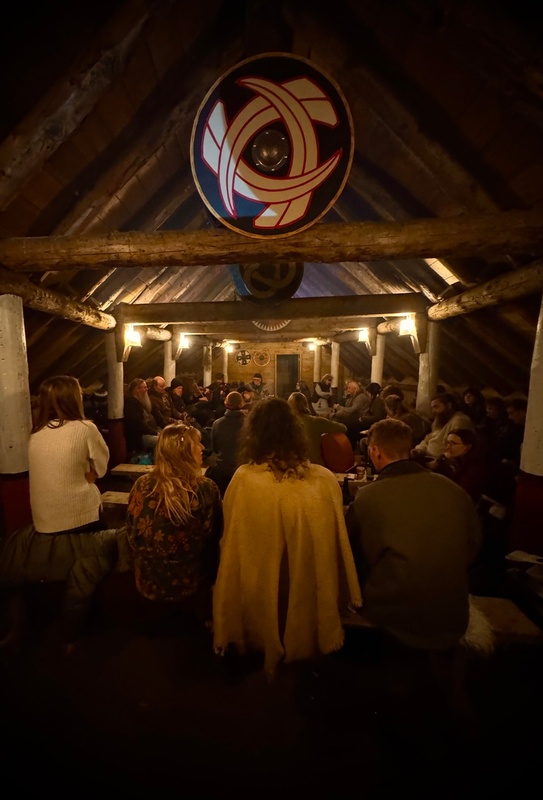
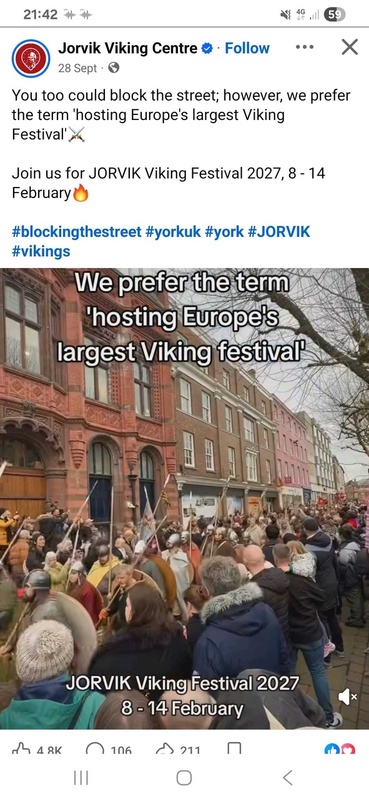
The JORVIK Viking Festival is recognized as Europe's largest celebration of Norse heritage, held annually in the historic city of York, England. First launched in February 1985 by York Archaeology, the week-long winter event was created to boost tourism during the quiet off-season following the rapid success of the newly opened JORVIK Viking Centre museum. Inspired by Jolablot—the ancient Norse midwinter festival welcoming the arrival of spring—the celebration has grown from its early days of river regattas and Norwegian gift-giving into a massive international gathering that completely transforms the city into an immersive, living history experience.
Today, the festival draws hundreds of costumed re-enactors, historical enthusiasts, and families from all over the world. Central city areas like Parliament Street are taken over by authentic tents and interactive encampments where wood-turners, metalworkers, and blacksmiths demonstrate 10th-century Scandinavian crafts. The festival features massive public spectacles, including a dramatic horde of hundreds of Vikings marching from York Minster to Coppergate, fierce weapons combat demonstrations, and explosive, open-air theatrical battle re-enactments complete with dramatic musical scores and torchlit finales at sites like the Eye of York. For families, the event offers specialized activities like "Berserker Bootcamp" weapons training and a "Kids Barbaric Battle". At the same time, adults can indulge in Norse-themed banquets, saga-inspired storytelling, and local mead tastings.
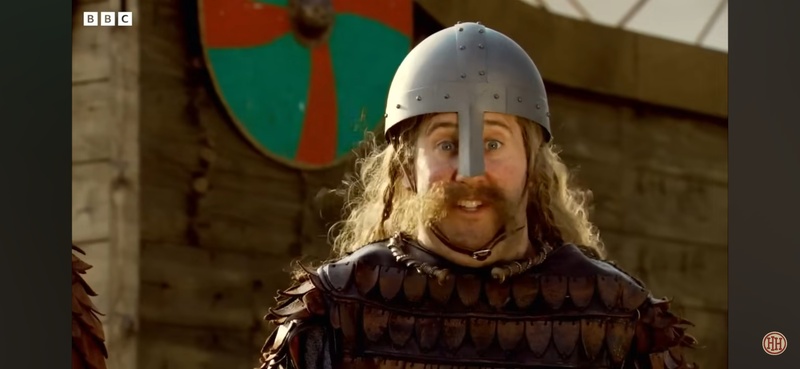
Scene from the Vicious Vikings segment in the Horrible Histories tv series. This scene is from Series 1, Episode 12 of Horrible Histories. The image features Jim Howick as a Viking during the "What a way to go" sketch, which humorously details a traditional Viking funeral setup.
Scene from a campaign produced by the Danish Road Safety Council. This campaign is meant to encourage people to wear a helmet when riding their bikes. The slogan is "A helmet has always been a good idea". This amusing short film revolves around a Viking character who initially refuses to wear a helmet but is ultimately persuaded by his friends to wear one to keep him safe while pillaging in England.
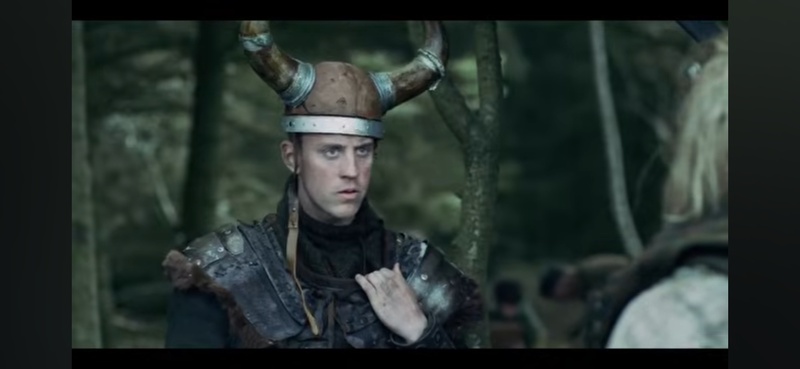
A scene from the comedy series "Norsemen". The characters are perplexed by their companion's choice of headgear. This scene makes fun of the historically inaccurate image of the Vikings wearing horned helmets.
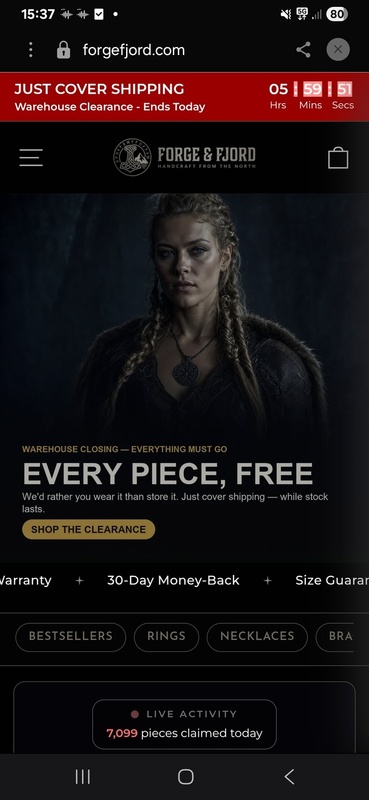
Screenshot of a scam website called Forgefjord which claims to be a business selling Norse inspired paraphernalia. It uses Viking/Norse imagery to appeal to its target audience.
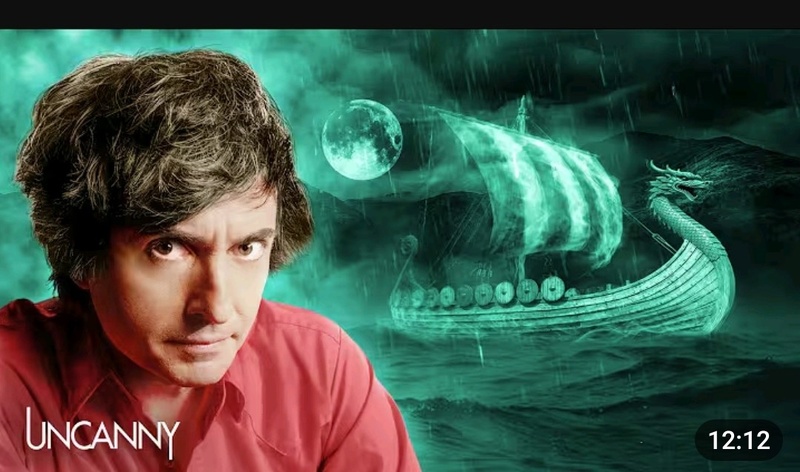
YouTube thumbnail from the Uncanny series/podcast featuring a depiction of a Viking longship. This is a reference to the alleged sightings of a ghostly longship appearing on a lake in Nant Gwynant in northern Wales.
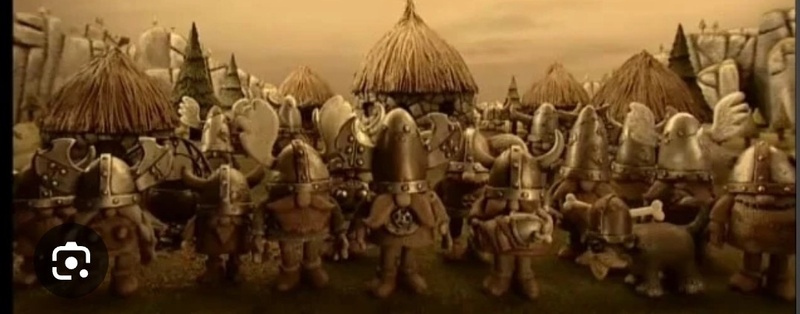
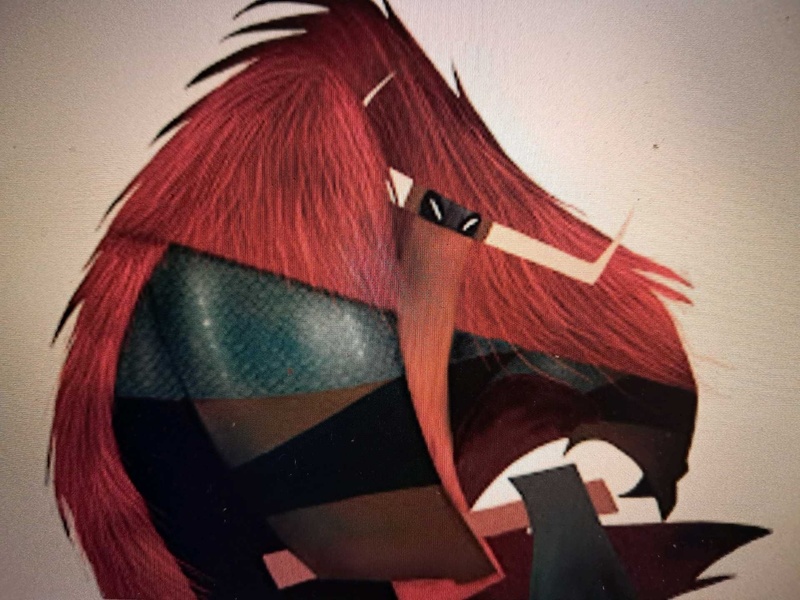
Early character design for the Vikings depicted in the 2009 animated fantasy drama, 'The Secret of Kells'.
Creator: Jean-Baptiste Vendamme (Character Designer for Cartoon Saloon)
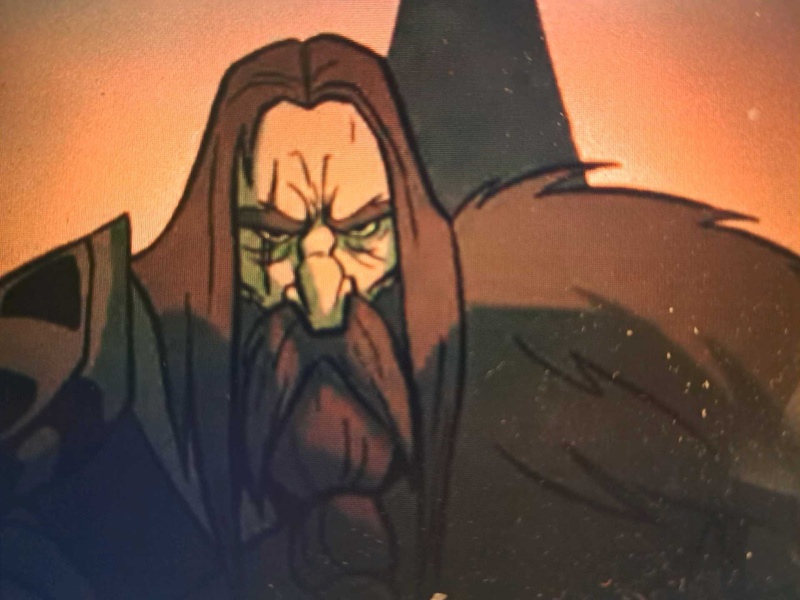
Viking Chieftain from Genndy Tartovsky's 'Primal'. "Vidarr" is Season 2, Episode 6 of Genndy Tartakovsky's animated series Primal, named after the Norse god of vengeance (Viðarr).
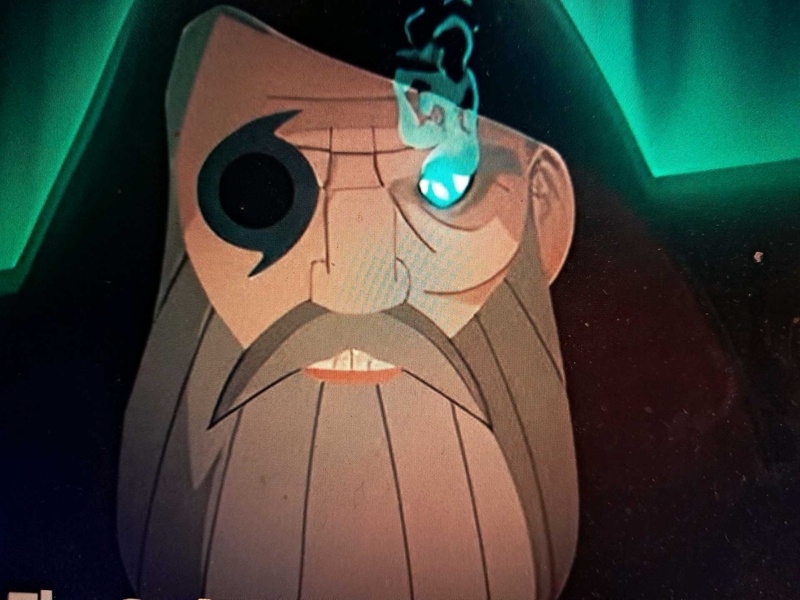
Depiction of Odin in the TV series, 'The Twilight of the Gods'. Twilight of the Gods is a mature, 2D-animated Norse mythology series created by Zack Snyder, Jay Oliva, and Eric Carrasco. It premiered on Netflix on September 19, 2024, and ran for an 8-episode first season before being canceled in November 2025.
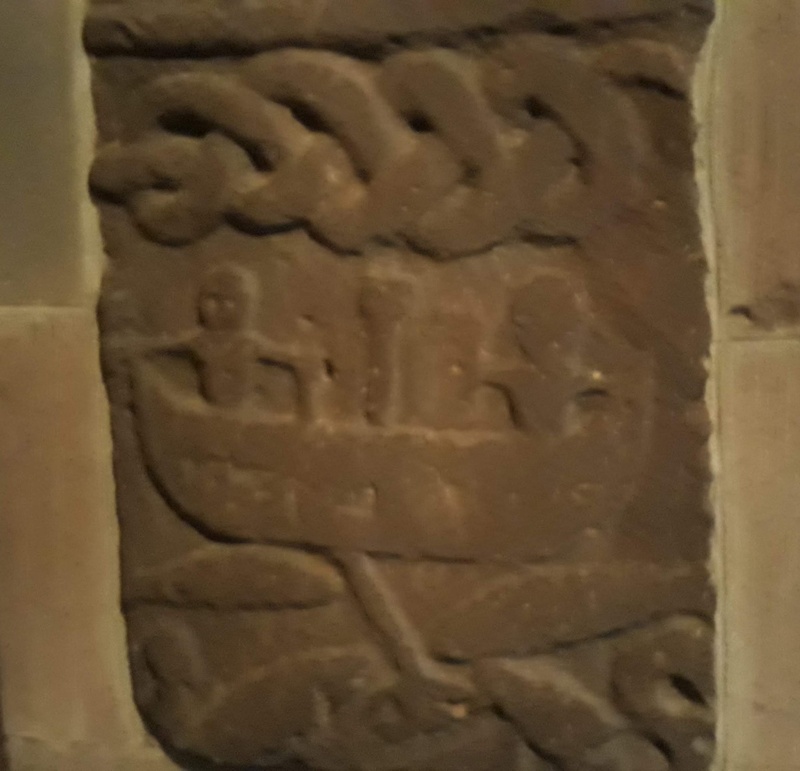
The Gosforth Fishing Stone. A 10th century stone fragment, built into St. Mary's church, Gosforth (Cumbria) which depicts Thor and Hymir out hunting the Midgard serpent.
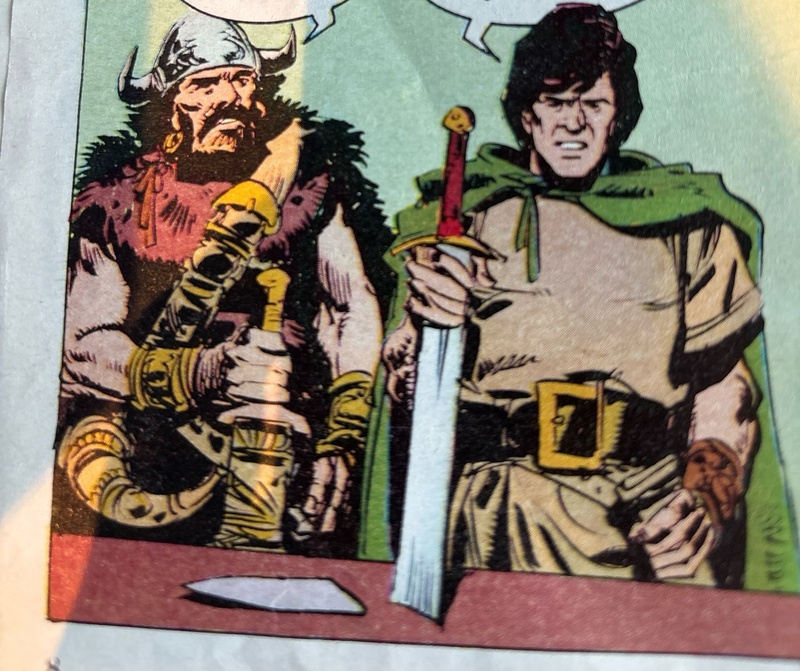
Boromir (on the left) is depicted in clothing reminiscent of cliché „Nordic“ medieval clothing. It is a panel from page 8 of the 1980 Lord of the Rings comic "Föruneyti Hringsins: Níu fótgangendur”.
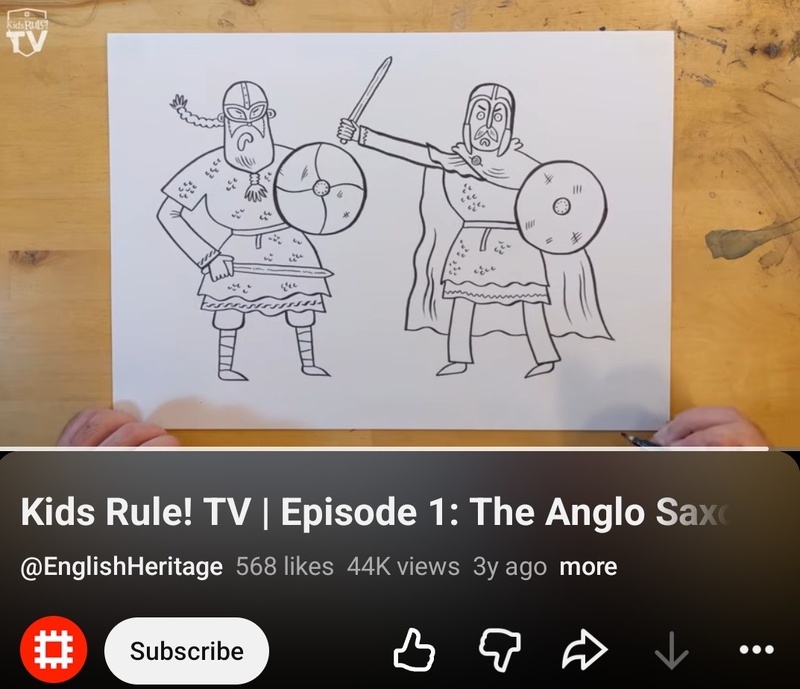
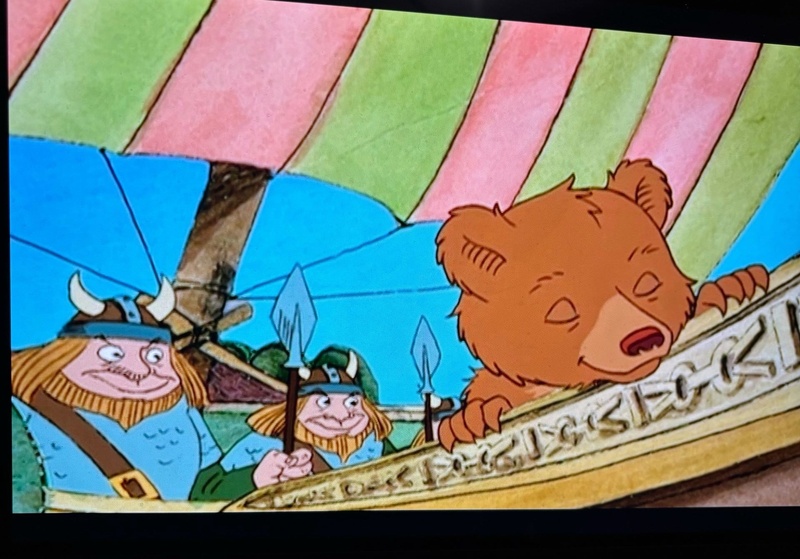
Still from season 1, episode 5 of “Little Bear”, in which Little Bear dreams of being a viking on a ship. Previous stills show a longboat with a dragon head and vikings with spears, wearing horned helmets. Episodes available on YouTube
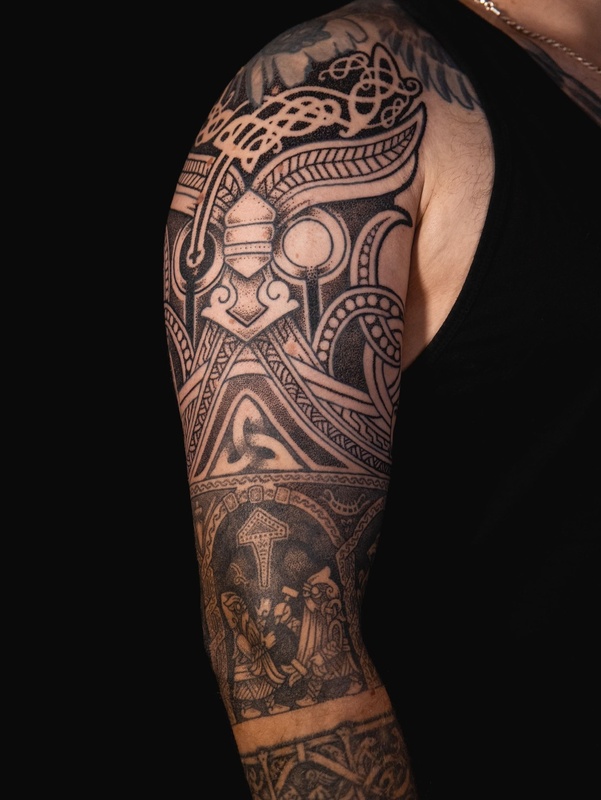
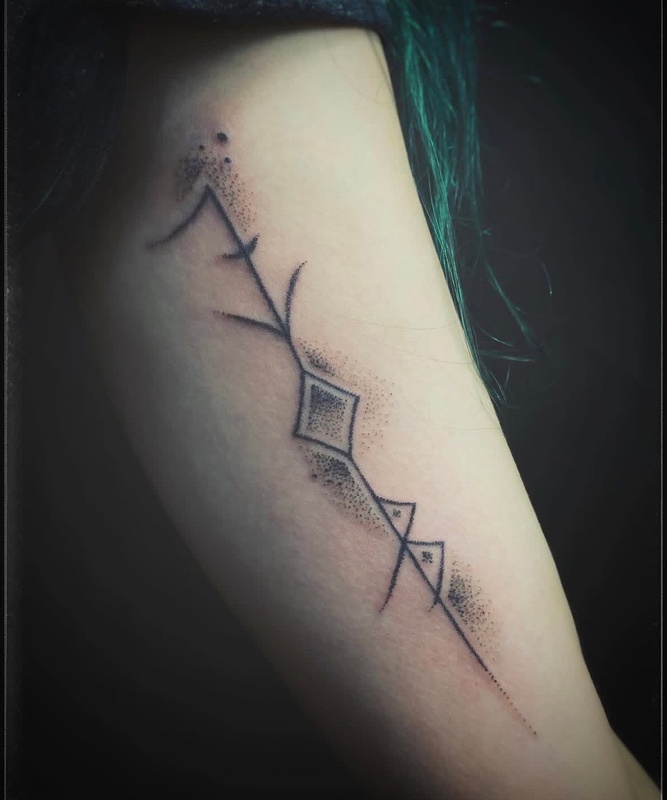
Bind rune tattooed by Hrafnhildur (Habba Nero Handpoke) in Reykjavik in Summer 2021.
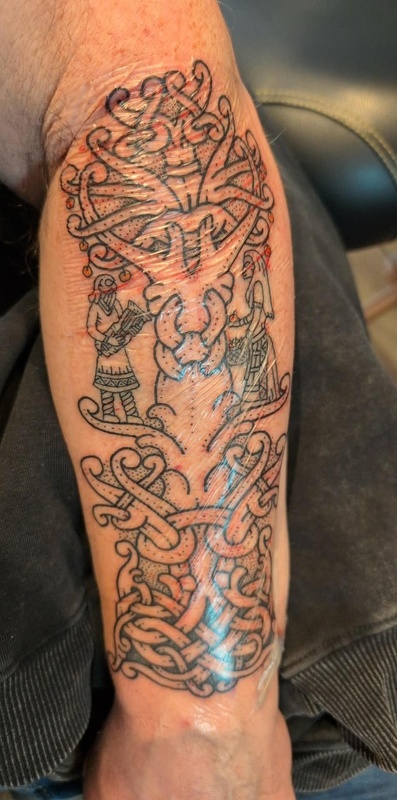
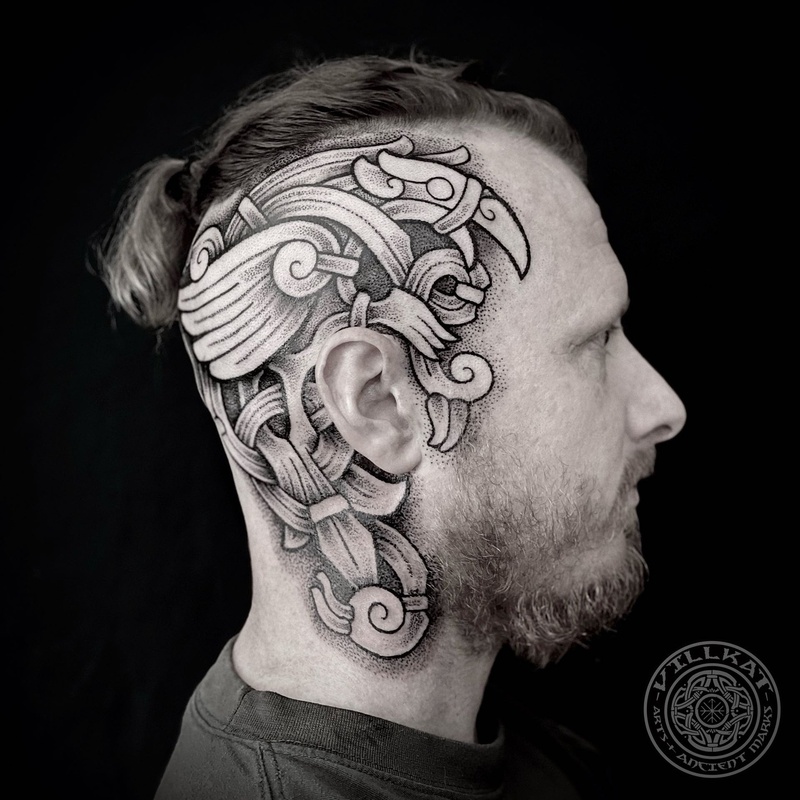
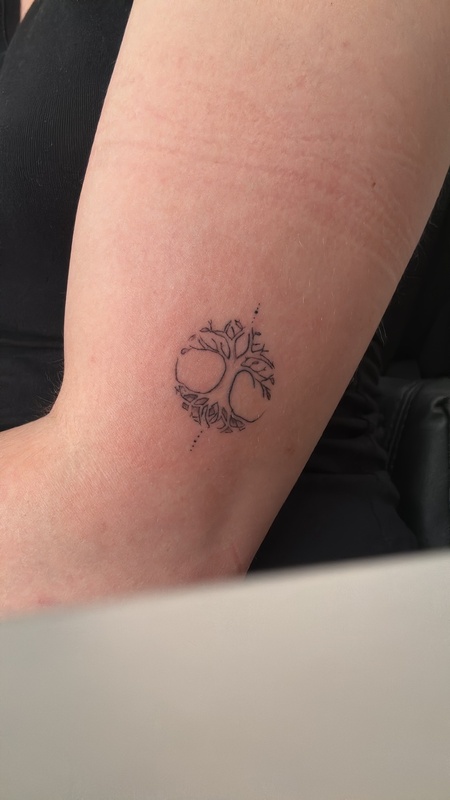
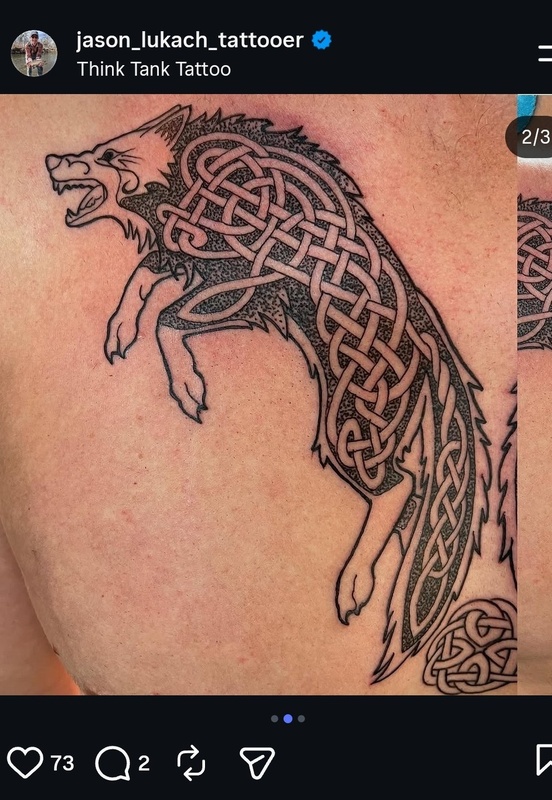
Bindrunes are popular choices for tattoos, and often have meanings that are very individual to the wearer.
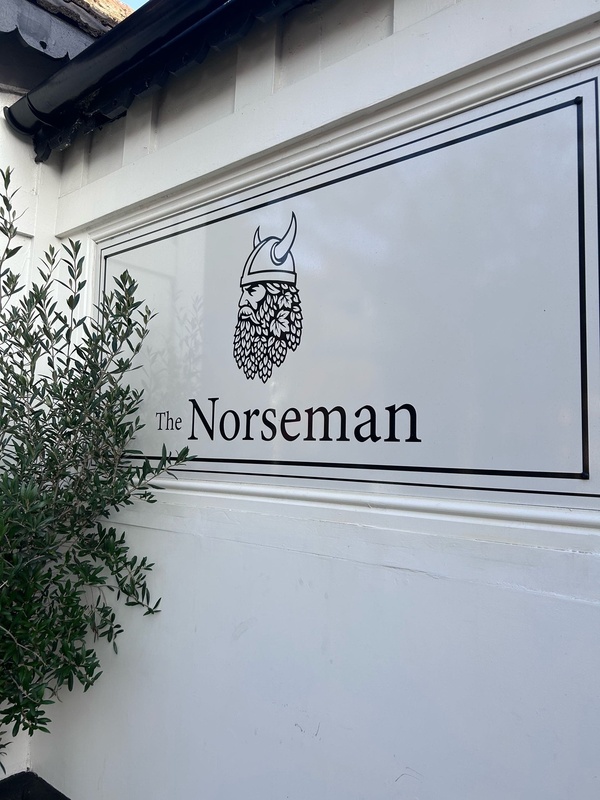
Exterior sign for The Norseman, a pub in Crosby, Liverpool. The pub uses Viking imagery in its branding: a bearded male figure wearing a horned helmet. Interestingly, the figure’s beard is stylised with shapes resembling hops. The choice of name also has a particular local resonance, as Crosby itself is a place-name of Old Norse origin, deriving from Krossabýr, meaning ‘village or settlement with a cross’.
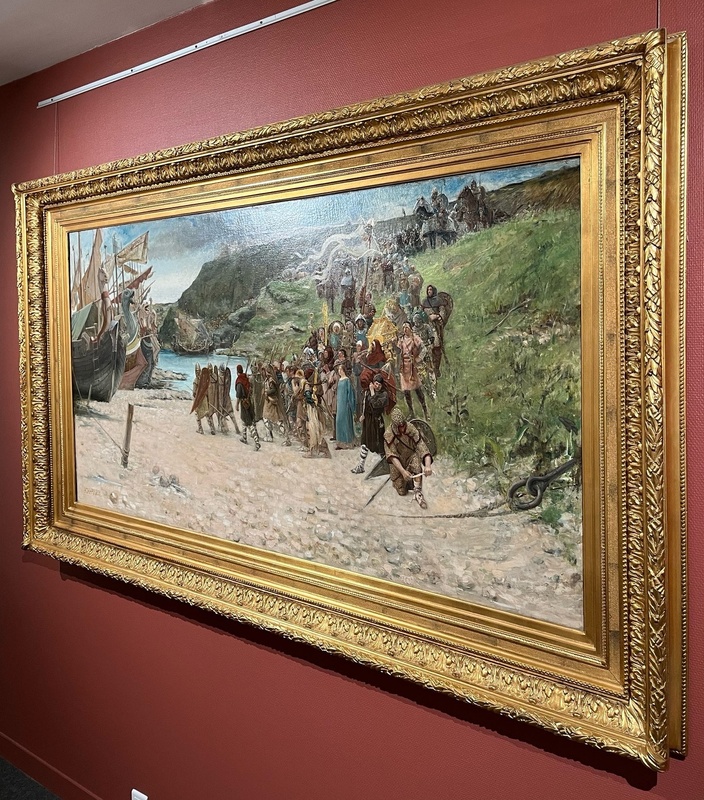
A history painting of a Viking raid, titled "Les Normands revenant du pillage" (The Normans Returning from Pillage) (1880-81), by the artist Henri-Georges Charrier.