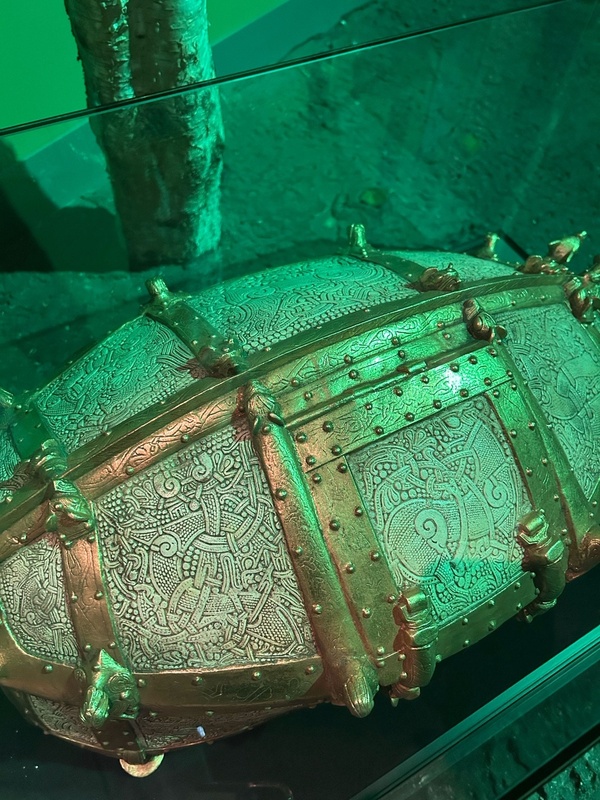
Codex Regius of the Poetic Edda as displayed in 2026 at the Edda Building in Reykjavik, Iceland.
This is one of the most famous Icelandic manuscripts, and the source of most poems in the Eddic tradition, as well as much of what we know about Norse myth and legend.
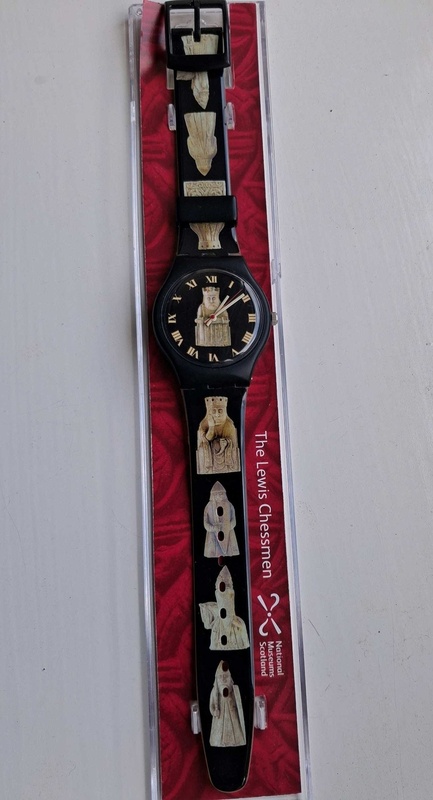
A wristwatch from the Lewis chessmen site in Uig Heritage Centre. The watch's band and face feature pictures of some of the Lewis Chessmen pieces. The original pieces were most likely made in Trondheim, Norway in the 12th century, and found in 1831 on the Isle of Lewis in the Outer Hebrides of Scotland.
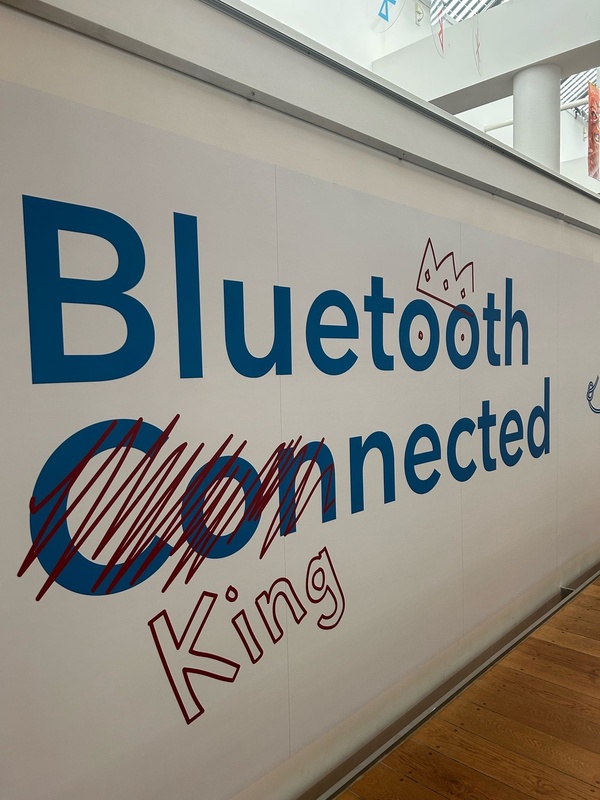
Banner for a Bluetooth exhibition in Jelling, Denmark, referencing King Harald "Bluetooth" Gormsson. "Bluetooth kingnected" celebrated the 25th anniversary of the creation of the bluetooth technology.
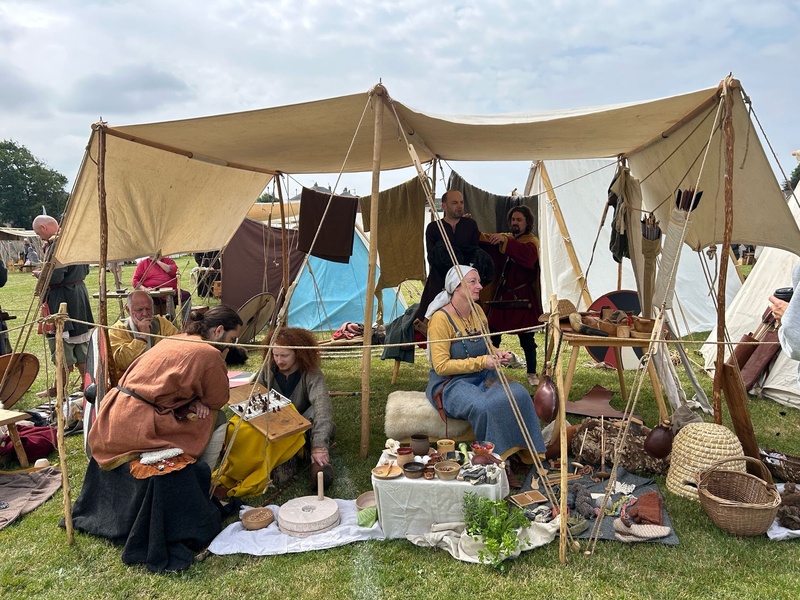
Heysham Viking Market July 2026. Pictured is a group of re-enactors with several objects, including hnefatafl, food items, yarn equipment, baskets, arrows, shields and clothing.
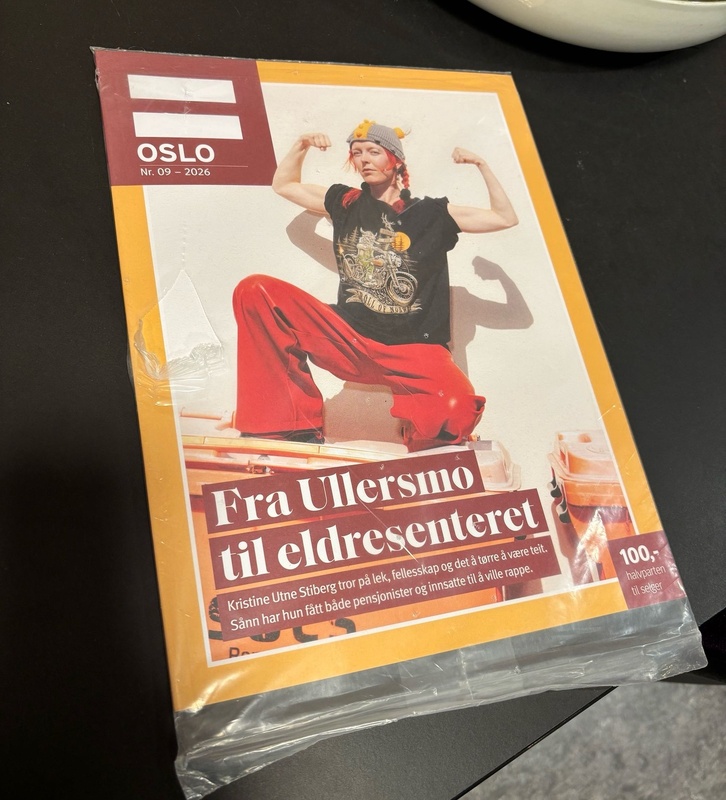
Cover of =Oslo magazine (September 2026) featuring musical artist Kristine Utne Stiberg dressed in horned helmet and t-shirt with Viking on motorbike . Title reads "Fra Ullersmo til eldresenteret" (From Ullersmo prison to the elderly center).
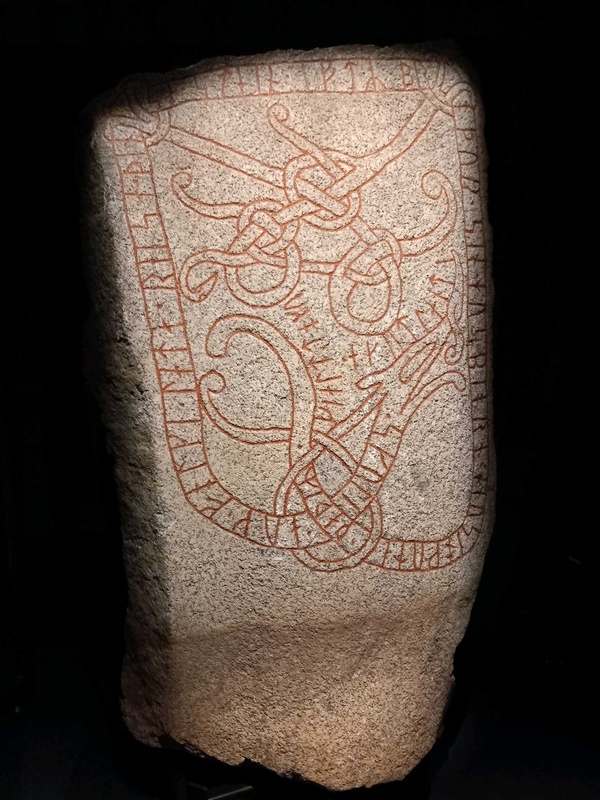
Runestone from the collection of the Historiska Museet, Stockholm, Sweden.
Torsätra
Västra Ryds socken
Also known as:
L 325
B 271
Rune reading
· skuli · auk · folki · lata · reisa · þinsa · stein · iftʀ · broþur · sin · husbiorn · hn us| |siok · uti · þa þiʀ · kialt · toku · a kutlanti ·
Old West Norse
Skúli ok Folki láta reisa þenna stein eptir bróður sinn Húsbjǫrn/Ásbjǫrn. Hann var sjúkr úti, þá þeir gjald tóku á Gotlandi.
Runic Swedish
Skuli ok Folki lata ræisa þennsa stæin æftiʀ broður sinn Husbiorn/Asbiorn. Hann vas siukʀ uti, þa þæiʀ giald toku a Gutlandi.
English
Skúli and Folki have raised this stone in memory of their brother Húsbjǫrn/Ásbjǫrn. He was sick abroad when they took payment on Gotland.
Runic inscription U 614 in the latest (2020) edition of the Scandinavian Runic-text Database, Department of Scandinavian Languages, Uppsala University. http://kulturarvsdata.se/uu/srdb/7584fb41-3944-4f94-bf6a-46a6d420ccfe
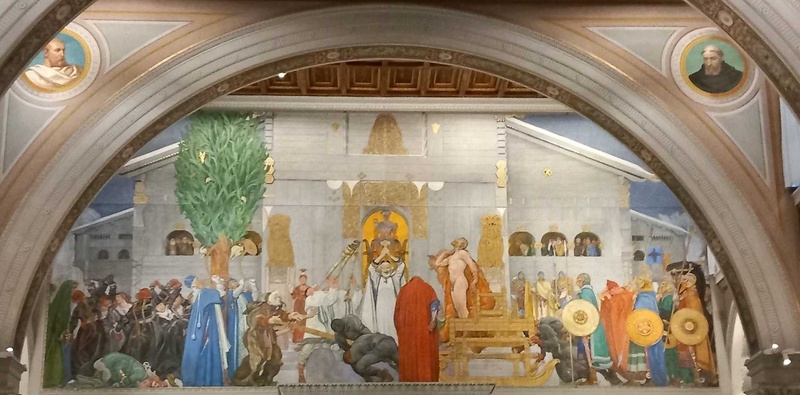
Midvinterblot (Swedish for "Midwinter sacrifice") is a painting by the Swedish painter Carl Larsson, created in 1915 for the hall of the central staircase in Nationalmuseum in Stockholm.
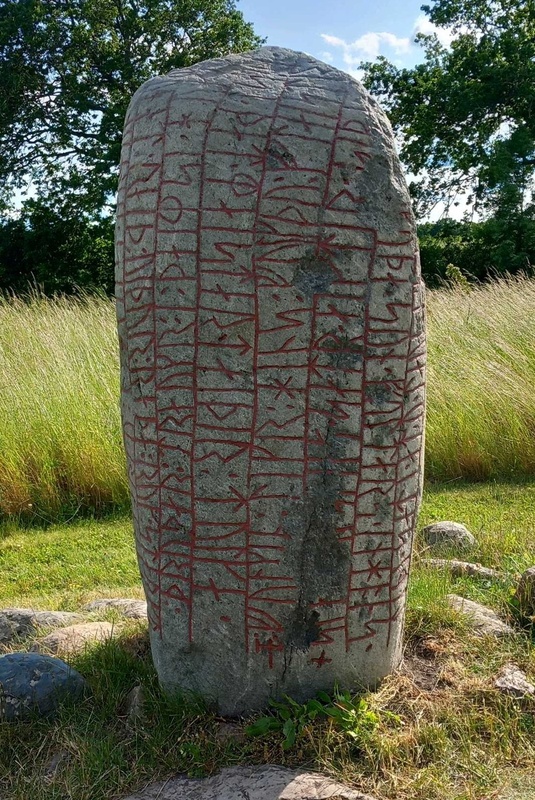
The Karlevi Runestone, designated as Öl 1 by Rundata, is commonly dated to the late 10th century and located in Karlevi on the island of Öland, Sweden.
English translation of text:
§A This stone is set up in memory of Sibbi Góði/Goði, son of Foldarr, and his retinue set on … Hidden lies the one whom followed (most know that) the greatest deeds, Þrud's warrior of battles, in this mound. Never will a more honest, hard-fighting 'wagon-Viðurr' upon Endill's expanses rule the land in Denmark. [This stone is placed in memory of Sibbi the good, Fuldarr's son, and his retinue placed on … He lies concealed, he who was followed by the greatest deeds (most men knew that), a chieftain (battle-tree of [the Goddess] Þrúðr) in this howe; Never again shall such a battle-hardened sea-warrior (Viðurr-of-the-Carriage of [the Sea-king] Endill's mighty dominion ( = God of the vessels of the the sea) ), rule unsurpassed over land in Denmark.] §B {In the name of Jesus(?) …}
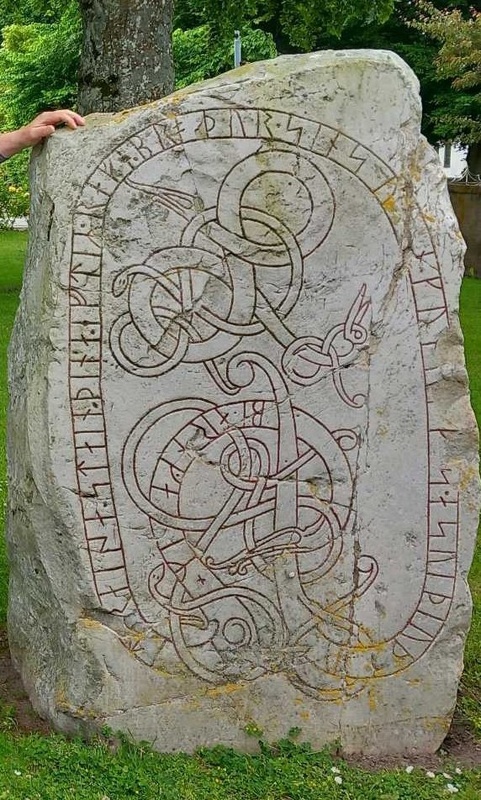
Simrisstenen- Runestone (DR 344 ( at the Simrishamn church, Sweden.
Runic text
· biarngaiʀ × lit (·) raisa · stain · þina · eftiʀ · rafn · broþur · sin · su(i)n · kun(u)--s · a suiþiuþu
English translation
Bjǫrngeirr had this stone raised in memory of Hrafn, his brother, Gunnulfr's lad in Sweden.