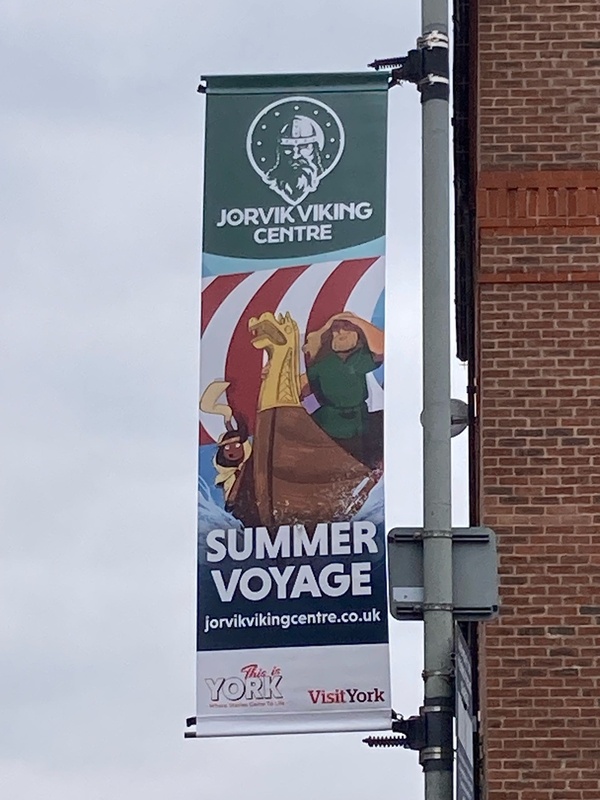
Signage to the Jorvik Viking Centre including advertisement for the Summer Voyage, This is York and Visit York. The advertisement includes a cartoon of a ship with sails and two Vikings
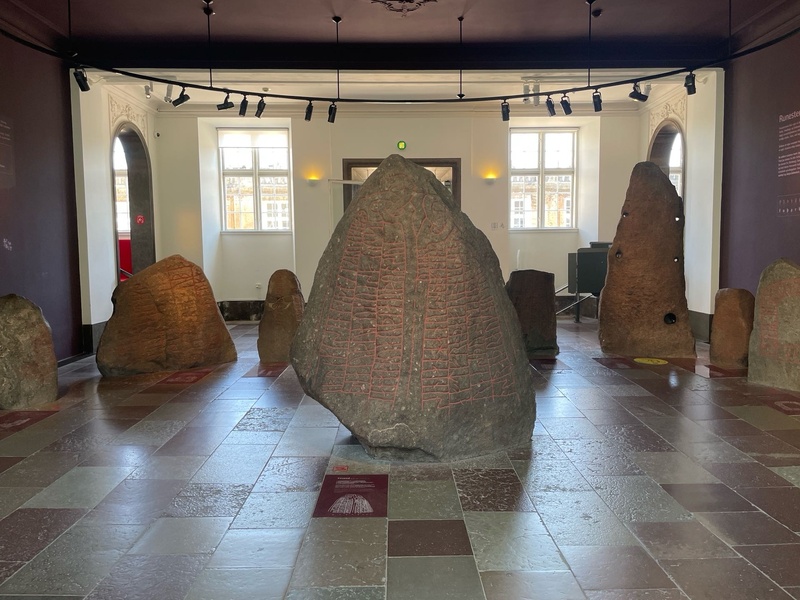
Picture of several runestones located at Nationalmuseet, the National Museum of Denmark in Copenhagen. The runestone at the forefront is the Tirsted runestone DR 216. This commemorative inscription runs on two sides of the stone, and reads:
Translitteration
§A osraþr auk hiltu(-)-ʀ ¶ raisþu stain þansi ¶ aft froþa fronti sin ¶ sin ian han uas þo foink ¶ uaiʀa §B ian han uarþ tauþr o suo¶þiauþu auk uas furs ¶ i frikis ioþi þo aliʀ uikikaʀ
English
§A Ástráðr and Hildungr/Hildvígr/Hildulfr raised this stone in memory of Fraði/Freði, their kinsman. And he was then the terror(?) of men. §B And he died in Sweden and was thereafter the first(?) in(?) Friggir's(?) retinue(?) and then: all vikings.
The Broby Bro Runestones—U 135, U 136, and U 137—are a group of Late Viking Age memorial stones in Täby, Uppland, Sweden. Dating to around AD 1020–1050, they commemorate members of the influential Jarlabanke family and include inscriptions about Estrid and her husband Östen, who is remembered for travelling to Jerusalem and dying in the Byzantine Empire.
U 135
Runes:
× ikifastr × auk × austain × auk × suain × litu · raisa + staina þasa · at · austain faþur × sin × auk × bru × þasa karþu × auk × hauk þana ×
Rune text transliteration:
Ingifastr ok Eysteinn ok Sveinn létu reisa steina þessa at Eystein, fǫður sinn, ok brú þessa gerðu ok haug þenna.
English translation:
Ingifastr and Eysteinn and Sveinn had these stones raised in memory of Eysteinn, their father, and made this bridge and this mound.
U 136
Runes:
× astriþr × la(t) + raisa × staina × þasa × [a]t austain × buta sin × is × suti × iursalir auk antaþis ub i × kirkum
Rune text transliteration:
Ástríðr lét reisa steina þessa at Eystein, bónda sinn, er sótti Jórsalir ok endaðist upp í Grikkjum.
English translation:
Ástríðr had these stones raised in memory of Eysteinn, her husbandman, who attacked Jerusalem and met his end up in Greece.
U 137
Runes:
· aystin · auk · astriþr · raistu · stina · aftir · kak · sun · sin ·
Rune text transliteration:
Eysteinn ok Ástríðr reistu steina eptir Kag(?)/Gag(?), son sinn.
English translation:
Eysteinn and Ástríðr raised the stones in memory of Kagr(?)/Gagr(?), their son.
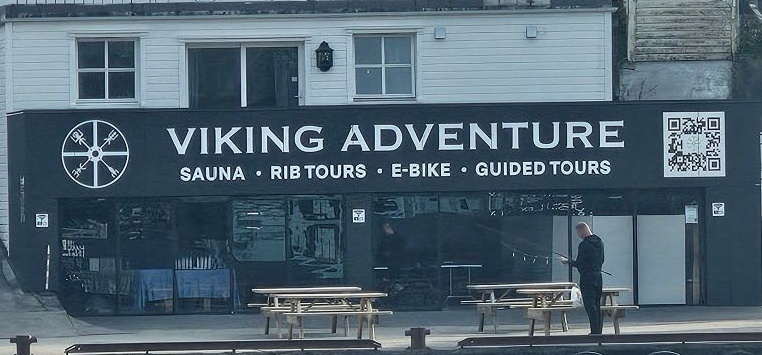
Viking Adventure Centre in Haugesund, Norway. The sign features the name along with a circular symbol on the left that resembles the 'Vegvisir' Icelandic stav.
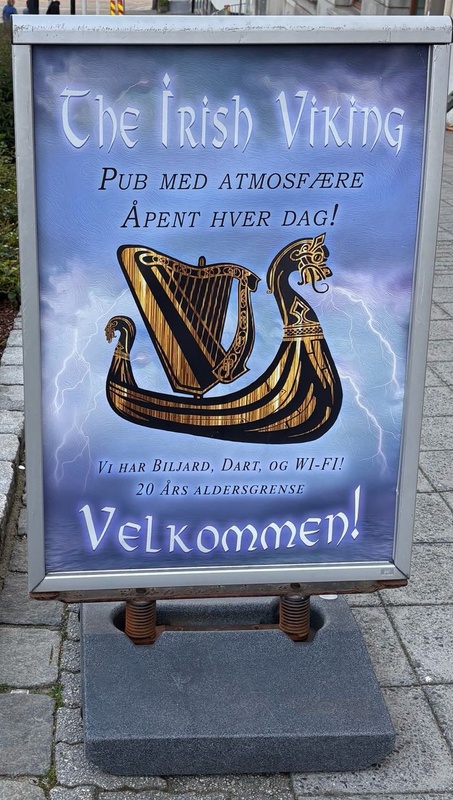
The Irish Viking Pub in Haugesund, Norway. “ Pub med atmosfære, åpent hver dag”- ”Pub with atmosphere, open every day”. The post has a Viking longship below a Harp.
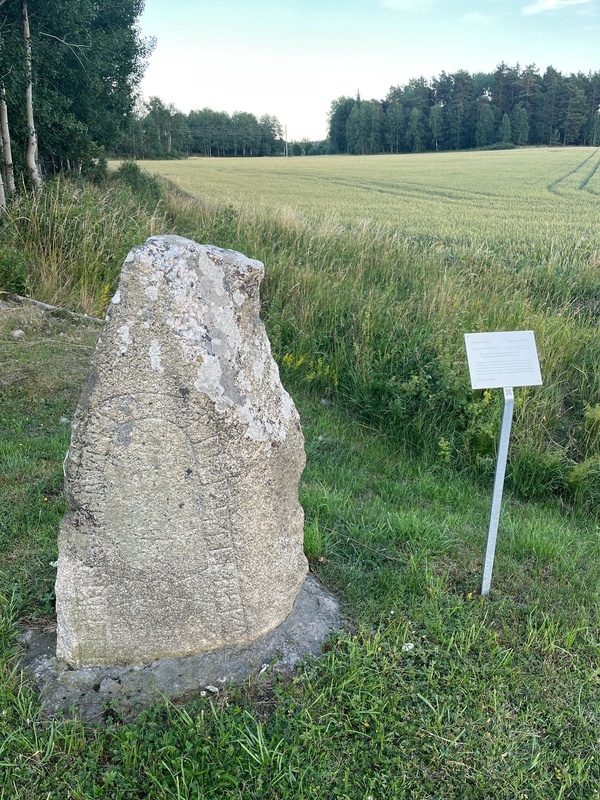
Runestone U 150 is a Late Viking Age granite runestone dating to around AD 1010–1050, located in Täby, Uppland, Sweden. The inscription commemorates Sveinn, stating that Jarlabanki and Fastvé raised the stone in memory of their son.
Runes:
[· iarla·b]aki · auk · fastui · litu · raisa · stina · aftiʀ [· suain · sun · sin]
Rune text transliteration:
Jarlabanki ok Fastvé létu reisa steina eptir Svein, son sinn.
English translation:
Jarlabanki and Fastvé had the stones raised in memory of Sveinn, their son.
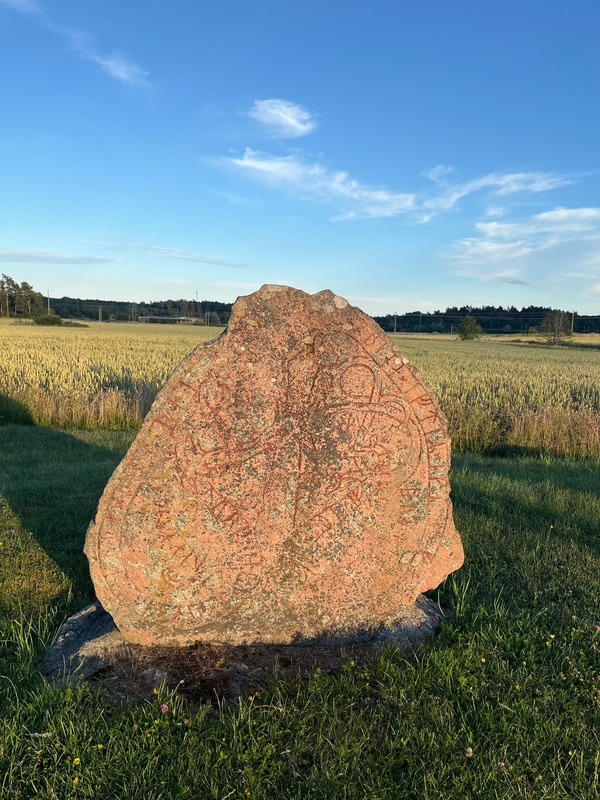
Runestone U 151 is a Viking Age runestone located in Täby, Uppland, Sweden, featuring carved runic inscriptions with an ornate serpent motif surrounding a central cross.
Runes:
× þurbiarn × uk × ikiþura × litu × raisa × ist[ai]n × þina × iftiʀ × ikul × faþur sin × uk × irinui × iftiʀ × buanta sin × uk afti(ʀ) ---
Rune text transliteration:
Þorbjǫrn ok Ingiþóra létu reisa stein þenna eptir Ígul, fǫður sinn, ok Erinvé eptir bónda sinn ok eptir …
English translation:
Þorbjǫrn and Ingiþóra had this stone raised in memory of Ígull, their father; and Erinvé in memory of her husbandman and in memory of …
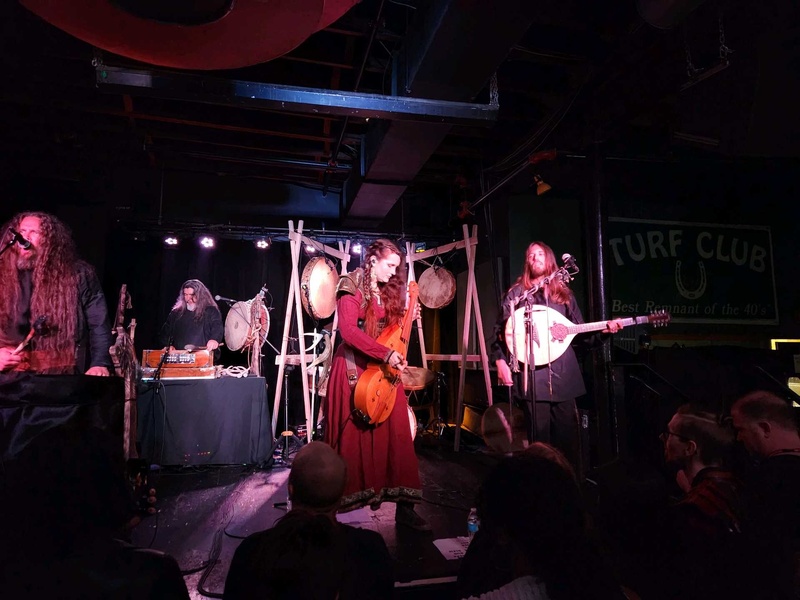
The Nordic folk band SKÁLD performing live at the Turf Club in St. Paul, Minnesota, featuring traditional instruments, drums, and Viking-inspired attire.
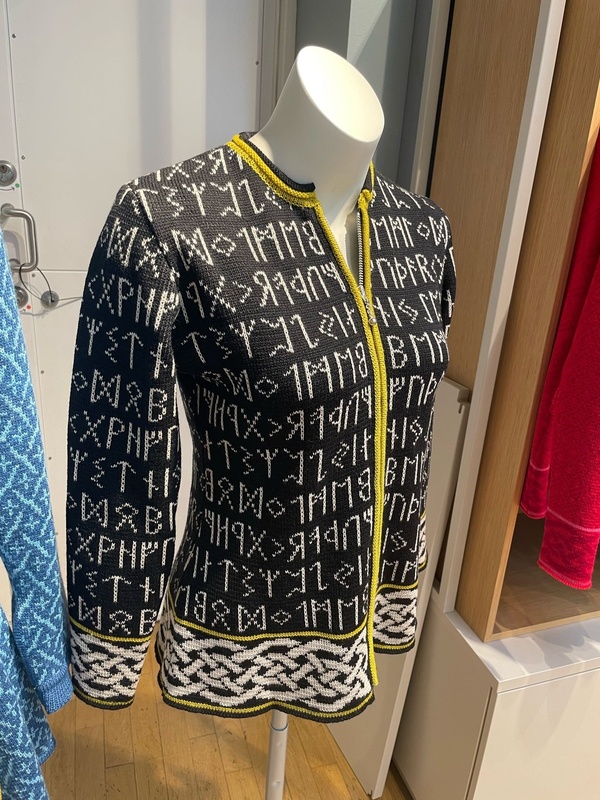
A knitted cardigan featuring an all-over runic pattern of the elder futhark sequence, braided trim, and contrasting yellow edging, displayed on a mannequin.
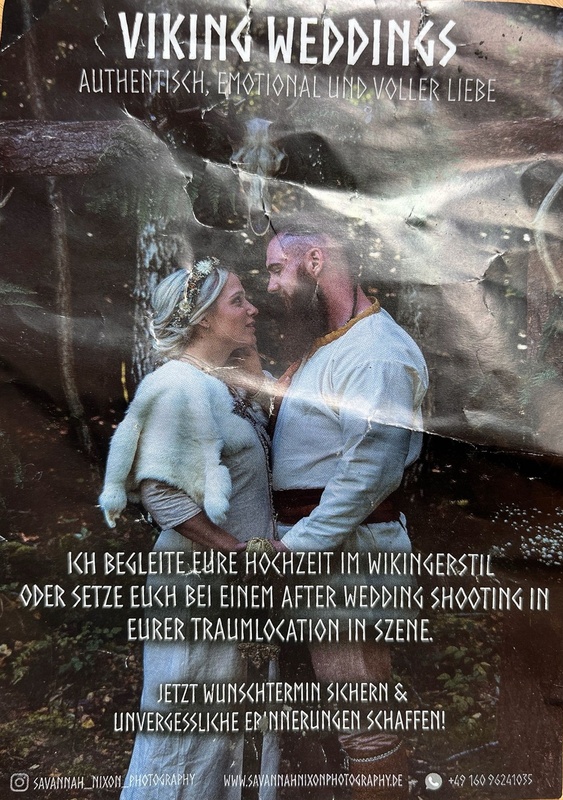
A promotional flyer advertising Viking-themed wedding photography, featuring a couple in Norse-inspired attire with German text describing the services.