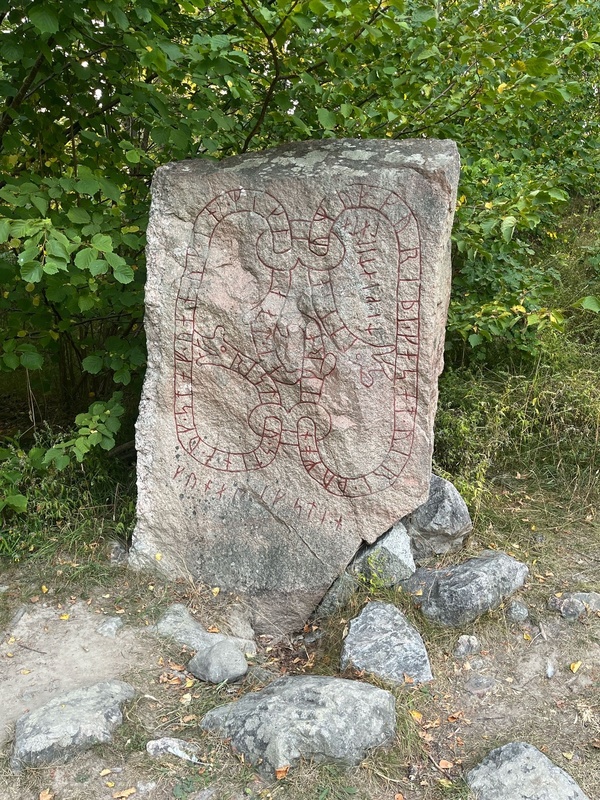
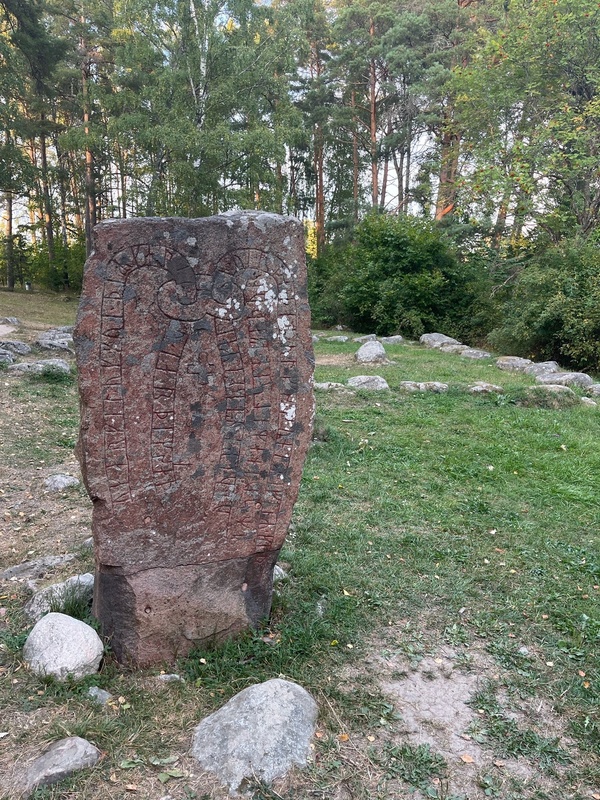
Runestone U226 found at Arkils Tingstad. Dating to approx. 1010-1050 CE. States the following in Swedish:
De reste stenar, och gjorde staven (?), också den höga, till hederstecken. även Gyrid älskade maken. Därför i tårar ska talas om honom. Gunnar högg stenen.
English translation:
They raised stones and made the staff (?), the tall one, too, into a memorial. Gyrid, too, loved her husband. Therefore, he shall be spoken of with tears. Gunnar carved the stone.
Forms a monument together with U 225.
Runestone U225 found at Arkils Tingstad ( . Dating to approx. 980–1015 AD. Features a cross and states the following in Swedish:
Ulvkel och Arnkel och Gye de gjorde här tingsplats... Ej skall en större minnesvård finnas än den Ulvs söner gjorde efter (honom), raska svenner, åt sin fader.
English translation:
Ulvkel and Arnkel and Gye made this to a thingwall. No greater memorial shall exist than the one Ulv’s sons—valiant youths—raised for their father.
Forms a monument together with U 226. Executed by the same carver who signed that stone: Gunnar.
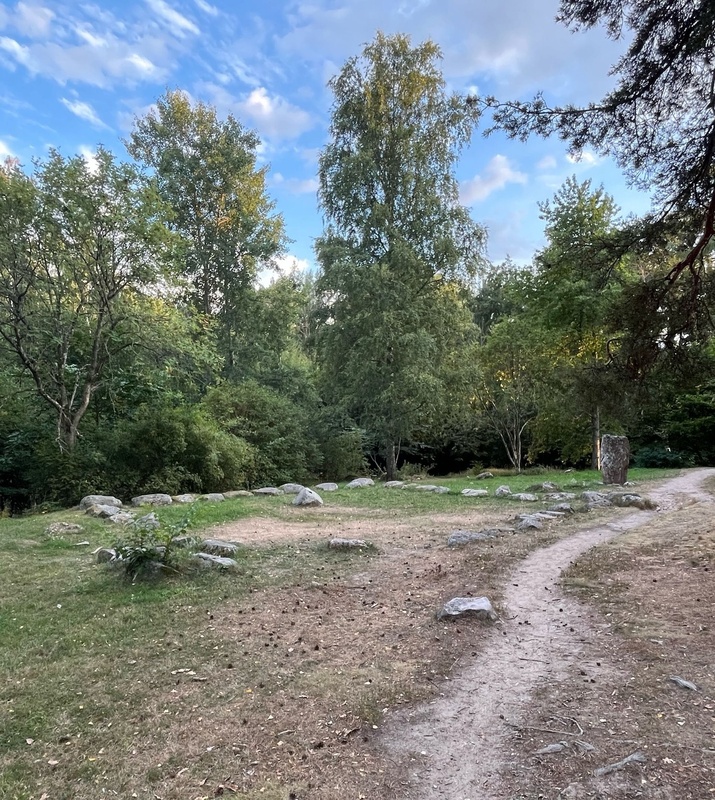
Arkils tingstad, a historical Viking Age assembly or meeting place (thing) located in Uppland, Sweden. It consists of a square stone setting with ten-meter sides and two of the Skålhamra family's runestones. The site was built by the Skålhamra clan in the 11th century to serve as a local judicial and political meeting place for the region. More information available here: https://www.vallentuna.se/runriket/runrikets-platser/arkils-tingstad/.
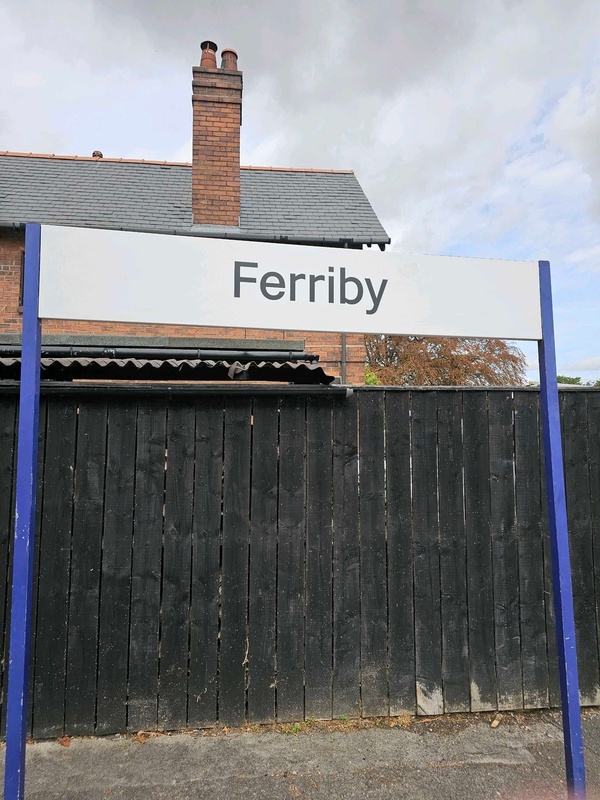
Ferriby comes from the Norse 'ferja bȳ', which means 'farm / homestead / settlement' by the ferry'. North and South Ferriby are on opposite banks of the Humber Estuary, an important raiding and trading route into Northern England.
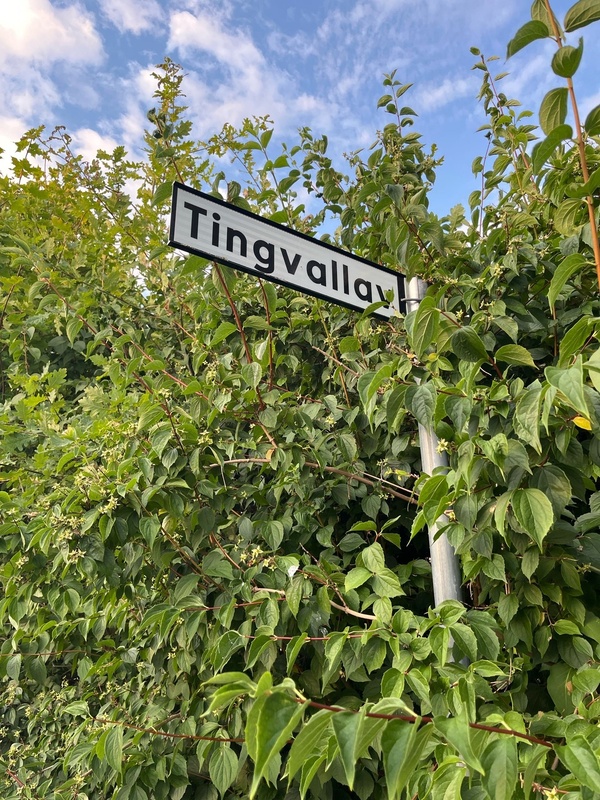
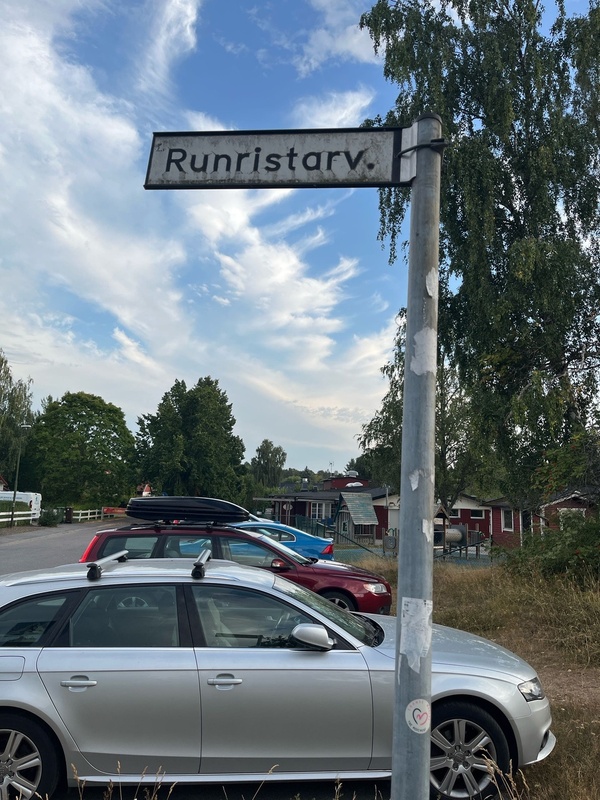
Tingvallav. street sign found in Sweden. Tingvalla translates to "the field of the assembly" or "meeting place of the thing" coming from Old Norse (þingvǫllr).
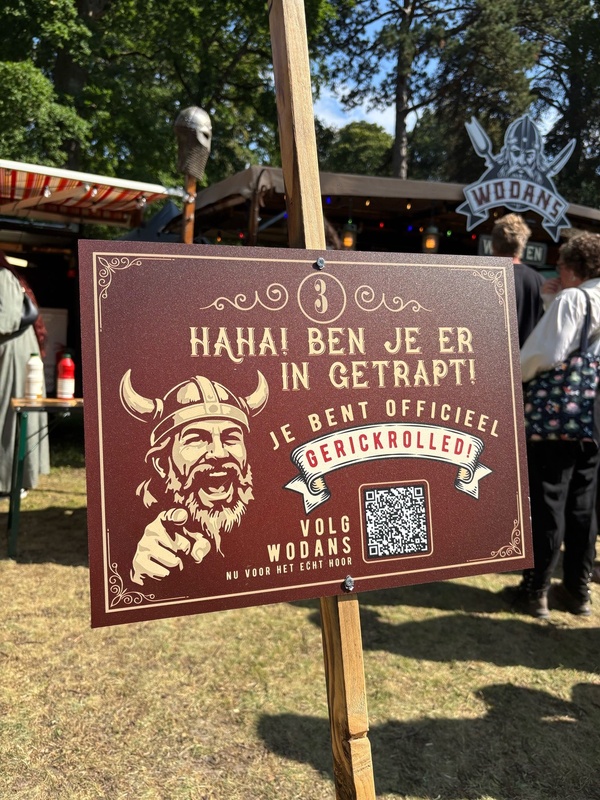
The sign features a humorous Dutch message that translates to: "Haha! You fell for it! You've officially been Rickrolled! Follow Wodans for real now."The Joke ("Gerickrolled") uses a Viking illustration paired with a playful spin on the famous internet prank ("Rickrolling"). This sign however is instead a promotional sign by Wodans (a Viking-themed food truck) and when scaning the QR code you are direct to their Facebook page (https://www.facebook.com/wodansvoedsel/).
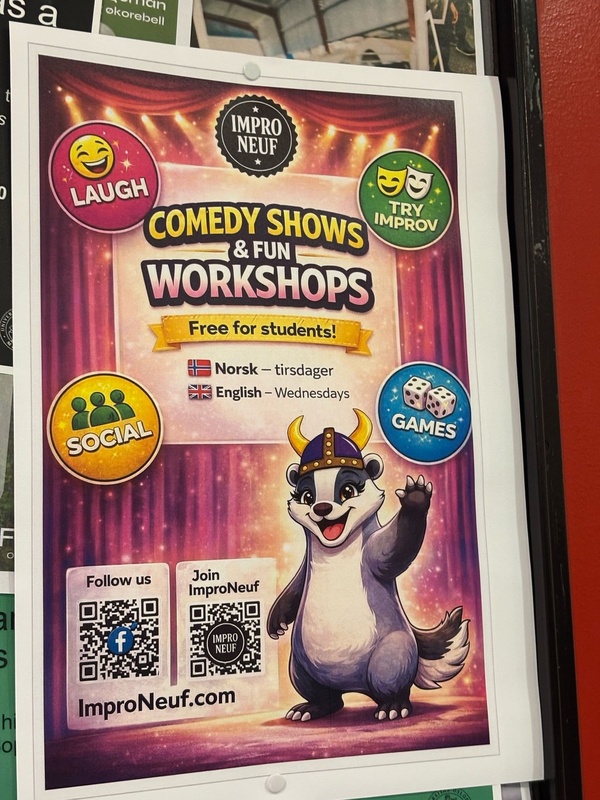
Poster advertising free comedy shows and improv workshops for students. Poster includes an image of a squirrel wearing a horned helmet. More information here: https://improneuf.com/dt/web/.
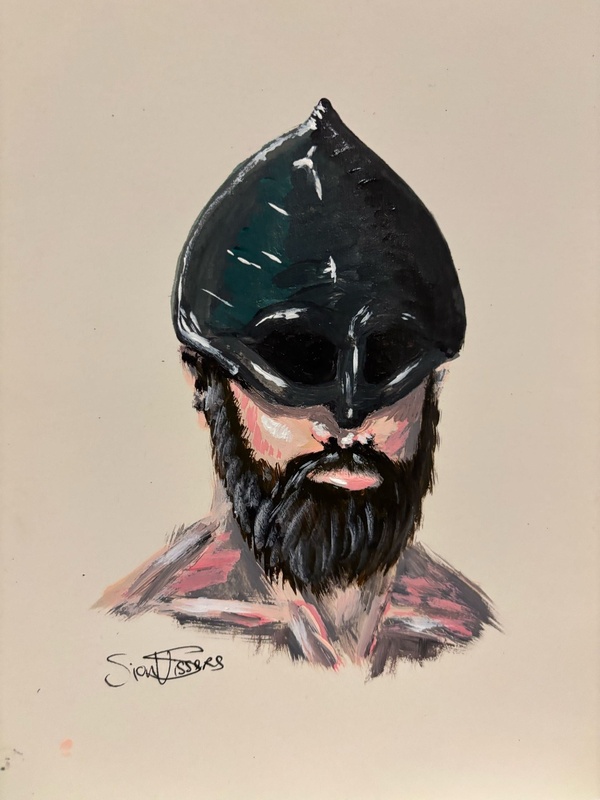
The portrait depicts a bearded man wearing a dark possibly Gjermundbu-style helmet featuring a distinctive prominent brow and eye-guard mask. Artwork is an original painting, and also signed by, by Sion Vissers.
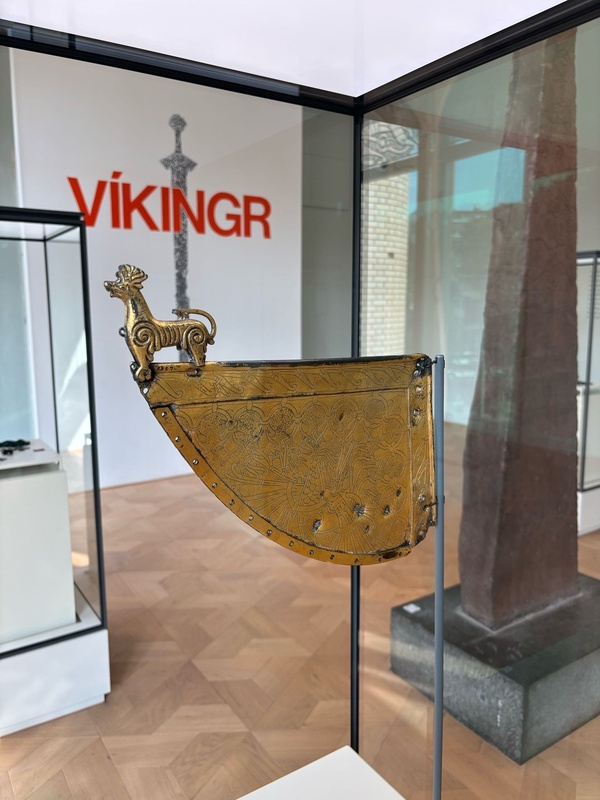
The Heggen weather vane, also known as Heggenfløyen, is a gilded copper alloy weather vane dating back to around 1050 CE. Originally mounted on a Viking longship, it was later placed atop the spire of the Heggen church in Norway. The vane features intricate engravings depicting battles between real and fantastical beasts, showcasing the Ringerike style of Norse art. It is now on display at the Museum of Cultural History in Oslo.
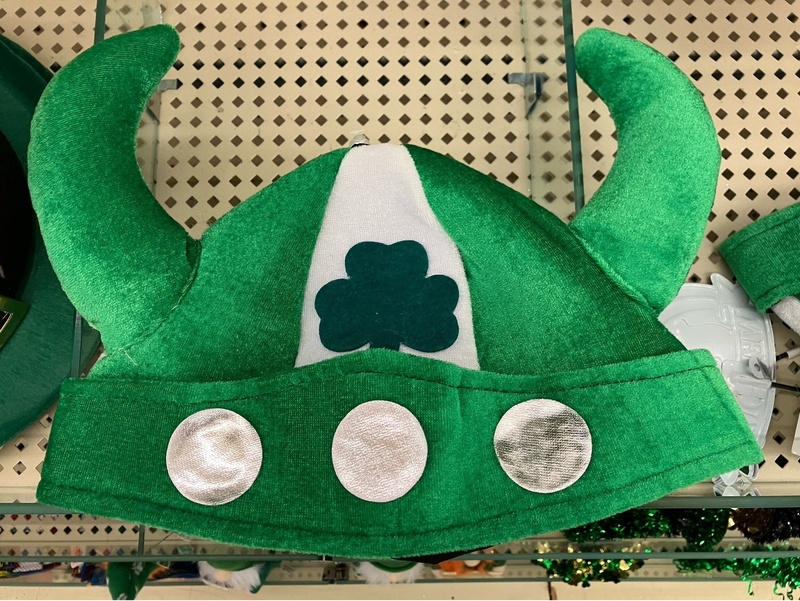
Green and white velvet Shamrock Viking hat which features horns, a white center panel with a dark green shamrock, and silver circular accents along the brim.
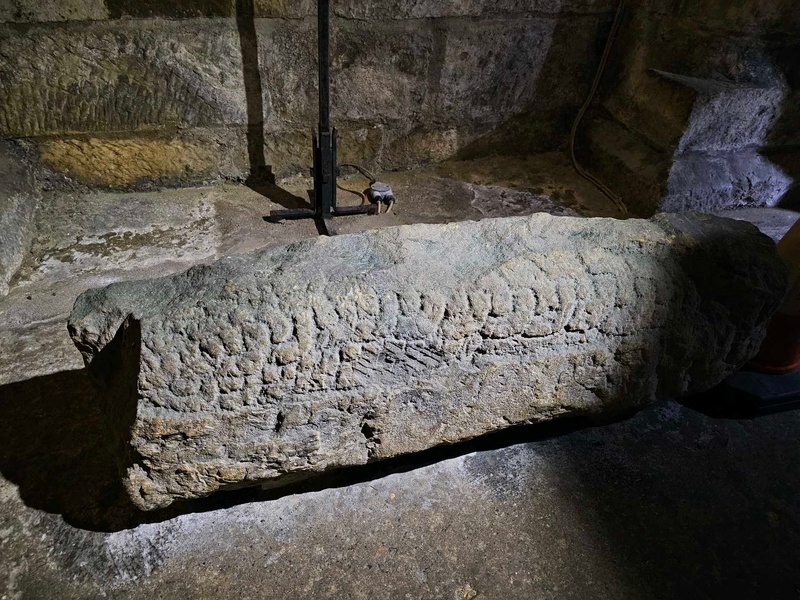
Tenth-century Anglo-Scandinavian hogback stone featuring a carving of a bear and displayed in the crypt in St Mary's Church, Lastingham (England). Hogbacks are house-shaped grave markers particular to Norse areas of settlement in the north of England and southern Scotland.
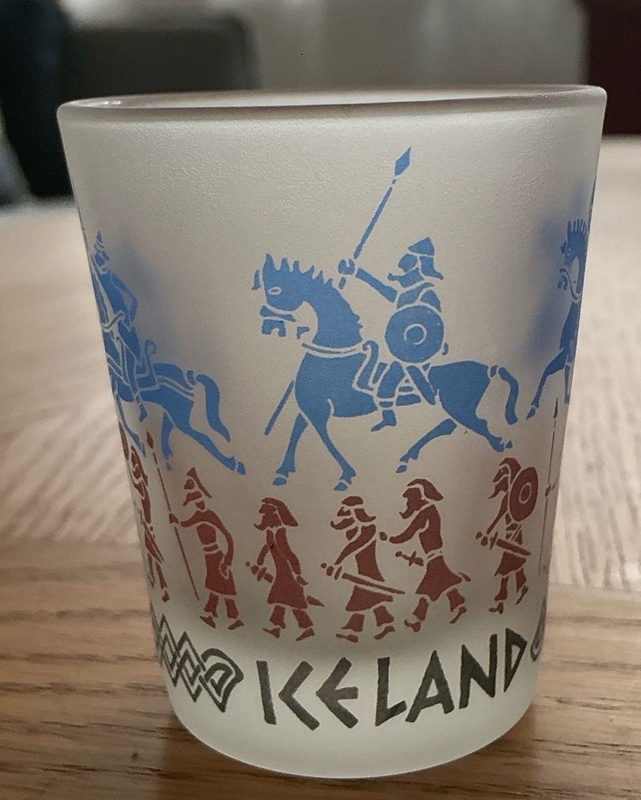
Frosted shot glass with patterns including Vikings on horses and warrior Vikings holding shields, swords and spears. Inscription says "Iceland" with a runic inspired print and pattern.
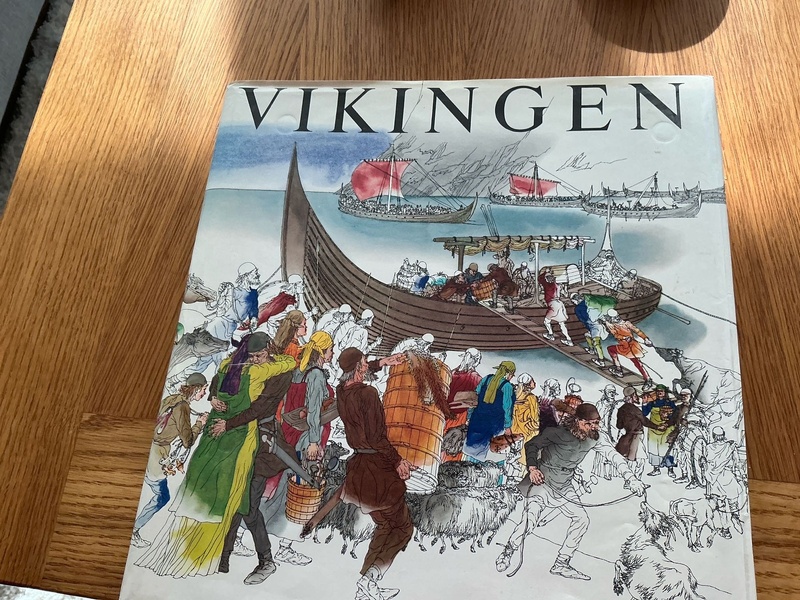
"Vikingen" (The Viking)- book providing a comprehensive look at Viking history, culture, and daily life. Author / Chief Contributor: Bertil Almgren (along with an international team of Scandinavian and English scholars)
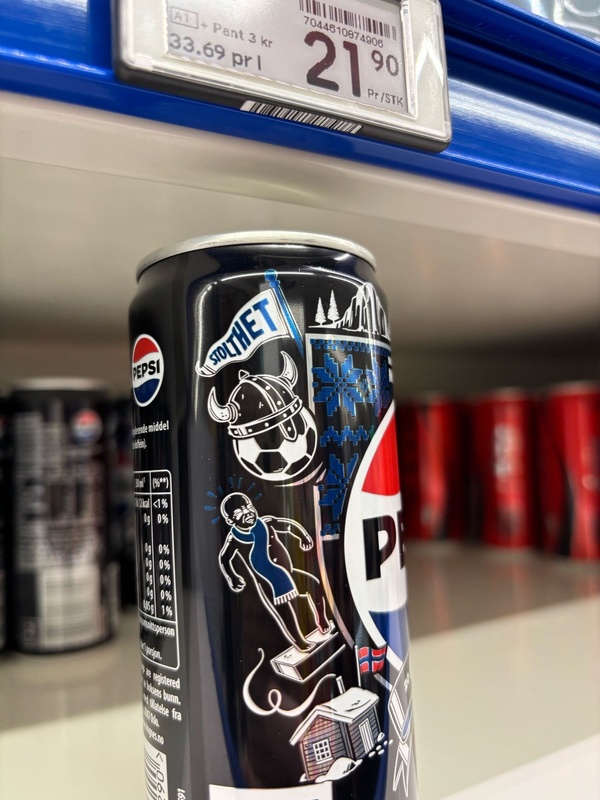
A can of Pepsi from Norway, with typical Norwegian motifs based around the theme "stolthet" (pride) made for the World cup: a fotball with a horned viking helmet, Vigeland's The Angry Boy wearing a football scarf, a cabin with the Norwegian flag on its roof, mountains, a forest, and the Selburose pattern.