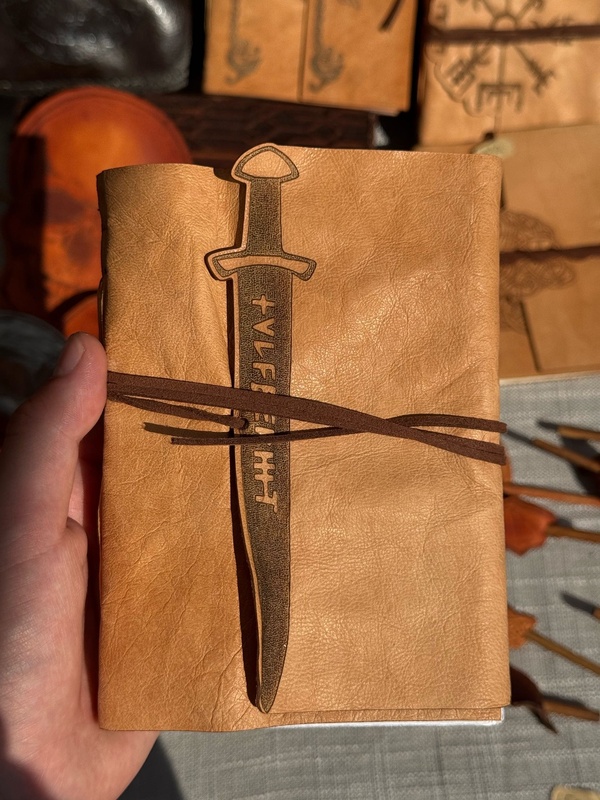
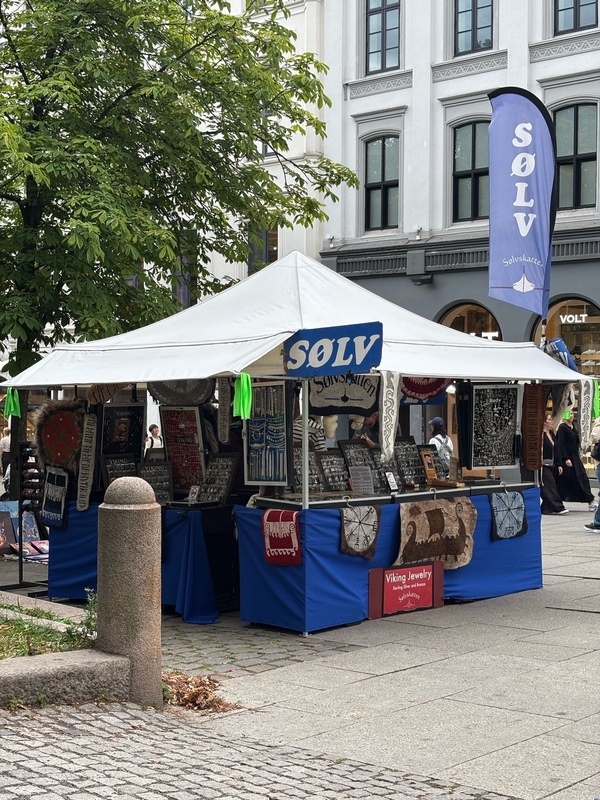
Handcrafted leather notebook with Ulfberht sword. Ulfberht swords are dated between the 9th and 11th century and named after the engraving on the blade, which is likely the name of the maker of these swords. Ulfberht is a Frankish name, suggesting Frankish production for these swords. The notebook is sold at a Viking-themed festival in Norway.
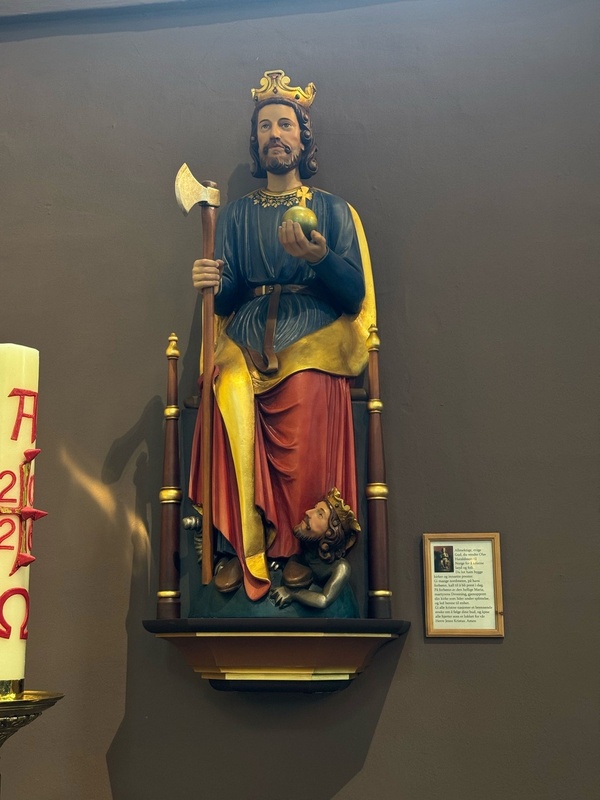
Sculpture of Saint Olaf in the St. Olavs Domkirke, Oslo. Saint Olav is here depicted holding an axe and standing triumphant over his past non-Christian Viking self.
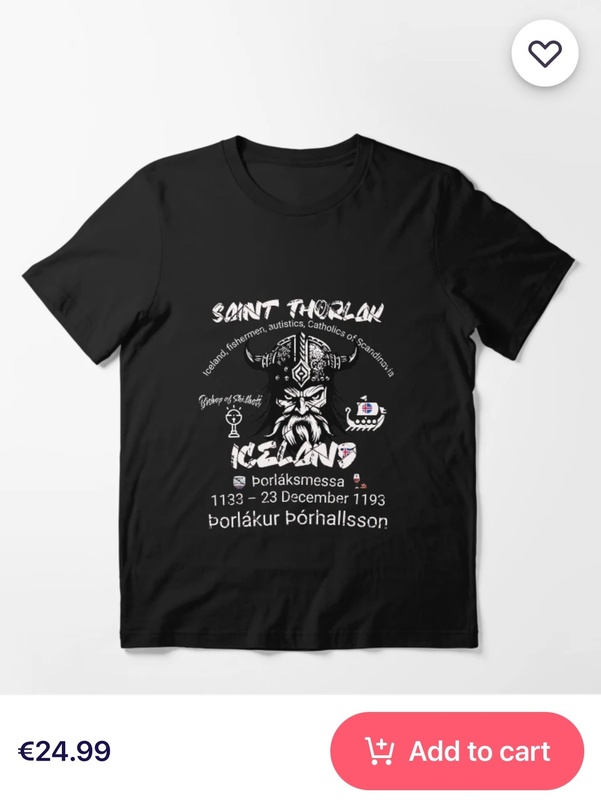
Merchandise invoking Saint Thorlak of Iceland (Þorlákur Þórhallsson, 1133-1193). The t-shirt reads "SAINT THORLAK - Iceland, fishermen, autistics, Catholics of Scandinavia - Bishop of Skálholt - ICELAND - Þorláksmessa - 1133 - 23 December 1193 - Þorlákur Þórhallsson" and is decorated with emojis of wine and viking ships. In the centre features prominently the angry head of a bearded man wearing a horned helmet.
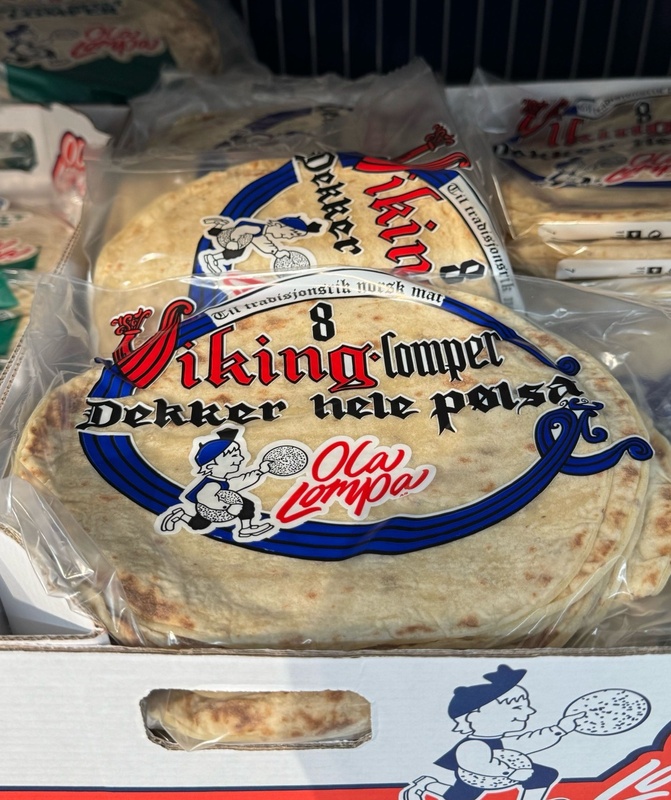
Lomper by the brand Ola Lompa, from their Viking line. Lomper are a Norwegian potato flatbread which nowadays is typically used for hot dogs, but which traditionally would go with both sweet and savoury fillings. The logo features a Viking ship as the "V" in "Viking" and uses a gothic font. The same font is used for both slogans. The first "Til tradisjonsrik norsk mat" means "For traditional Norwegian food", the second "Dekker hele pølsa" means "It covers the full sausage". This last one references the modern tradition of eating hot dogs in lomper instead of hot dog buns.
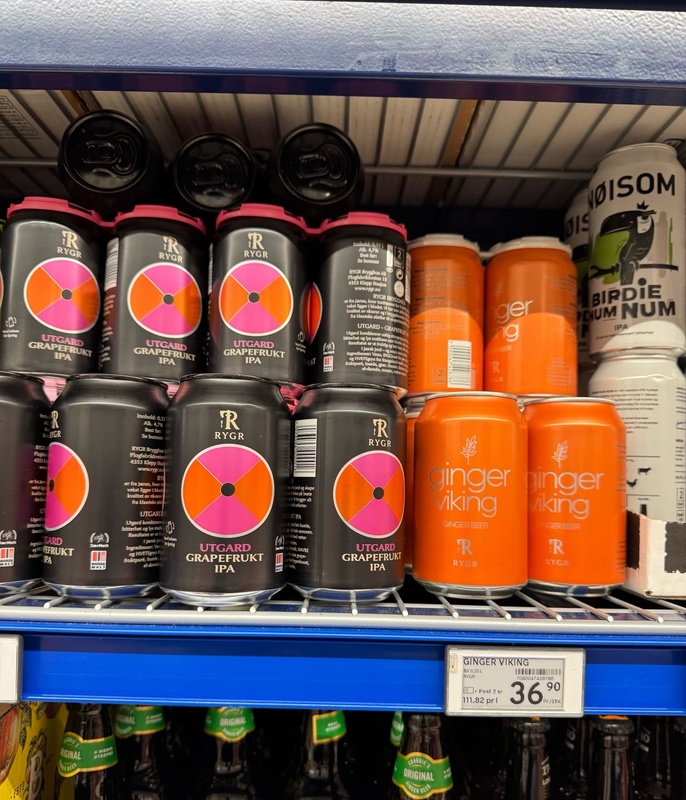
A selection of drinks by Rygr Brygghús, a Norwegian brewery. One is a grapefruit IPA named "Utgard" decorated with a viking shield, the other a ginger beer named "Ginger Viking". The brewery's logo features an axe as part of the R and the year 872. The brewery itself was founded in 2017 in Jæren (Rogaland, Norway), but they chose 872 as the year to feature on their logo as it marks the battle of Hafrssfjordr which resulted in the unification of Norway under the rule of King Harald Fairhair.
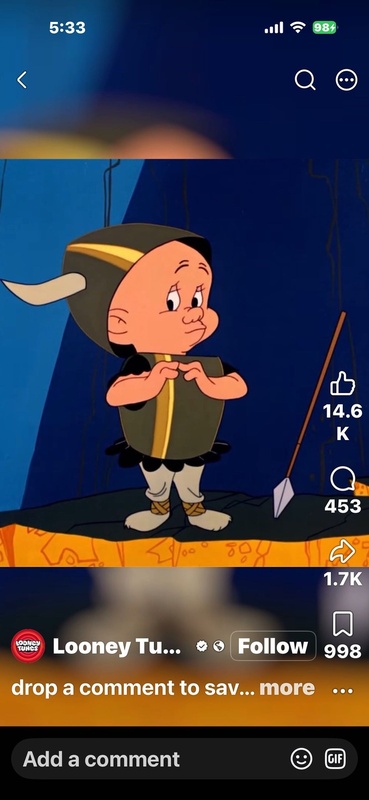
Social media screenshot of the Loony Toons character Elmer Fudd dressed as a Viking hunting Bugs Bunny or “wabbits.” Notably, he is wearing a horned helmet.
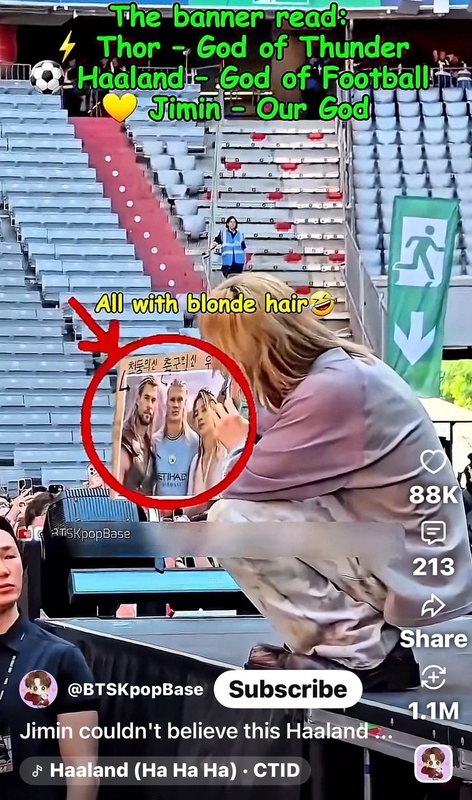
Screengrab of a social media video showing KPop star Jimin from BTS receiving a poster from a fan at a U.S. concert. The poster features Chris Hemsworth as Thor, Erling Braut Haaland and Jimin and reads: "Thor - God of Thunder, Haaland - God of Football, Jimin - our God".
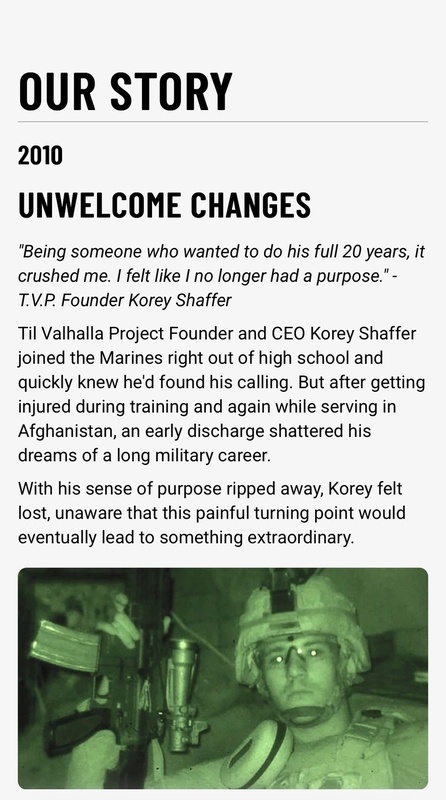
Screenshot from the Til Valhalla Project website (https://tilvalhallaproject.com/pages/about-us). The Til Valhalla Project is a US veteran-founded initiative that aims to honors fallen service members by creating and delivering memorial plaques to their families while supporting veteran mental health.
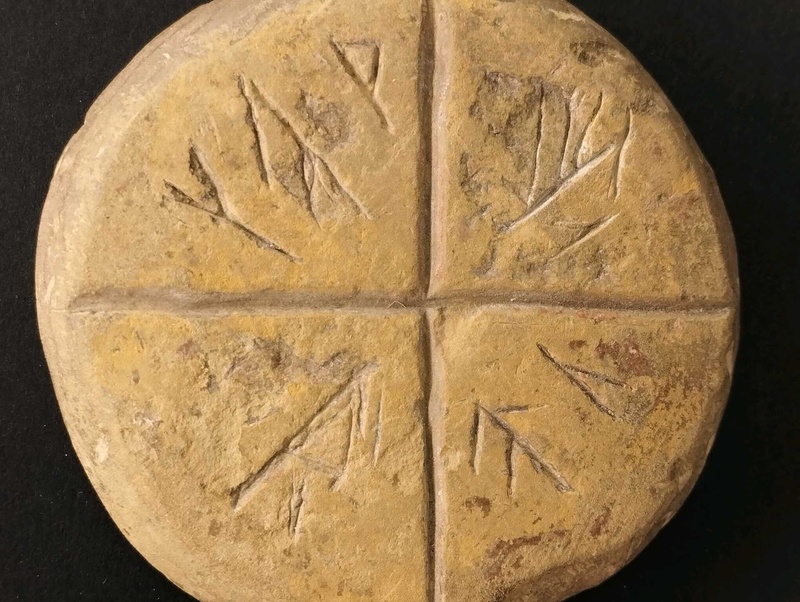
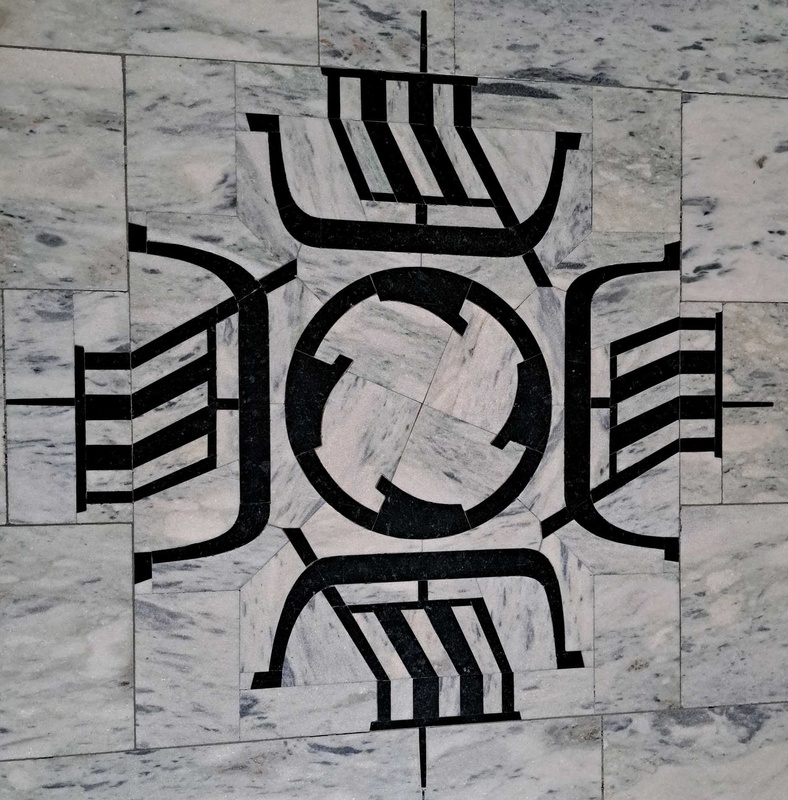
The Stackrue sandstone disc with short twig Norse runes. Discovered in the Stackrue broch near Sternness, Orkney in 19th century. On display at Skail House (https://skaillhouse.co.uk/). Made of steatite (soapstone). Estimated to date back to 9th-10th century. The runes on the Stackrue sandstone disc remain mostly undeciphered, though the characters in the first quadrant can be interpreted to mean "god".
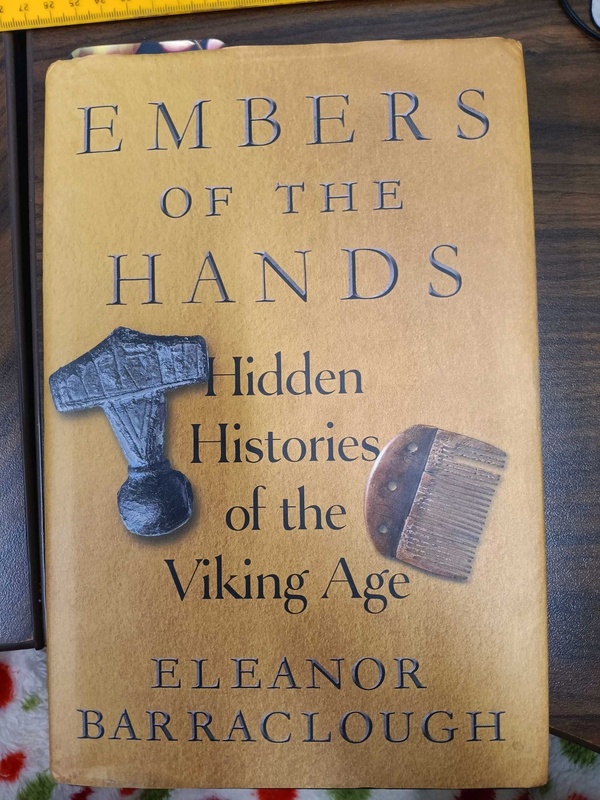
Embers of the Hands: Hidden Histories of the Viking Age by Eleanor Barraclough. Book sometimes used at Universities, in classes such as Archaeology of Vikings. It seeks to educate about Norse culture based on archaeology. Chapters include: love, travel, belief, bodies, home, play, unfreedom, and endings. United States: Published in the US in January, 2025, by W. W. Norton & Company. Published in the September, 2024, by Profile Books.
From contributor:
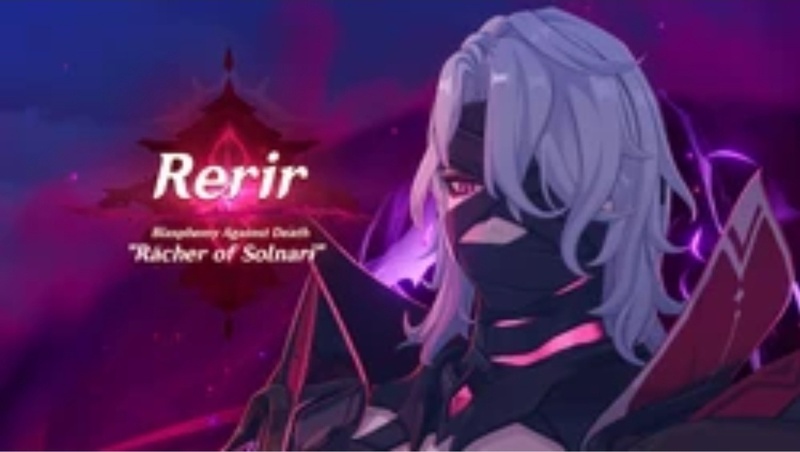
The text reads "Rerir", "Blasphemy against death" and "Racher of Solnari" as his title.
Rerir is an antagonists from Genshin Impact and has several components of his character that are drawn from Norse mythology and folklore. His name is of course the same as Rerir from Volsungasaga. He also has Racher as a title which means "Avenger" (i think it's germanic in origin though, but it matches the original Rerir's motives.) Solnari appears to be a combination of the names for the Goddess Sól and Loki's son Nari. Solnari has not appeared in the game so it's unsure if there's more norse inspiration there. In general though, Rerir is aligned with an order that's avenging a fallen civilization so the themes still stand.
Rerir's weapon, a polearm called Barnstokkr, is named after the tree in Volsungasaga that's very central to the plot.
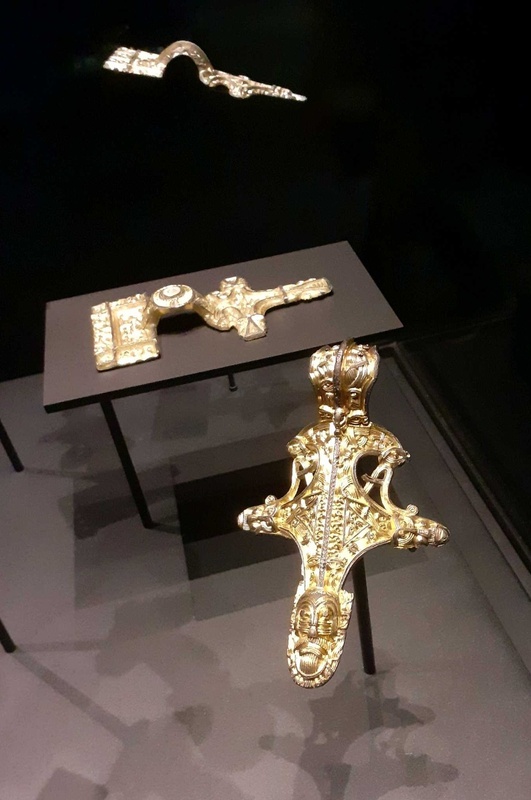
A gilded bronze square-headed bow brooch featuring intricate animal ornamentation and stylised human faces with beards. On display in the Arkeologisk museum, Stavanger, Norway.
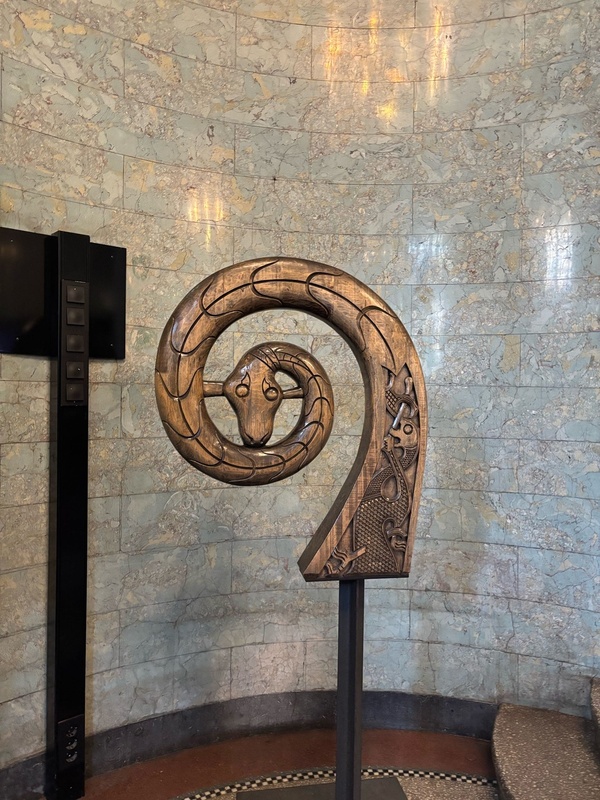
A reconstruction of an ornate spiral serpent or dragon head from the prow of the 9th-century Oseberg Viking ship. Will be on display at the Viking Ship Museum in Oslo once the museum reopens: https://www.vikingtidsmuseet.no/english/.
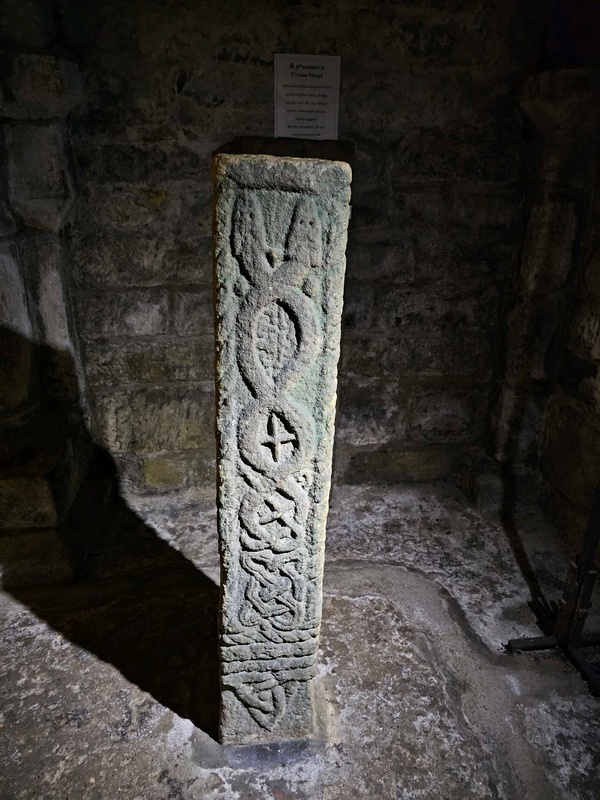
Remains of a carved stone cross preserved inside the crypt of St. Mary's Church in Lastingham, North Yorkshire (https://lastinghamparishchurch.org.uk/about-us/vicars-of-lastingham/). It dates from the 8th to 10th centuries, and features intricate interlaced knotwork, ring-headed cross motifs, and carvings in Scandinavian style . The crypt itself dates largely to 1078 and is acknowledged as one of the earliest Norman crypts in England.
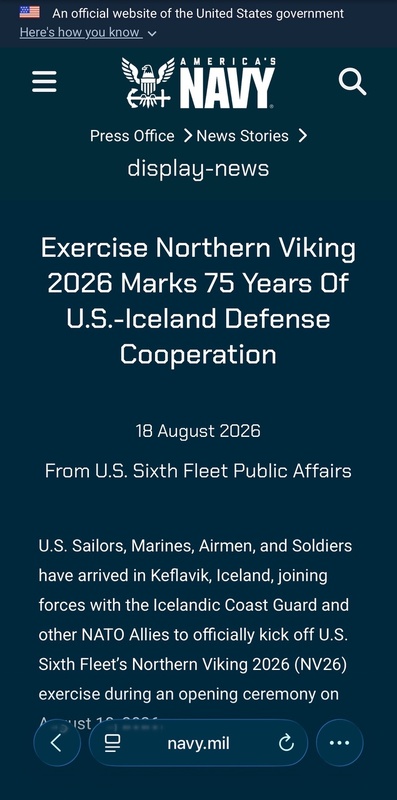
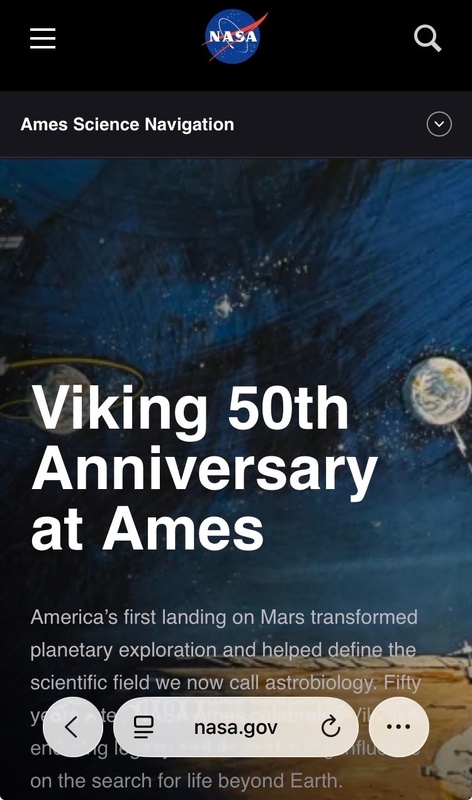
Screenshot showing Northern Viking 2026, the codename for a joint U.S., Icelandic and NATO military exercise held in Iceland in August 2026, marking 75 years of U.S.–Iceland defence cooperation.
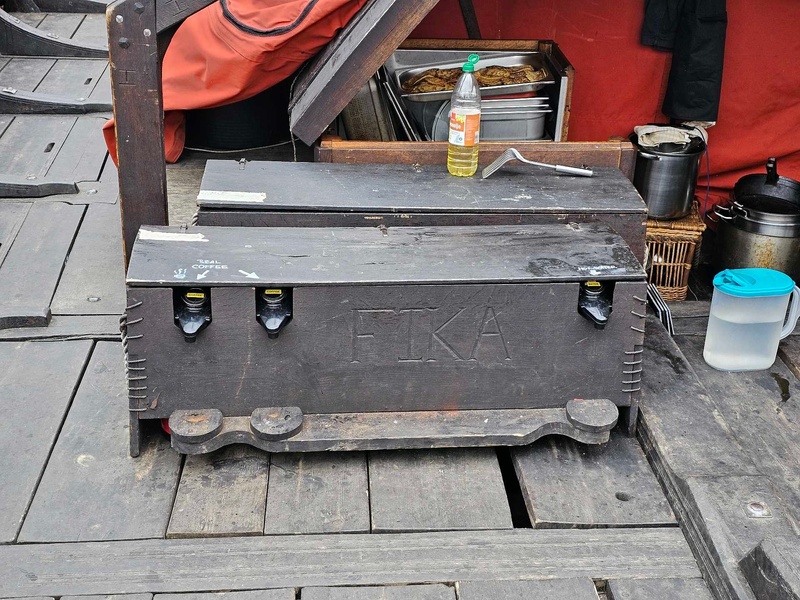
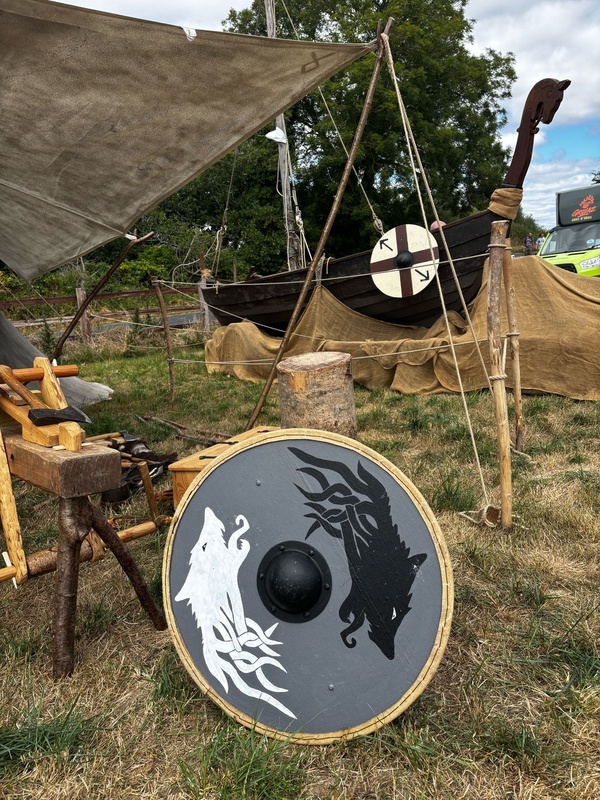
Viking reenactment encampment at the Woodstown Viking Festival in County Waterford, Ireland, featuring a reconstructed longship, decorated round shields, period-style tents and traditional woodworking equipment.
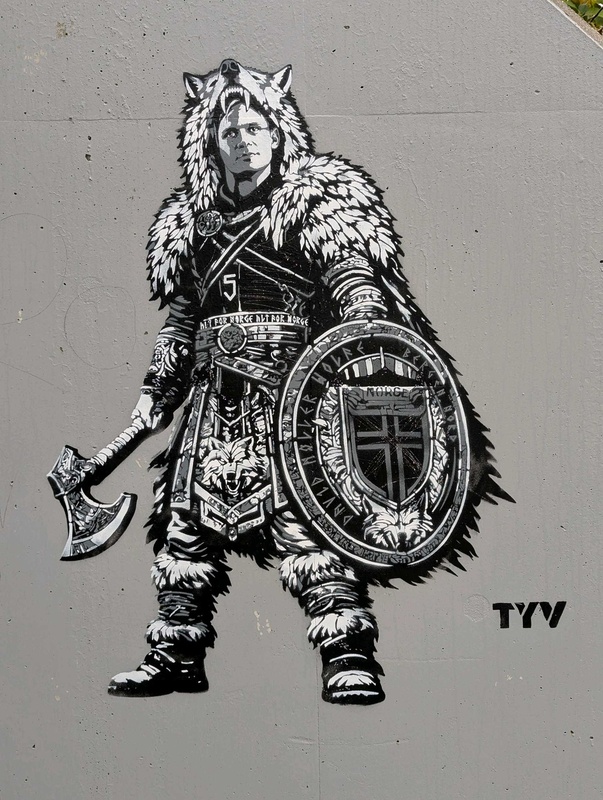
Street art by Norwegian artist TYV (thief) depicting footballer David Møller Wolfe as a berseker. Wolfe was part of the Norwegian national football team which competed in the 2026 World Cup. TYV made this graffiti on the eve of the match Norway-Ivory Coast. The graffiti is located in the underpass leading to IKEA in Åsane (Vestlandet, Norway). The location pays homage to Wolfe, who comes from Åsane. In the graffiti, Wolfe is depicted in Viking gear, complete with shield and axe. The wolf skin on his back is a nod to the footballers surname and to the famed Ulfhednar, a group of berserkers who adorned themselves in wolf skins. TYV added several details, such as the slogan "Alt for Norge" (all for Norway) in a runic-inspired font on the belt, as well as "David Møller Wolfe" and "Bergen nord" where Åsane is located in the same font on the shield. A copy of this artwork has been co-signed by TYV and Wolfe and will be auctioned to support a charity.
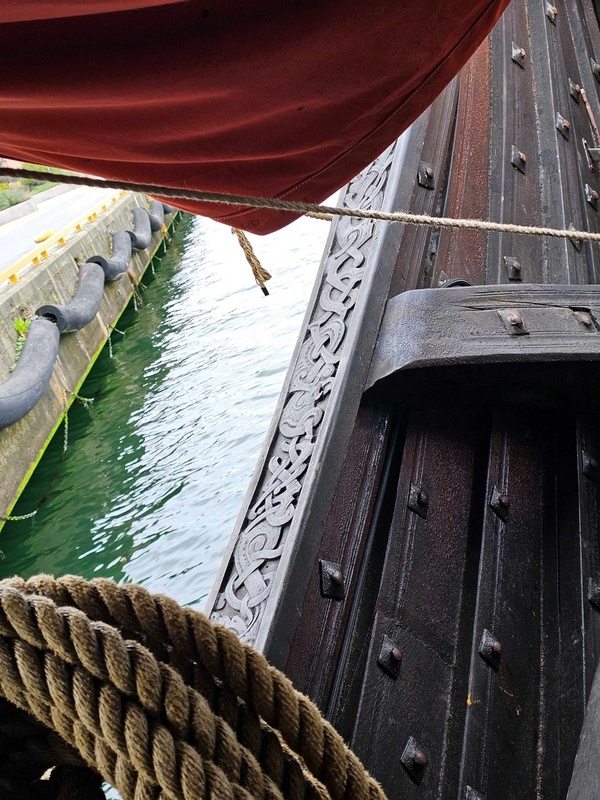
Decorative carving on the side of the Draken Harald hårfagre. This modern, ocean-crossing longship is not a faithful reproduction of a Viking longship, but it is heavily inspired by living Norwegian boat-building traditions hailing back to the Viking Age. In 2016 the Draken Harald Hårfagre sailed from Haugesund (Rogaland, Norway) to the USA, and in 2026 it featured as Odysseus' ship in Christopher Nolan's "The Odyssey".
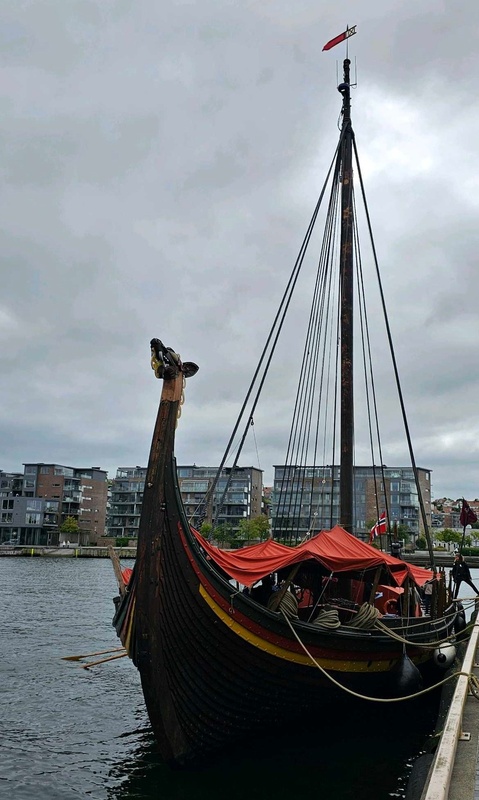
Draken Harald Hårfagre moored in Sandnes (Rogaland, Norway). This modern, ocean-crossing longship is not a faithful reproduction of a Viking longship, but it is heavily inspired by living Norwegian boat-building traditions hailing back to the Viking Age. In 2016 the Draken Harald Hårfagre sailed from Haugesund (Rogaland, Norway) to the USA, and in 2026 it featured as Odysseus' ship in Christopher Nolan's "The Odyssey".
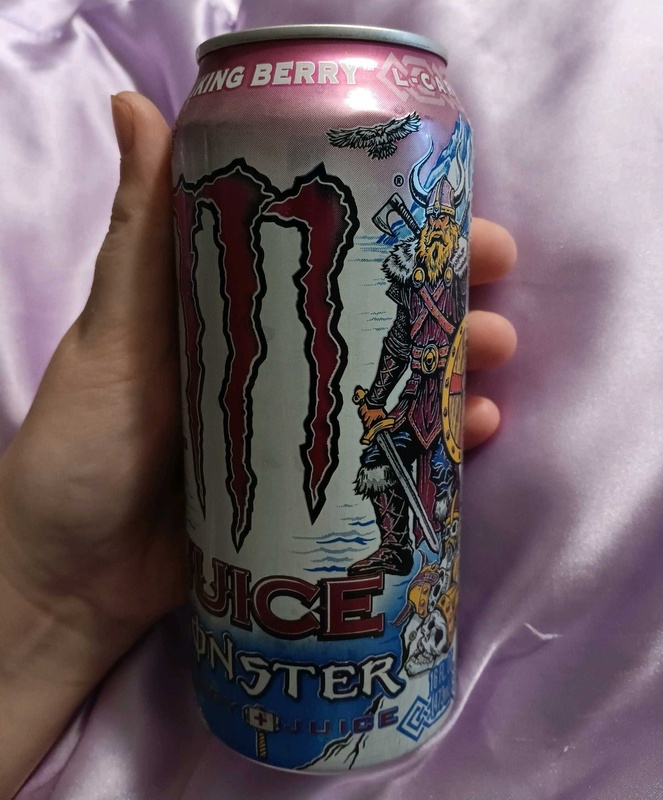
A can of Viking Berry flavored Monster Energy Drink. The side pictured shows a stereotypical Viking warrior with horned helmet, sword, axe, fur and shield. Above him flies a raven, underneath him is a pile of skulls, ice and sea pictured in the background. The other side has a stereotyped depiction of a Viking warrior woman in warrior clothing with fur, holding an axe and a shield. Above her is a raven, a wolf to her side, and a longship in the background.
The description on the back reads "The Vikings were valiant warriors who loved a good drink! They saved the very best of what they gathered, grew, bartered, and pillaged for their celebratory feasts. Inspired by the wild Nordic berries and Scandinavian fruit comes Juice Monster Viking Berry.
Like nothing you've ever tasted, Viking Berry blends real fruit juices and exotic flavors for a whole new taste experience.
Loaded with our world-famous Monster Energy blend to power you through your next adventure.
Grab your drinking horn and take a swig, skol!"
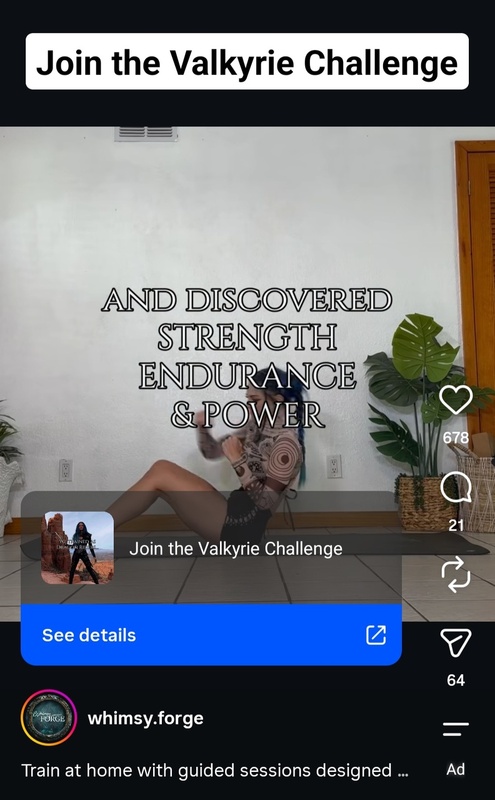
Ad for the "Valkyrie Challenge", a training programme targeted to women by company Whimsy Forge. The Valkyrie Challenge is one of several training programmes offered by Whimsy Forge, who specialise in "fantasy-infused fitness", with challenges and training paths inspired by popular fantasy books, as well as world mythologies.
The logo of the Vikingology Podcast which features the microphone icon in a blue circle surrounded by the Futhark sequence. The podcast is run by historians Terri Barnes and C.J. Adrien.
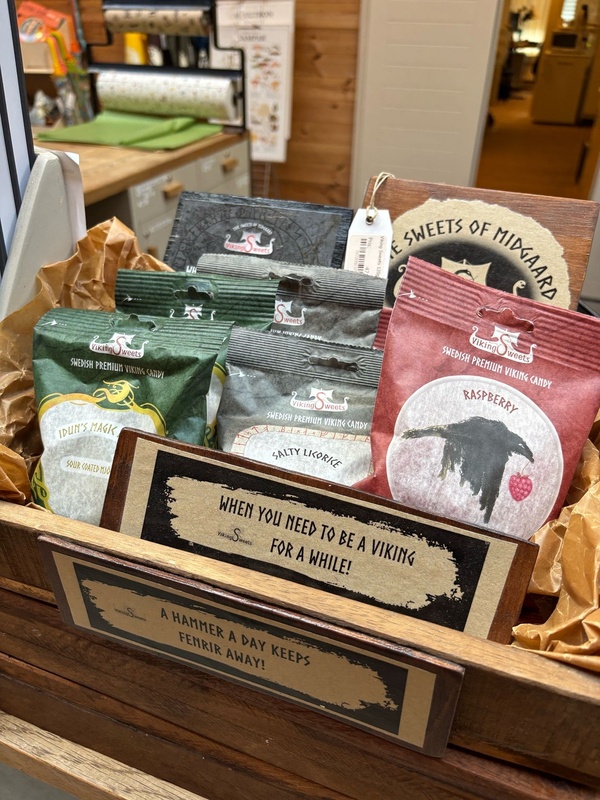
A basket of different types of candies from the Swedish company "Viking Sweets" accompanied by slogans such as "When you need to be a Viking for a while" and "A hammer a day keeps Fenrir away". The bags of candy pictured are in the flavours raspberry, salty licorice, and "Idun's magic apples".
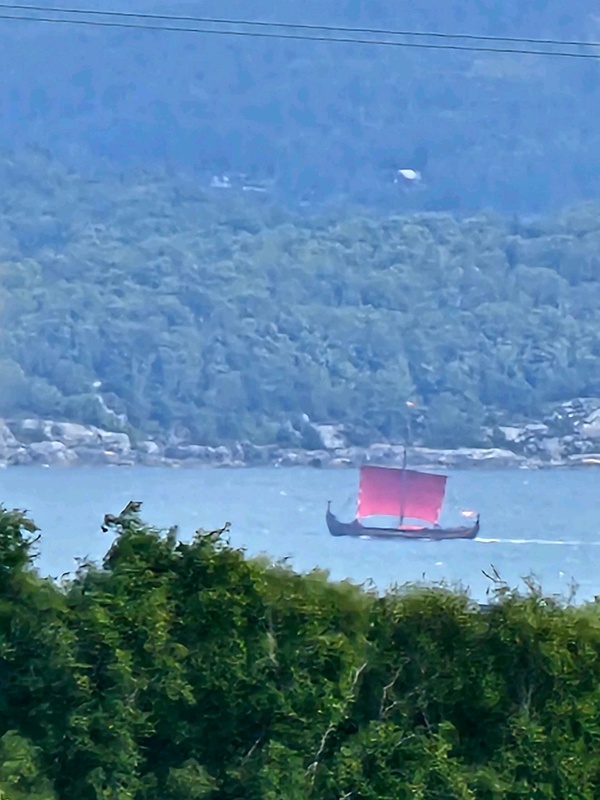
The Draken Harald Hårfagre seen in the distance in Byfjorden (Rogaland, Norway). This modern, ocean-crossing longship is not a faithful reproduction of a Viking longship, but it is heavily inspired by living Norwegian boat-building traditions hailing back to the Viking Age. In 2016 the Draken Harald Hårfagre sailed from Haugesund (Norway) to the USA, and in 2026 it featured as Odysseus' ship in Christopher Nolan's "The Odyssey".
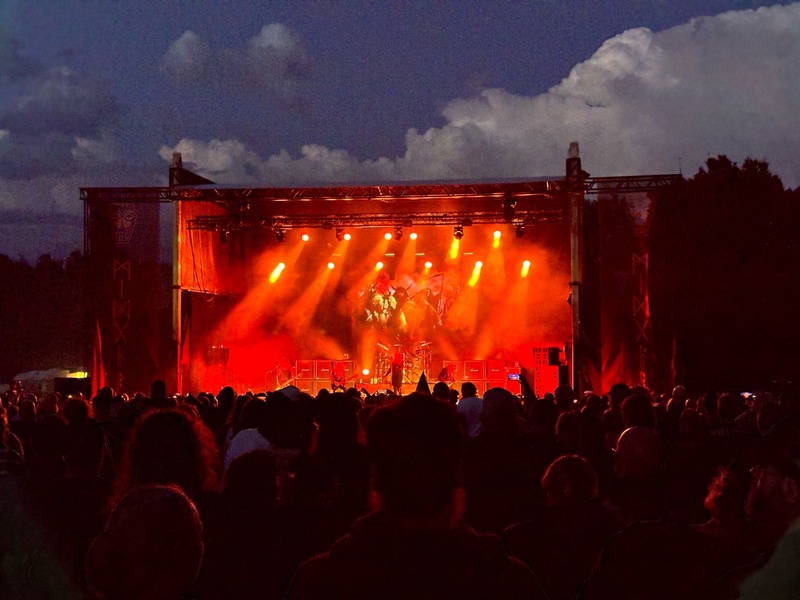
Performance from the Midgardsblot festival in 2026. It is an annual metal and neofolk music festival held in August at the historic Borre burial mounds outside the Midgard Viking Center in Norway.
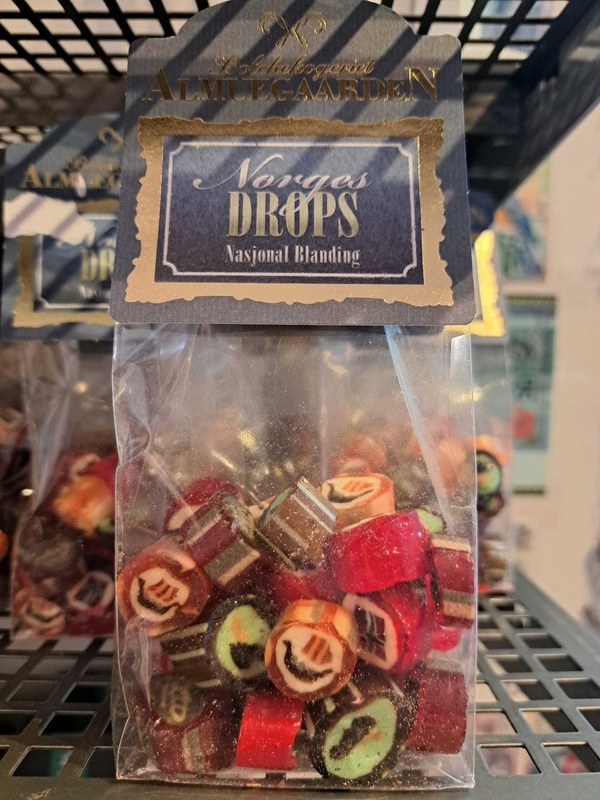
Norges Drops Nasjonal Blanding boiled sweets handcrafted by the Danish confectioner Almuegaarden, featuring traditional Norwegian-themed patterns and some Viking, such as ships, inside each candy piece.
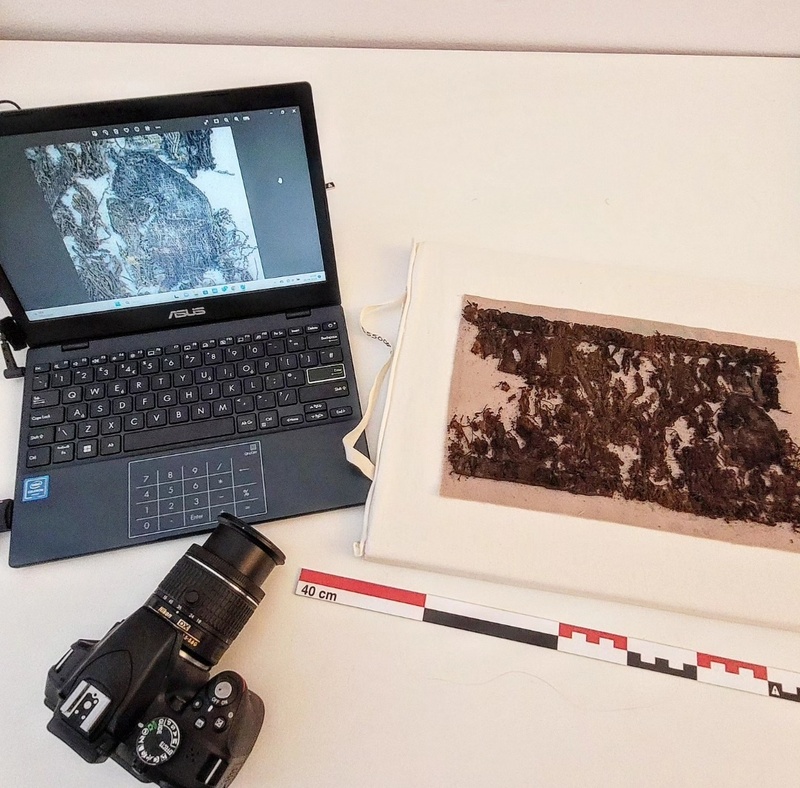
The Oseberg Tapestries Fragment 4 is an early 9th-century Viking Age textile fragment discovered in the famous Oseberg ship burial near Tønsberg, Norway, showcasing stylized figures and horses processed in a ritualistic or mythological scene. The original is poorly preserved. This is a reconstruction drawn by Stig Saxegaard, Storm Studios, in 2018.
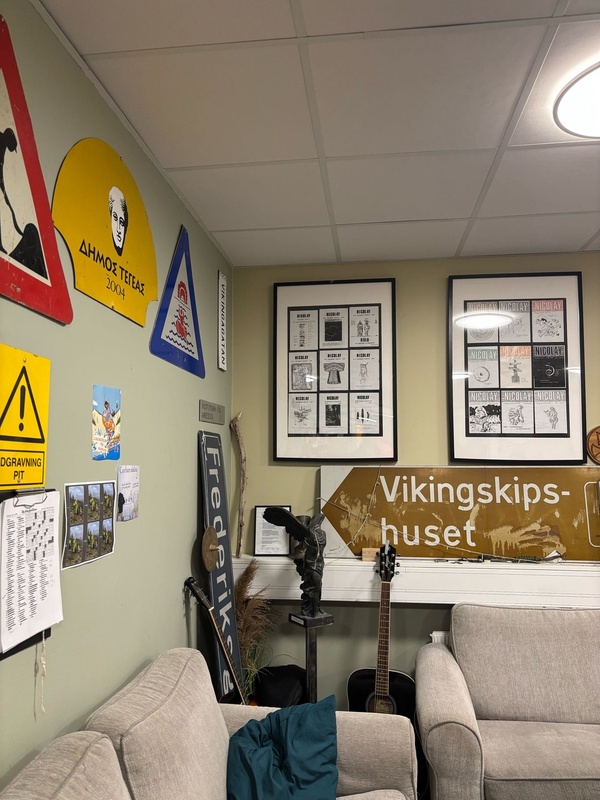
Brown sign on the right wall reads "Vikingskipshuset", which translates to The Viking Ship Museum. Museum is currently closed but is anticipated to reopen in 2027 under the name of the Viking Age Museum.
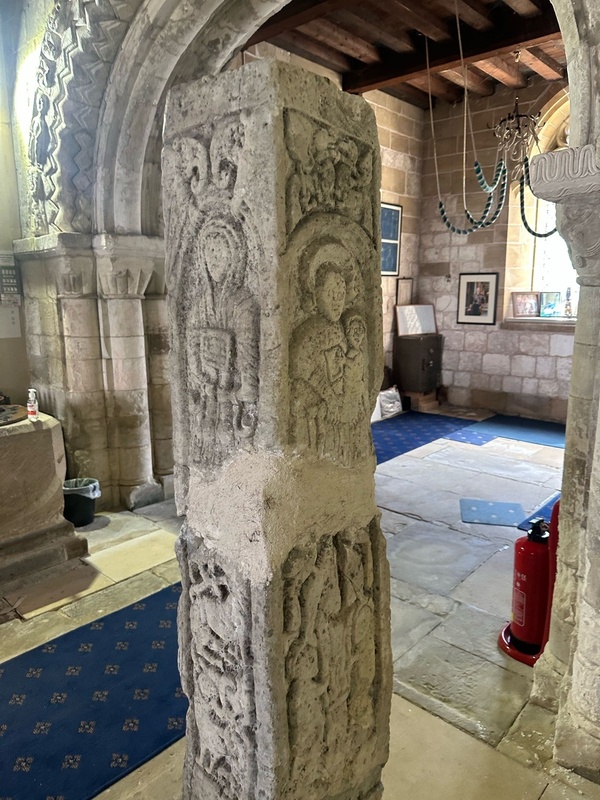
The late Anglo-Saxon cross shaft at St James Church, Nunburnholme includes some Norse-influenced imagery, including a depiction of Sigurd and the dragon Fafnir, and a warrior with Viking sword.
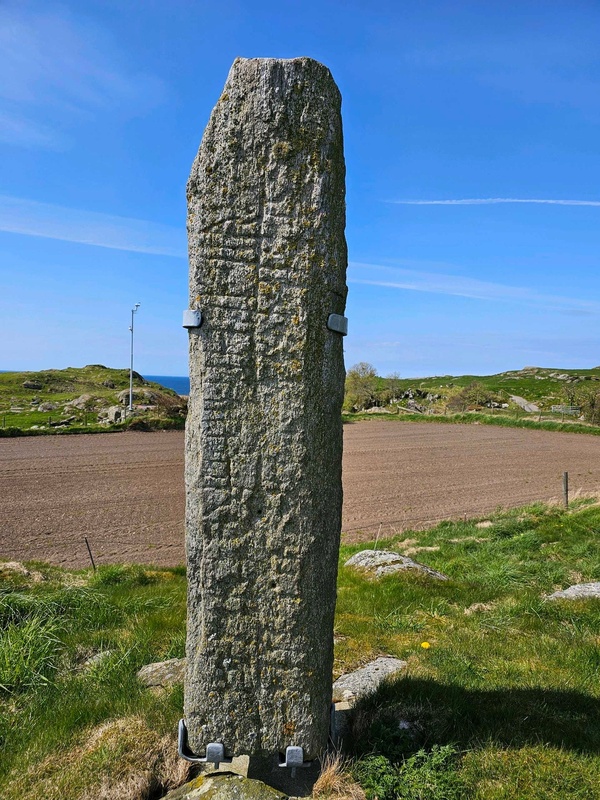
Photograph of runestone from Helland, Sola sogn, Rogaland (Norway) with the sigla N 244.
From Runor:
Runic Text
× skarþi : risti : stin : þana : iftir :: biafa : sun : sin : harþa : kuþan : man :
Old West Norse
Skarði reisti stein þenna eptir Bjalfa, son sinn, harða góðan mann.
English
Skarði raised this stone in memory of Bjalfi, his son, a very good man.
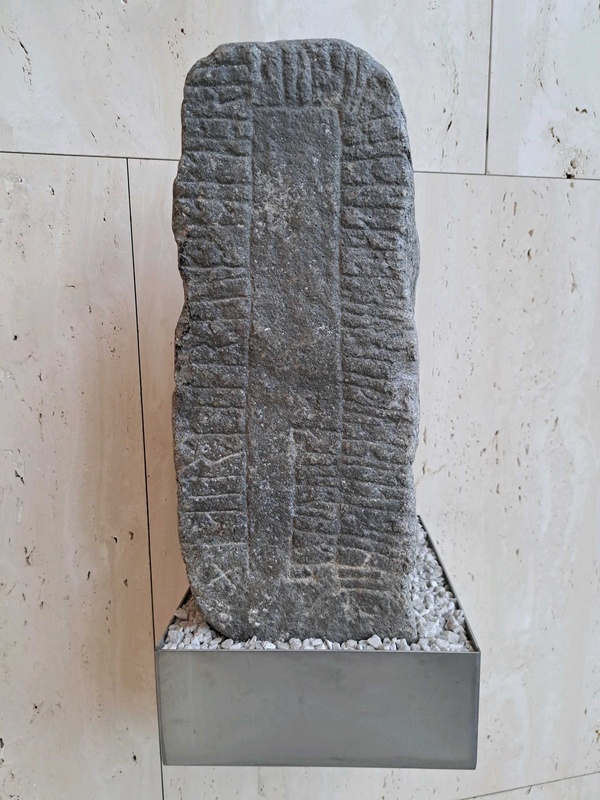
Runestone N 29 from Nørstebø, on display at the entrance to Oslo University Library, Blindern Campus.
Details from Runor:
Runic Text
× þair : finr : auk : skofti : rais(t)u : s(t)in : þena : þa : es : (þ)air : s(k)iþtu : lantom : sinum : saʀn(e)r : uala ×
Old West Norse Text
Þeir Finnr ok Skopti reistu stein þenna, þá er þeir skiptu lǫndum sínum, synir Vála.
English
Finnr and Skopti, Váli's sons, they raised this stone when they divided their land(ed property).
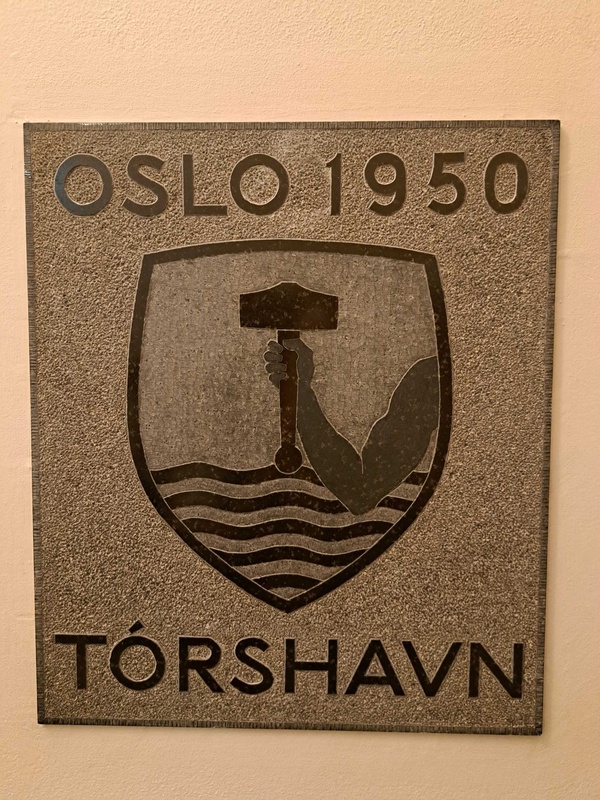
Plaque celebrating the opening of Oslo City Hall in 1950, and depicting the coat of arms of Tórshavn, featuring a Thor's hammer (and relating to its name meaning 'Thor's harbour').
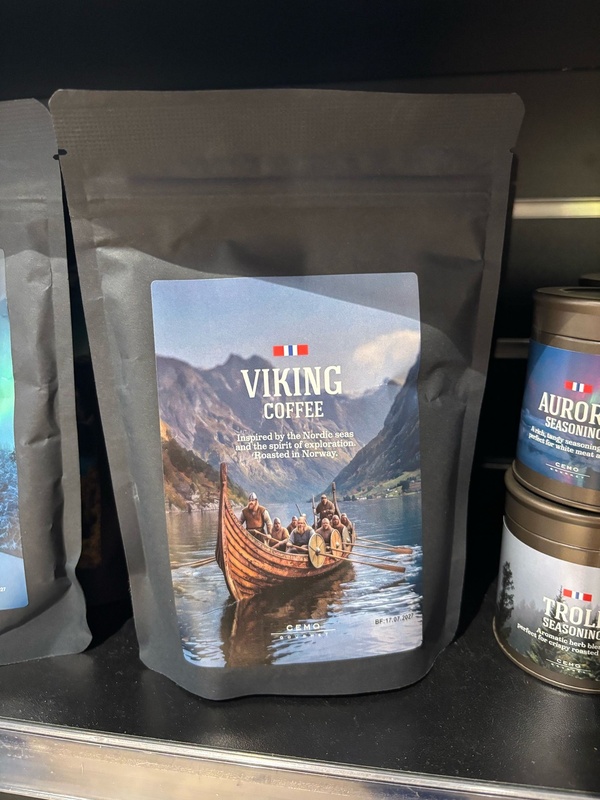
Viking-themed coffee by Cemo Gourmet, roasted in Norway and marketed as inspired by the Nordic seas and the spirit of exploration, with packaging depicting Viking warriors aboard a longship in a Norwegian fjord.
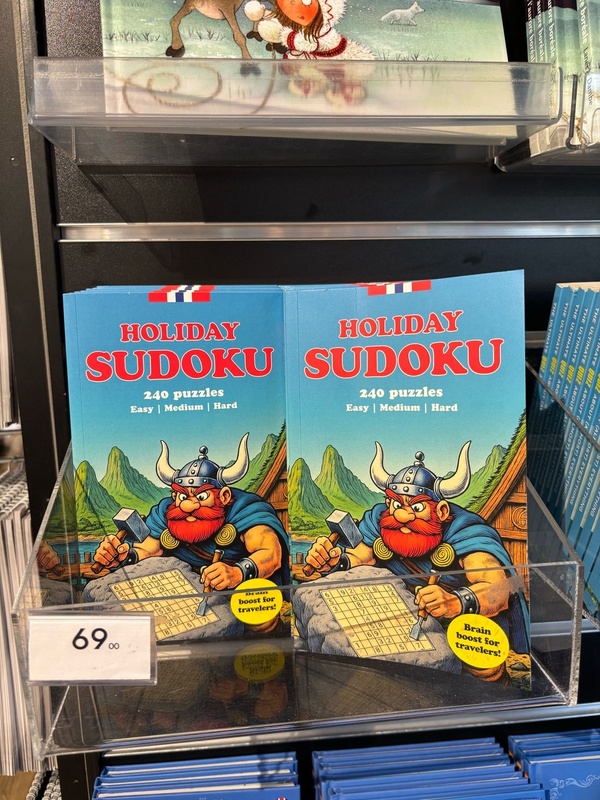
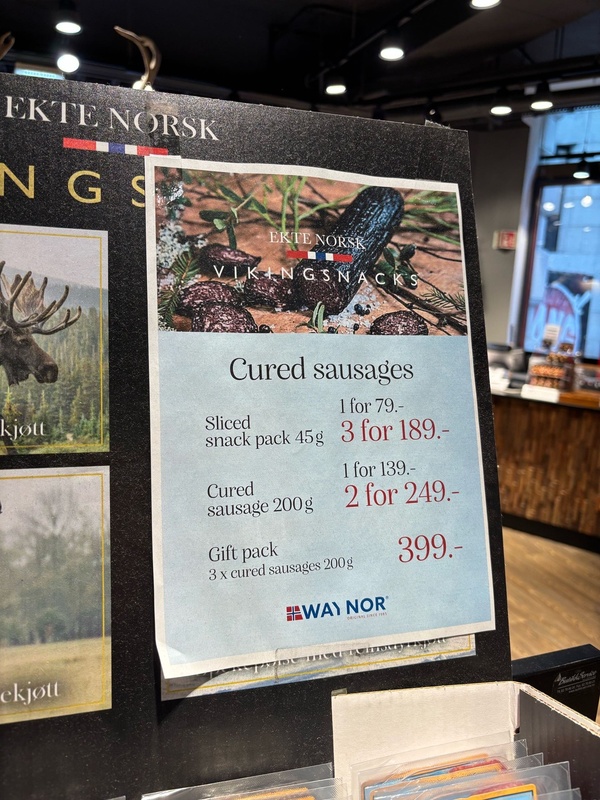
Norway-themed Sudoku puzzle book featuring a cartoon Viking warrior wearing a stereotypical horned helmet and holding a hammer, set against a mountainous Nordic landscape.
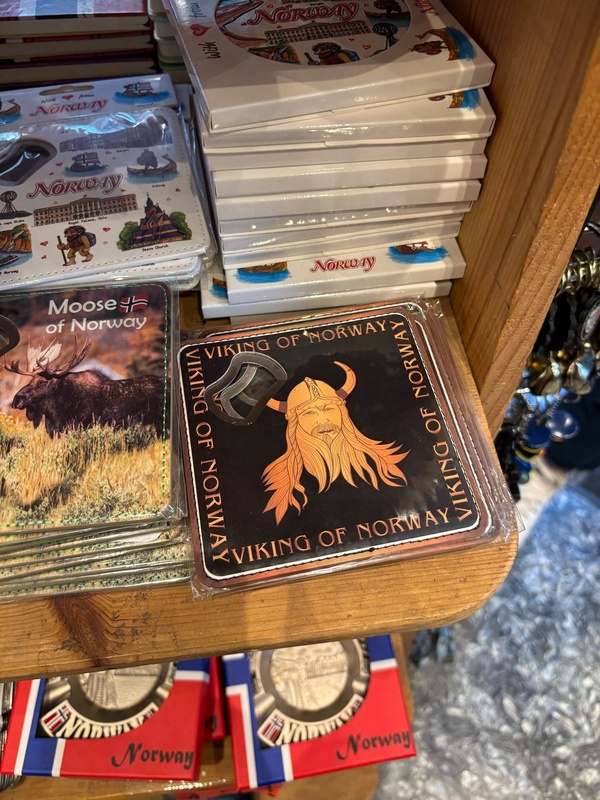
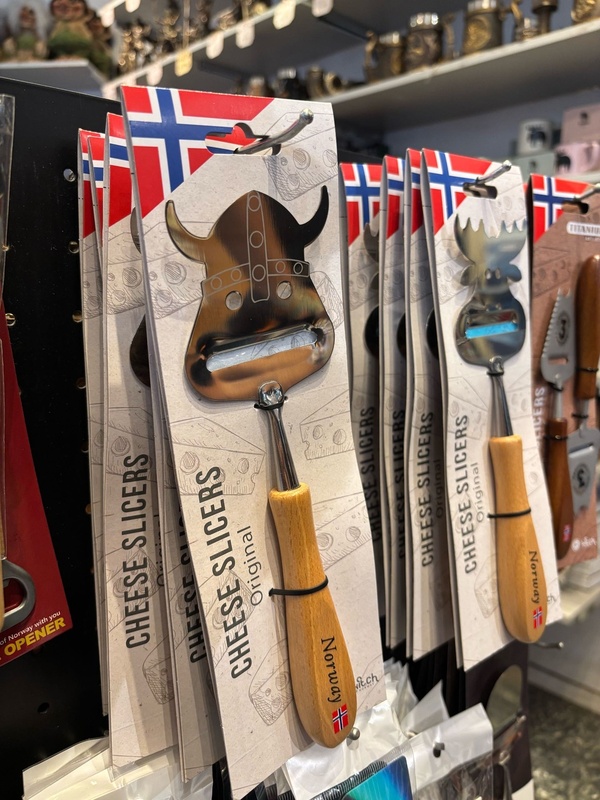
Norway-themed souvenir bottle opener featuring a stylised Viking warrior with a horned helmet and beard, surrounded by repeated “Viking of Norway” lettering.
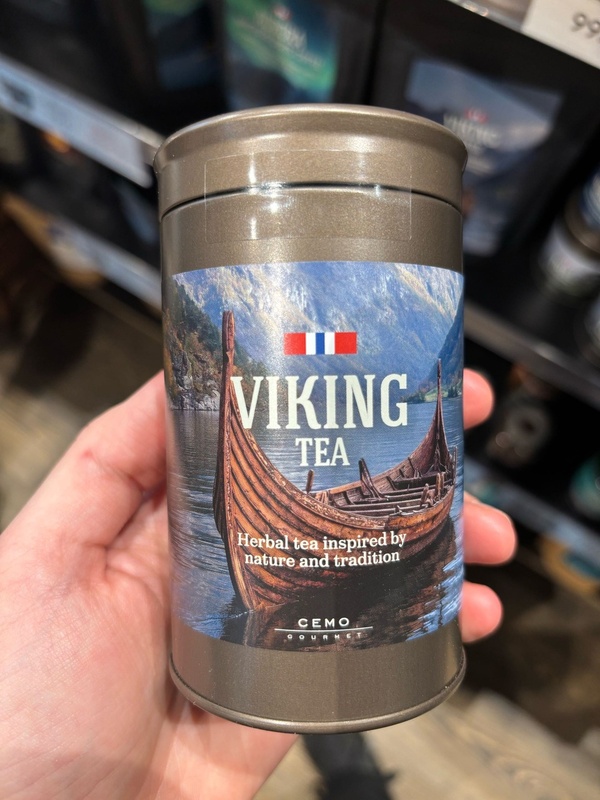
Viking-themed herbal tea by Cemo Gourmet, marketed as inspired by nature and tradition, with packaging featuring a Viking longship against a Norwegian fjord landscape.
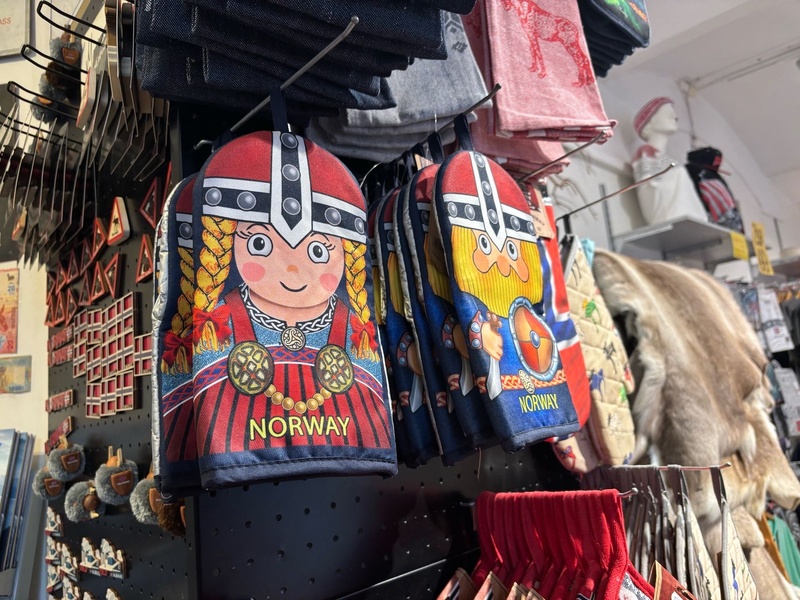
Norway-themed souvenir oven mitts featuring colourful cartoon Viking figures in stylised clothing and helmets, combining popular Viking imagery with modern Norwegian tourism merchandise.
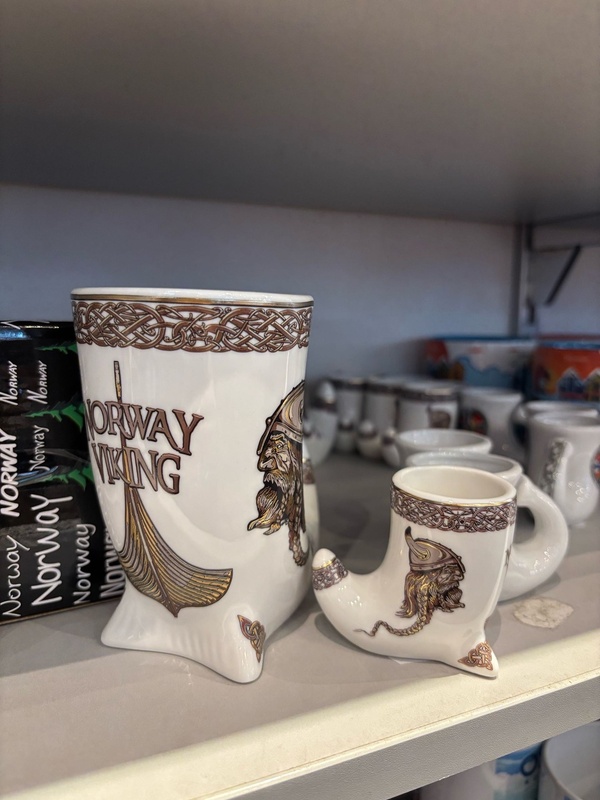
Norway-themed ceramic drinking vessels shaped like Viking drinking horns, decorated with stylised Viking warriors, a longship and interlaced knotwork inspired by Norse ornamentation.
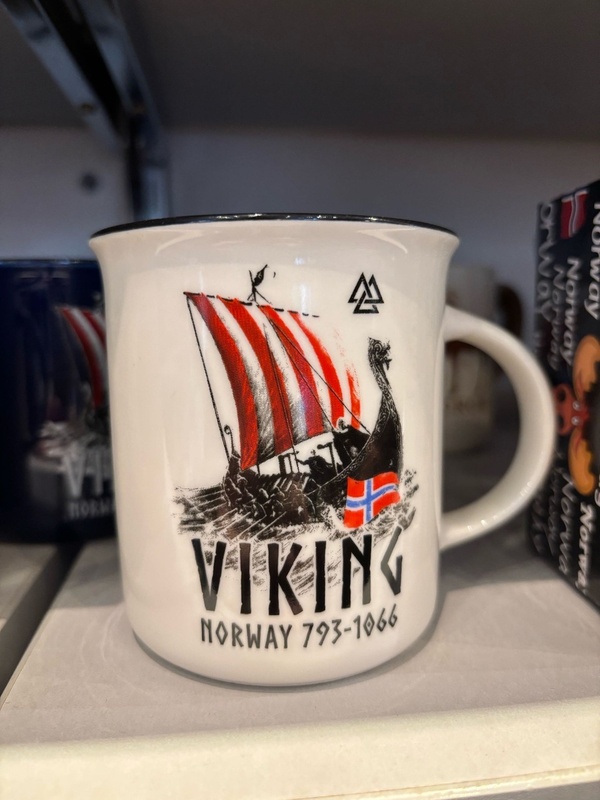
Norway-themed souvenir mug featuring a Viking longship with a red-and-white striped sail, the Norwegian flag and a Valknut symbol, alongside the dates 793–1066, commonly used to represent the Viking Age.
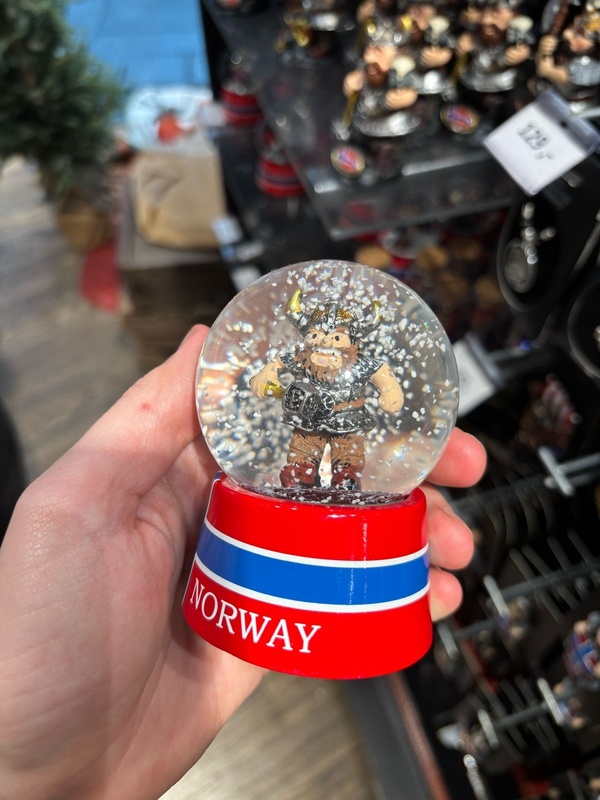
Norway-themed souvenir snow globe featuring a stylised Viking warrior wearing a horned helmet, sword and shield, set on a base decorated with the colours of the Norwegian flag.
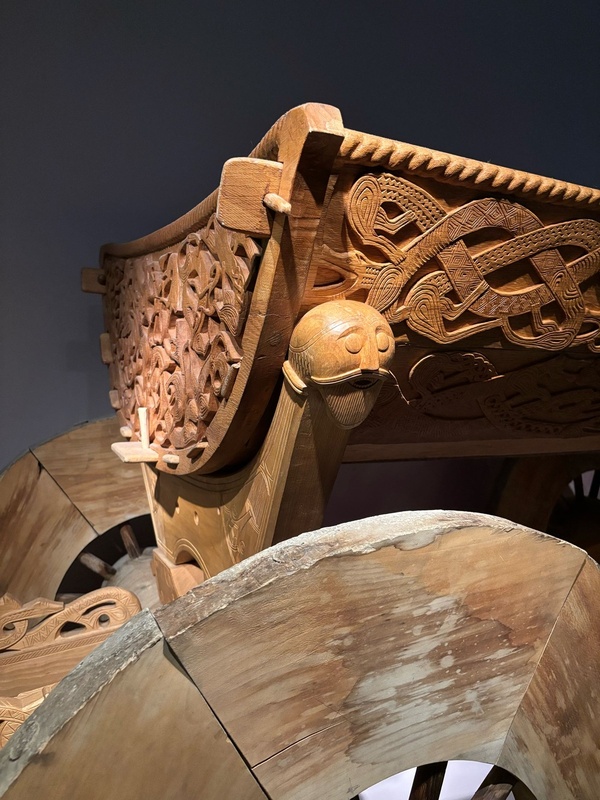
Richly carved wooden wagon from the Oseberg ship burial in Norway, dating to the ninth century and excavated in 1904. One of the best-preserved wagons from the Viking Age, it forms part of the collection of the Museum of the Viking Age in Oslo, due to reopen in November 2027.
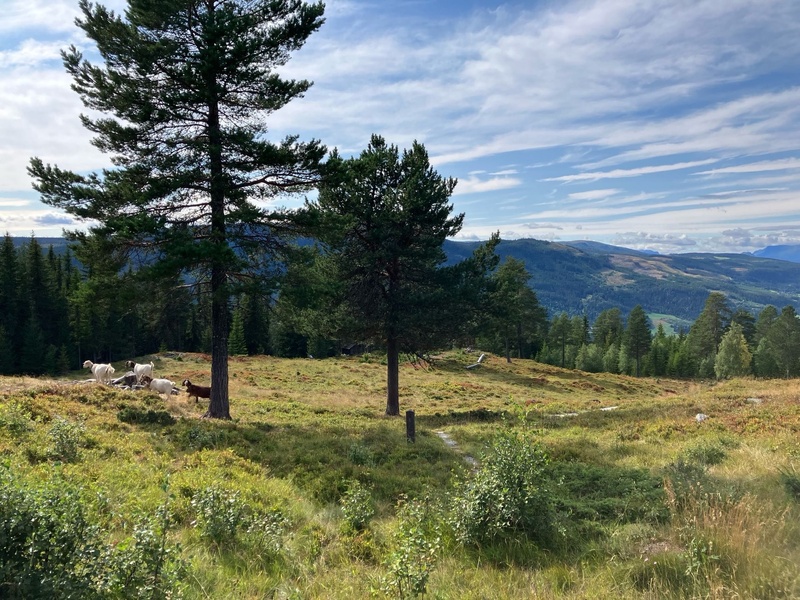
Covering more than 2 square kilometres, the Gardberg (Gardbergfeltet) site in Vestre Slidre is estimated to contain around 1,000 burial mounds, although only 550 have been investigated. More than 900 finds from the site date from a period spanning the Roman Iron Age through to the Viking Age (c. 800 CE).
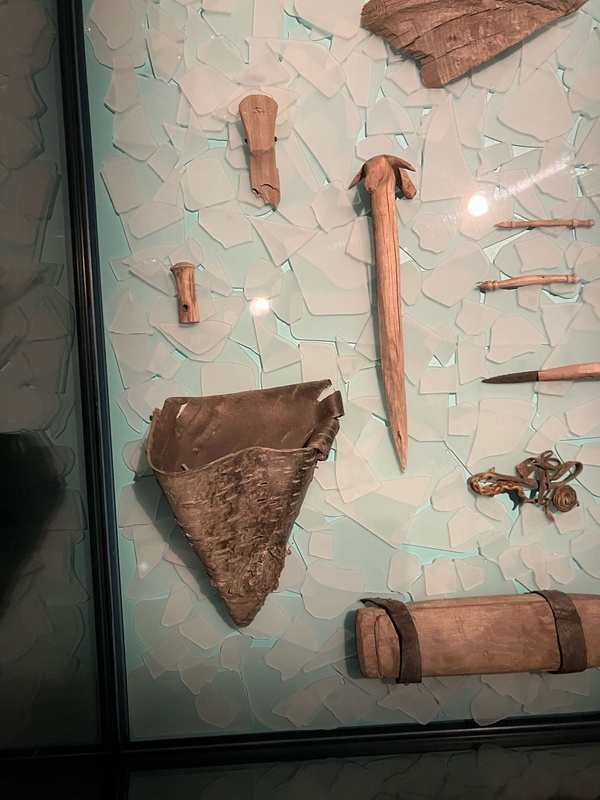
Viking-Age basketry, wooden objects and tools preserved in mountain ice around Lom, Norway, displayed in the 'Frozen in Time' glacial archaeology exhibition at Norsk Fjellsenter.